


Battles in Normandy vs Blackguards
Side-by-side comparison of features, pricing, ratings, and alternatives.
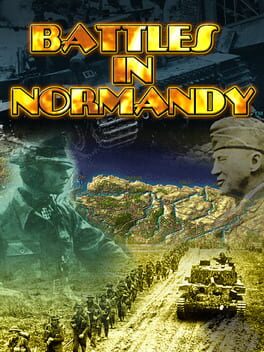
Battles in Normandy is a historically‑accurate turn‑based strategy game that puts players in charge of Allied operations during the 1944 Normandy invasion. The game features a hex‑grid map, realistic unit statistics, and a deep order‑of‑battle system that rewards careful planning. Developed by Strategic Studies Group and published by Matrix Games, the title offers both single‑player scenarios and multiplayer battles, allowing enthusiasts to recreate historic engagements or devise their own tactics against friends.
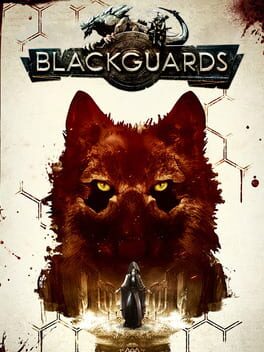
Blackguards is a turn‑based strategy RPG that puts you in the shoes of a band of misfits fighting for a threatened world. Explore over 180 hex‑based battlegrounds and make story‑changing choices in a mature tale of crime, drugs, and murder. Play as a warrior, mage, or hunter and fully customize your skills while navigating a challenging single‑player campaign filled with doubt, treason, and loss.
- Deep historical accuracy
- Robust multiplayer options
- Extensive unit variety
- Custom scenario editor
- Extensive hex‑based battlefields offer tactical depth.
- Rich, mature storyline with impactful choices.
- Three fully customizable classes provide variety.
- Indie production delivers a unique artistic style.
- Steep learning curve for newcomers
- Outdated graphics
- Limited UI customization
- Limited to single‑player mode; no multiplayer.
- Steep learning curve for new turn‑based players.
- Graphics may feel dated compared to newer titles.
More alternatives & similar tools
Alternatives to Battles in Normandy
View all →
World War II tactical combat brought to life in turn‑based detail
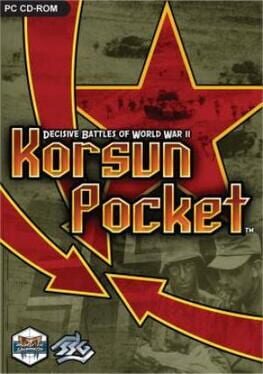
Relive the brutal 1944 Korsun Pocket clash in deep turn‑based strategy

Relive the daring D-Day parachute drops in a realistic strategy simulation.
Alternatives to Blackguards
View all →No alternatives listed yet. Browse similar tools →
The Verdict
AI-generated from listing dataBattles in Normandy offers a historically detailed, multiplayer‑capable WWII turn‑based strategy with a scenario editor, while Blackguards delivers a single‑player, story‑heavy fantasy tactical RPG with deep character customization.
Key differences
- •Multiplayer support: Normandy includes hot‑seat and online play; Blackguards is single‑player only.
- •Theme and setting: Normandy is WWII historical; Blackguards is dark fantasy with mature narrative.
- •Replay tools: Normandy provides a built‑in scenario editor; Blackguards relies on its 180 preset maps.
- •Class system: Blackguards features three fully customizable classes; Normandy focuses on unit variety rather than character classes.
- •Release era: Normandy released 2004 with older graphics; Blackguards released 2014 but still notes dated visuals.
Gameplay & fun factor
Both are turn‑based tactical experiences; one emphasizes historical warfare, the other a narrative‑driven fantasy RPG.
Platform availability
Both are PC titles; no other platforms are specified.
Pricing & value
Both priced at $39.99 (one‑time purchase).
Multiplayer / co‑op
Normandy offers hot‑seat and online multiplayer; Blackguards is single‑player only.
Content & replayability
Normandy adds a scenario editor and extensive unit logistics, extending replay value beyond its fixed maps.
Difficulty & accessibility
Both list a steep learning curve for newcomers.
Graphics & performance
Each is described as having outdated or dated graphics relative to newer titles.
Choose Battles in Normandy if…
WWII strategy fans who want multiplayer and custom battle creation.
Choose Blackguards if…
Players seeking a single‑player, story‑rich fantasy tactical RPG.
Common questions
Do either of these games support multiplayer?
Battles in Normandy includes hot‑seat and online multiplayer; Blackguards is single‑player only.
Is there a way to create my own battles in either game?
Normandy includes a built‑in scenario editor; Blackguards does not offer a battle‑creation tool.
Which game has a lower learning curve for new turn‑based players?
Both are described as having a steep learning curve, so neither is easier for beginners.