


Datadog vs Nagios XI
Side-by-side comparison of features, pricing, ratings, and alternatives.
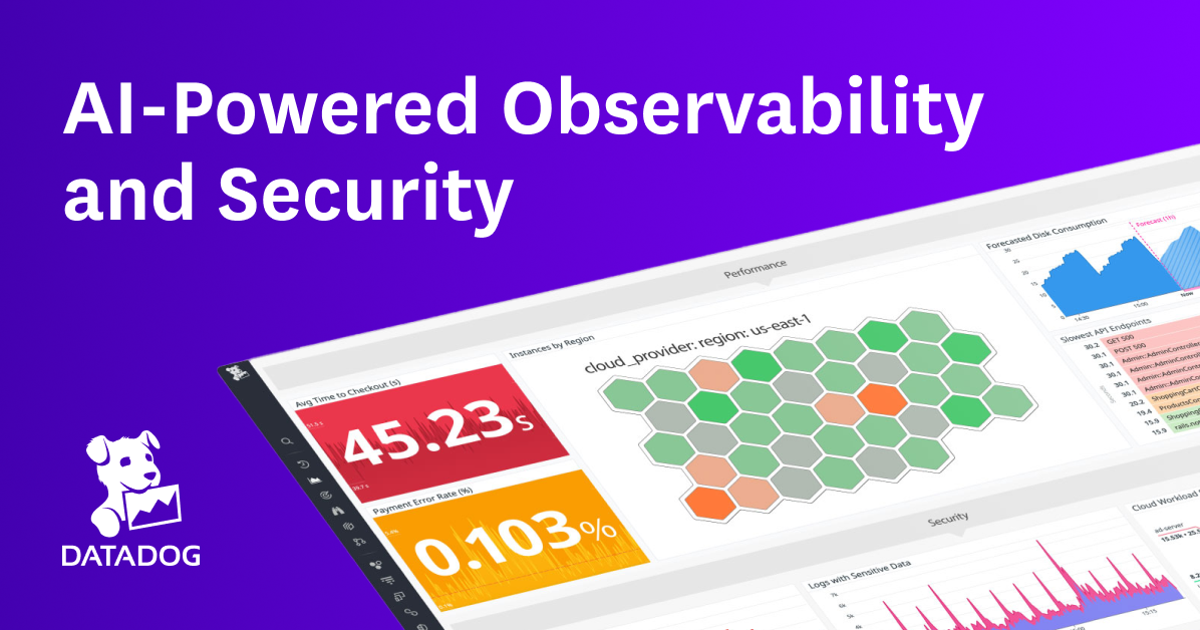

Datadog is a cloud‑based observability platform that provides monitoring of servers, containers, databases, and services. It aggregates metrics, traces, and logs into a single pane. The service offers real‑time dashboards, AI‑driven alerts, and integrations with major cloud providers, helping teams troubleshoot performance issues and ensure reliability.
Nagios XI delivers enterprise‑grade monitoring for servers, networks, applications, and services. Its web‑based interface lets IT teams visualize health, set thresholds, and receive alerts in real time. Built for self‑hosted deployment, Nagios XI integrates with ITSM tools, CMDBs, and cloud platforms, offering customizable dashboards and extensive reporting to keep systems running smoothly.
- Comprehensive integration library
- Unified view of metrics, logs, and traces
- Scalable SaaS architecture with minimal maintenance
- Advanced AI alerts reduce noise
- Highly customizable with thousands of plugins
- Robust alerting and escalation workflows
- Comprehensive reporting and dashboards
- Self‑hosted deployment gives full data control
- Pricing can become expensive at scale
- Learning curve for complex dashboard configurations
- Limited on‑premises deployment options
- Steeper learning curve for initial setup
- User interface can feel dated compared to newer SaaS tools
- Limited out‑of‑the‑box mobile app support
More alternatives & similar tools
Alternatives to Datadog
View all →



Alternatives to Nagios XI
View all →
Real‑time visibility and optimization for enterprise networks.


Real-time network visibility and performance monitoring for IT pros.
The Verdict
AI-generated from listing dataDatadog offers a cloud‑native, unified observability suite with extensive integrations but can become costly, while Nagios XI provides a self‑hosted, highly customizable monitoring platform with full data control but a steeper setup.
Key differences
- •Deployment model: Datadog is SaaS/cloud, Nagios XI is self‑hosted.
- •Integration breadth: Datadog lists 450+ integrations; Nagios relies on plugins and fewer native integrations.
- •Pricing structure: Datadog has a freemium tier; Nagios XI is paid subscription only.
- •Alerting & AI: Datadog includes AI‑powered anomaly detection; Nagios XI offers traditional threshold alerts.
- •User experience: Datadog provides modern dashboards; Nagios XI’s UI is considered dated.
Pricing & value
Datadog offers a freemium tier, whereas Nagios XI requires a paid subscription.
Ease of use / learning curve
Datadog’s SaaS UI is modern; Nagios XI has a steeper initial setup and dated interface.
Features & depth
Datadog includes metrics, logs, traces, AI alerts in one platform; Nagios focuses on host/service monitoring.
Integrations & ecosystem
Datadog lists over 450 native integrations; Nagios relies on plugins and fewer built‑in integrations.
Collaboration
Datadog integrates with Slack, PagerDuty, email for incident management; Nagios XI lacks comparable built‑in collaboration tools.
Scalability
Datadog’s SaaS architecture scales automatically; Nagios XI requires self‑managed clustering for high availability.
Support
Both provide 24/7 support options (Datadog: email, live chat, phone; Nagios XI: email, phone).
Choose Datadog if…
Enterprises needing fast‑to‑deploy, cloud‑native observability with many integrations and AI alerts.
Choose Nagios XI if…
Organizations that require on‑premises control, extensive customization via plugins, and are willing to manage infrastructure.
Common questions
Can I start using Datadog for free?
Yes, Datadog offers a freemium tier; Nagios XI has no free tier.
Which tool gives me more out‑of‑the‑box integrations?
Datadog provides over 450 native integrations; Nagios XI depends on plugins for additional integrations.
Do both solutions support 24/7 support?
Yes, both list 24/7 support options (Datadog via email, live chat, phone; Nagios XI via email and phone).