


Katamari Forever vs We Love Katamari
Side-by-side comparison of features, pricing, ratings, and alternatives.
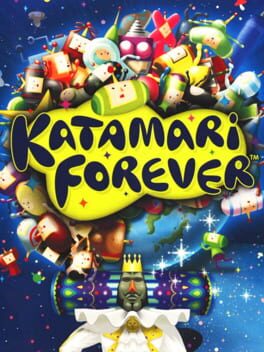

In Katamari Forever you roll a magical ball to collect objects, turning black‑and‑white stages into vibrant worlds. Half the stages occur inside the amnesiac King of All Cosmos’s mind, while the other half battle the destructive RoboKing.
We Love Katamari is a third‑person puzzle‑action game where you control the Prince, rolling a magical katamari to collect objects and fulfill the King of All Cosmos' wishes. The game blends quirky humor, vibrant visuals, and split‑screen multiplayer as you travel Earth and the cosmos. The title expands on the original Katamari Damacy, adding a self‑referential story about the King's newfound fame and an origin tale of how he became the ruler of the universe. Play solo or with friends in chaotic co‑op modes across a variety of themed levels.
- Unique color‑restoration gameplay
- Blend of classic and new stages
- Supports both single‑player and multiplayer
- Humorous story and visuals
- Unique rolling mechanic that feels fresh and addictive.
- Humorous story and characters add charm.
- Local multiplayer split‑screen encourages social play.
- Vibrant art style and memorable soundtrack.
- Limited to PlayStation 3 platform
- No online multiplayer matchmaking
- Some stages feel repetitive after multiple playthroughs
- Limited to PlayStation 2 hardware; no modern ports.
- Controls can feel imprecise for some players.
- Replay value diminishes after completing all objectives.
More alternatives & similar tools
Alternatives to Katamari Forever
View all →

Alternatives to We Love Katamari
View all →
Roll the universe in dazzling HD as the Prince and his cousins save the cosmos!
The Verdict
AI-generated from listing dataKatamari Forever (A) offers newer PS3 hardware and mixed monochrome/color stages, while We Love Katamari (B) scores higher critically and has split‑screen multiplayer but is limited to older PS2.
Key differences
- •Platform: A runs on PS3 only; B runs on PS2 only.
- •Critic scores: A 81/100 vs. B 89/100.
- •Multiplayer mode: A supports generic local multiplayer; B explicitly offers split‑screen competitive/co‑op.
- •Release era: A (2009) includes newer stage designs and soundtrack remixes; B (2005) is an older title with original graphics.
- •Stage variety: A alternates monochrome and colorful stages; B focuses on everyday and surreal environments without that contrast.
Gameplay & fun factor
Both share the core rolling mechanic and quirky humor; neither is shown as objectively more fun.
Platform availability
A runs on PS3, a newer console than PS2, offering better hardware support.
Price & value
Both priced at $19.99 with one‑time purchase.
Multiplayer / co‑op
B specifies split‑screen competitive/co‑op, giving clearer local multiplayer experience.
Content & replayability
A includes 34 stages mixing classic and new content; B’s replay value noted to diminish after objectives.
Difficulty & accessibility
Both rated ESRB E/PEGI 3 and have no specified difficulty differences.
Graphics & performance
A’s monochrome/color visual style on PS3 likely offers higher fidelity than B’s PS2 graphics.
Choose Katamari Forever if…
Buy if you have a PS3 and want newer visuals and more stages.
Choose We Love Katamari if…
Buy if you prefer higher critic rating and split‑screen local multiplayer.
Common questions
Do either of these games support online multiplayer?
No; A lacks online matchmaking and B is limited to local split‑screen only.
Can I play either game on modern consoles?
Not specified; both are listed only for PS3 (A) and PS2 (B) with no mention of ports.
Which game offers more content?
A offers 34 stages mixing classic and new levels; B’s content is less quantified.