


Might and Magic VII: For Blood and Honor vs The Lord of the Rings: The Third Age
Side-by-side comparison of features, pricing, ratings, and alternatives.
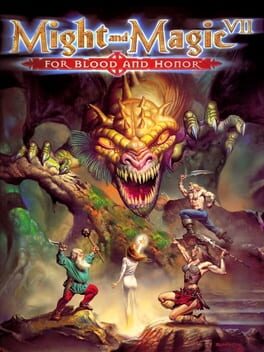
Might and Magic VII: For Blood and Honor is an open‑world classic CRPG that lets you switch between real‑time and turn‑based combat, offering a rich fantasy setting on the continent of Antagarich. Build a party of four, choose from four races and nine base classes, then promote them through a complex hierarchy to reach one of 18 end‑game classes. The game features a compelling political storyline, memorable locations, a soundtrack, and the addictive Arcomage card mini‑game, delivering over a hundred hours of adventure for single‑player fans of deep role‑playing experiences.
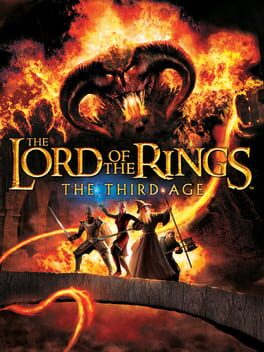
The Lord of the Rings: The Third Age is a classic turn‑based role‑playing game for PlayStation 2 that lets players control a party of seven original characters while interacting with familiar faces like Gandalf and Aragorn. Featuring narrated cutscenes from all three movies and strategic combat reminiscent of Final Fantasy, the game blends familiar lore with fresh storytelling. Explore locations such as the Pelennor Fields and Moria, level up your heroes, and make tactical decisions that shape each battle’s outcome, all while enjoying Ian McKellen’s narration throughout the journey.
- Rich class promotion system with 36 variations
- Open world exploration with diverse locations
- Both real‑time and turn‑based combat options
- Includes the popular Arcomage card mini‑game
- Original characters add new perspectives to the LOTR lore
- Turn‑based system offers deep tactical depth
- Narrated cutscenes enhance immersion
- Both single‑player and multiplayer options
- Aging graphics may feel dated to modern players
- Combat can be unforgiving for newcomers
- Limited UI modernization and quality‑of‑life features
- Graphics are dated by modern standards
- Limited to PlayStation 2 platform
- Original characters may not appeal to purists
More alternatives & similar tools
Alternatives to Might and Magic VII: For Blood and Honor
View all →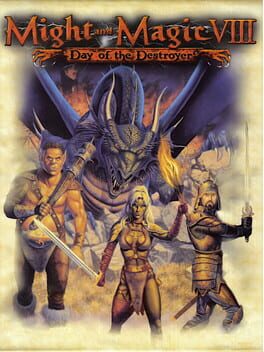
Save the world from elemental gates and the Destroyer in a classic RPG adventure.
Alternatives to The Lord of the Rings: The Third Age
View all →No alternatives listed yet. Browse similar tools →
The Verdict
AI-generated from listing dataBoth are classic, single‑purchase RPGs, but The Lord of the Rings: The Third Age offers turn‑based tactical combat with multiplayer on PS2, while Might and Magic VII provides a larger open world, dual combat modes, and richer class variety on PC.
Key differences
- •Combat system: A is strictly turn‑based; B lets you switch between real‑time and turn‑based.
- •World scope: A follows a linear story across movie locations; B features a fully open world with diverse environments.
- •Class depth: A has a fixed party of seven characters; B offers 36 class promotions across four races.
- •Multiplayer: A supports both single‑player and multiplayer; B is single‑player only.
- •Release platform: A is PlayStation 2‑only; B is a PC title (implied by era, not explicitly stated).
Gameplay & fun factor
B’s dual combat modes and 36 class combos give more variety than A’s fixed turn‑based party.
Platform availability
B runs on PC (implied), while A is limited to PlayStation 2, restricting modern access.
Price & value
Both list MSRP $49.99; value depends on player preference for content type.
Multiplayer / co‑op
A includes both single‑player and multiplayer modes; B is single‑player only.
Content & replayability
B promises over 100 hours of narrative and an open world, versus A’s more linear story.
Difficulty & accessibility
A’s turn‑based tactical combat is generally more forgiving than B’s potentially unforgiving combat.
Graphics & performance
Both have aging graphics, but A’s PS2 visuals are noted as dated; B’s PC graphics are also dated but not specified.
Choose Might and Magic VII: For Blood and Honor if…
Players who crave deep class customization, open‑world exploration, and flexible combat on PC.
Choose The Lord of the Rings: The Third Age if…
Players who want Tolkien‑themed turn‑based tactics and multiplayer on a console.
Common questions
Do either of these games support modern operating systems?
Not specified; A is PS2‑only, B is a 1999 PC release, likely requiring legacy compatibility.
Which game offers more content length?
B claims over a hundred hours of narrative and exploration; A’s length is not specified.
Is multiplayer available in both games?
Only A includes multiplayer; B is single‑player only.