


Moovit vs Organic Maps
Side-by-side comparison of features, pricing, ratings, and alternatives.

Moovit helps commuters and travelers find the fastest routes across buses, trains, metros, trams, and ferries in over 112 countries. The app combines official transit data with crowd‑sourced updates to deliver accurate arrival times and service alerts. Available on mobile and web, Moovit offers step‑by‑step navigation, offline maps, and personalized trip planning, making daily commutes and occasional trips hassle‑free.
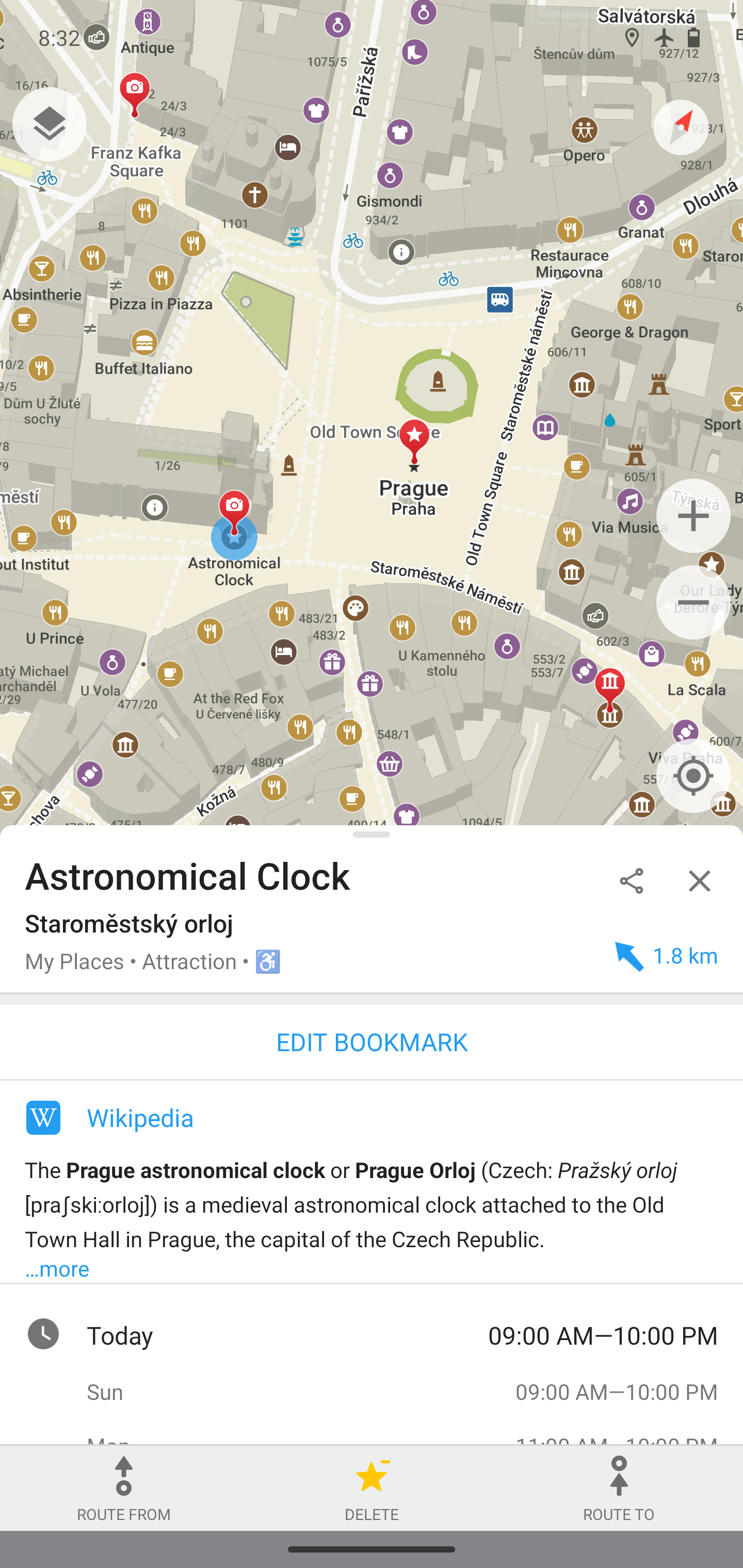
Organic Maps is a privacy-focused, open-source offline maps and GPS app licensed under the Apache License 2.0. It provides offline navigation with voice guidance, cycling routes, hiking trails, contour lines, elevation profiles, and metro maps, all without requiring an internet connection once maps are downloaded. The app collects no ads, tracking, or user data, and is completely free to use, with the project sustained through donations. It reached 6 million installs as of December 2025, and is available on iOS, Android (including Google Play and Huawei AppGallery), and Linux desktop via Flatpak and native packages.
- Extensive global coverage
- Accurate real‑time data
- Offline route planning
- Free tier with core features
- Completely free with no ads, tracking, or account required
- Fully functional offline once maps are downloaded
- Open-source codebase that can be independently audited
- Detailed hiking and cycling route data including elevation
- Ads in free version
- Limited premium features on some platforms
- Occasional discrepancies in crowd‑sourced data
- No real-time traffic or live transit data like commercial map apps
- Desktop support limited to Linux, with no native Windows or Mac app
- Relies on community-maintained map data rather than a large commercial team
More alternatives & similar tools
Alternatives to Moovit
View all →
Alternatives to Organic Maps
View all →


The Verdict
AI-generated from listing dataOrganic Maps offers completely free, privacy‑first offline navigation for outdoor activities, while Moovit provides real‑time public‑transit data with a freemium model and ads.
Key differences
- •Offline vs. real‑time: Organic Maps works fully offline; Moovit relies on live transit feeds.
- •Privacy: Organic Maps collects no data; Moovit shows ads and likely tracks usage.
- •Scope: Organic Maps focuses on hiking, cycling, driving maps; Moovit focuses on public‑transit and multimodal journeys.
- •Platform openness: Organic Maps is open‑source; Moovit is closed‑source with an API.
- •Pricing model: Organic Maps is entirely free; Moovit has a freemium tier with ads.
Pricing & value
Organic Maps is completely free with no ads; Moovit offers a free tier but includes ads and premium upgrades.
Ease of use / learning curve
Moovit provides step‑by‑step transit navigation and push notifications, which are more guided for commuters.
Features & depth
Moovit includes live arrival predictions, service alerts, and multimodal integration; Organic Maps lacks real‑time data.
Integrations & ecosystem
Moovit integrates with Google Maps, Apple Wallet, Uber and offers an API; Organic Maps has no listed integrations.
Security & privacy
Organic Maps collects no ads, tracking data, or personal info; Moovit shows ads and does not specify privacy stance.
Support
Moovit lists email and in‑app help center; Organic Maps provides no support details.
Scalability / lock‑in
Moovit’s API and cloud services support larger deployments; Organic Maps is a standalone mobile app.
Choose Moovit if…
Urban commuters who need live transit info, multimodal options, and integration with other services.
Choose Organic Maps if…
Outdoor enthusiasts needing reliable offline maps without ads or data collection.
Common questions
Is there any cost to use Organic Maps?
No, Organic Maps is free with no ads or premium tiers.
Can Moovit work without an internet connection?
It supports offline map download and route calculation, but live arrival predictions and alerts require connectivity.
Which app better protects my personal data?
Organic Maps explicitly collects no tracking data or personal information, while Moovit includes ads and does not state a privacy‑first policy.