


Moovit vs OsmAnd
Side-by-side comparison of features, pricing, ratings, and alternatives.


Moovit helps commuters and travelers find the fastest routes across buses, trains, metros, trams, and ferries in over 112 countries. The app combines official transit data with crowd‑sourced updates to deliver accurate arrival times and service alerts. Available on mobile and web, Moovit offers step‑by‑step navigation, offline maps, and personalized trip planning, making daily commutes and occasional trips hassle‑free.
OsmAnd is an offline maps and navigation app built on OpenStreetMap and Wikipedia data, letting users store detailed maps directly on their device so routing works without an internet connection. Because routes are calculated locally rather than through a remote server, the app emphasizes user privacy alongside offline reliability.
- Extensive global coverage
- Accurate real‑time data
- Offline route planning
- Free tier with core features
- Works fully offline once maps are downloaded
- Open-source with community-sourced map data
- No routes sent to external servers, aiding privacy
- Detailed customization of map layers
- Ads in free version
- Limited premium features on some platforms
- Occasional discrepancies in crowd‑sourced data
- Interface is less polished than mainstream mapping apps
- Exact pricing for OsmAnd+ and subscription tiers isn't listed on the main site
- Map data quality depends on OpenStreetMap coverage in a given area
More alternatives & similar tools
Alternatives to Moovit
View all →
Alternatives to OsmAnd
View all →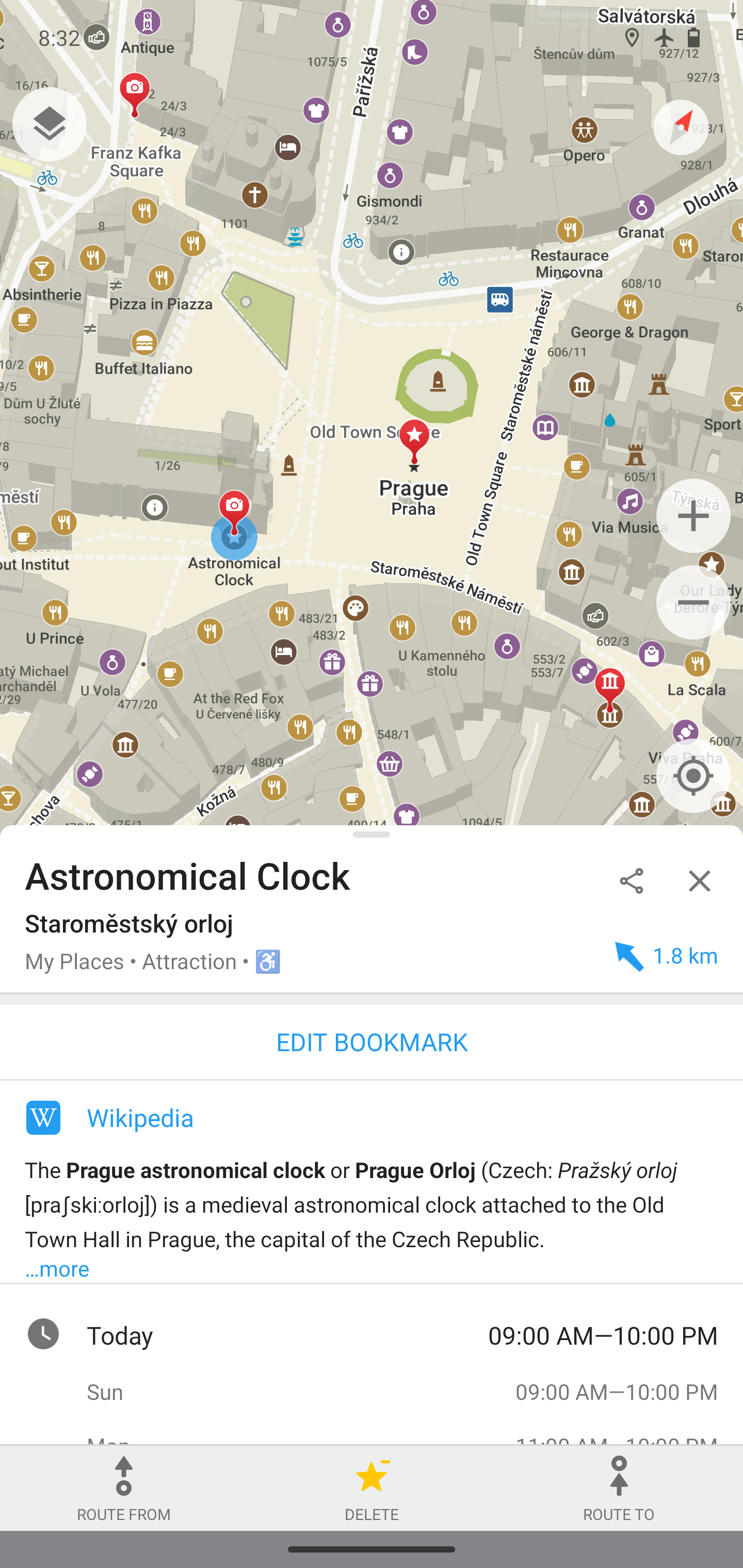
Privacy-focused offline maps and GPS navigation for hiking, cycling, and driving.


The Verdict
AI-generated from listing dataOsmAnd excels for offline, privacy‑focused navigation with map customization, while Moovit shines for real‑time public‑transit planning and multi‑modal integration.
Key differences
- •Offline capability: OsmAnd works fully offline after map download; Moovit offers offline route planning but still relies on live transit data.
- •Primary use case: OsmAnd targets hikers, cyclists, and drivers needing detailed map layers; Moovit targets commuters needing real‑time transit schedules.
- •Data source & privacy: OsmAnd uses OpenStreetMap data and keeps routes on device; Moovit pulls crowd‑sourced live transit data and shows ads in the free tier.
- •Integrations: Moovit integrates with Google Maps, Apple Wallet, Uber; OsmAnd has no listed third‑party integrations.
- •Open source vs closed: OsmAnd is open‑source; Moovit is not.
Pricing & value
Both offer freemium models; specific paid tier details are not provided for either.
Ease of use / learning curve
Moovit provides step‑by‑step transit navigation and push notifications, which are generally more beginner‑friendly than OsmAnd's less polished interface.
Features & depth
OsmAnd includes detailed offline maps, contour lines, hill‑shading, GPX recording, and extensive map layer customization.
Integrations & ecosystem
Moovit lists integrations with Google Maps, Apple Wallet, and Uber; OsmAnd lists none.
Security & privacy
OsmAnd keeps routing on device and is open‑source; Moovit shows ads and relies on external crowd‑sourced data.
Support
Moovit offers email and in‑app help center; OsmAnd support details are not specified.
Scalability / lock‑in
OsmAnd’s offline maps and open‑source nature avoid vendor lock‑in; Moovit depends on external live data services.
Choose Moovit if…
Urban commuters needing real‑time transit info and multi‑modal connections.
Choose OsmAnd if…
Outdoor enthusiasts or drivers needing fully offline, privacy‑first navigation.
Common questions
Can I navigate without any internet connection?
Yes with OsmAnd after maps are downloaded; Moovit allows offline route planning but still needs live data for real‑time updates.
Which app protects my location data better?
OsmAnd keeps routes on the device and is open‑source; Moovit sends data to servers for live predictions and shows ads.
Do either of these apps integrate with other services like Uber?
Moovit lists integrations with Google Maps, Apple Wallet, and Uber; OsmAnd does not list any integrations.