


Google Nest Learning Thermostat vs Sinope Smart Thermostat for Baseboard Heaters TH1123WF
Side-by-side comparison of features, pricing, ratings, and alternatives.

The Google Nest Learning Thermostat observes your temperature adjustments over the first week or two of use and automatically builds a personalized heating and cooling schedule, eliminating the need for manual programming that most people never bother to set up on traditional thermostats. Its built-in sensors detect when nobody is home and automatically switch to an energy-saving temperature (Auto-Schedule and Home/Away Assist), while a rotating dial UI on a sharp display makes manual adjustments simple without needing an app. Energy History reports show how much energy was used each day and why, helping identify savings opportunities, and integration with Google Home allows voice control alongside other smart home devices.
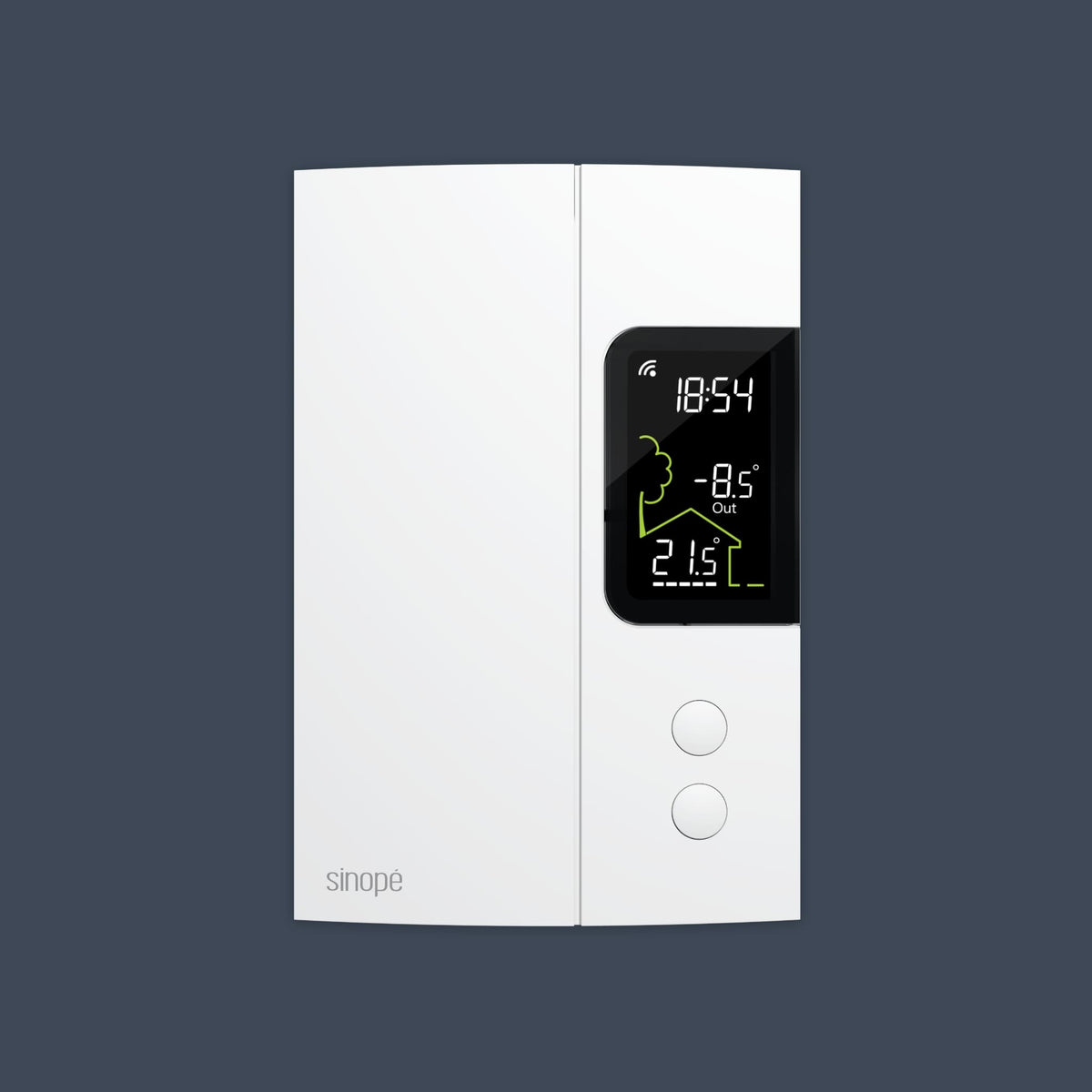
The TH1123WF is Sinope's Wi-Fi thermostat for electric baseboard heaters and convectors, rated to 3000W. This is a category most smart thermostats ignore: electric resistance heating is controlled at the heater rather than through a central furnace, so a standard smart thermostat cannot manage it. Sinope builds specifically for it. It connects directly over Wi-Fi with no proprietary hub required and works with Apple HomeKit, Amazon Alexa and Google Assistant, so it fits into an existing smart home rather than forcing a separate app silo. Sinope is a Canadian manufacturer with a three-year warranty and a product line covering thermostats, water leak protection, load control and lighting, and its devices qualify for several Canadian utility rebate programmes including Hilo by Hydro-Quebec and Peak Saver by BC Hydro.
Around $249.99 MSRP.
- Genuinely learns and adapts without setup effort
- Attractive, simple physical interface
- Real energy savings reporting
- Strong Google ecosystem integration
- One of the few smart thermostats that actually handles baseboard heat
- Works with all three major voice ecosystems
- No hub required for the Wi-Fi model
- Eligible for several Canadian utility rebates
- Requires compatible HVAC wiring (C-wire often needed)
- Premium price versus basic smart thermostats
- Some advanced scheduling requires manual override
- One thermostat is needed per heater, so whole-home cost adds up
- Requires an electrician for hard-wired installation
- Rebate programmes are mostly Canadian, limiting the value elsewhere
What reviewers say
Google Nest Learning Thermostat Reviews
4.0 (4)Does exactly what we need
Google Nest Learning Thermostat has quickly become part of our daily routine. Genuinely learns and adapts without setup effort. One minor gripe: some advanced scheduling requires manual override, but it hasn't been a dealbreaker. Would recommend.
Does exactly what we need
Google Nest Learning Thermostat has quickly become part of our daily routine. Real energy savings reporting. One minor gripe: premium price versus basic smart thermostats, but it hasn't been a dealbreaker. Would recommend.
Does exactly what we need
We've been using Google Nest Learning Thermostat for a few months now and it's genuinely made a difference. Strong Google ecosystem integration. One minor gripe: premium price versus basic smart thermostats, but it hasn't been a dealbreaker. Would recommend.
Sinope Smart Thermostat for Baseboard Heaters TH1123WF Reviews
No reviews yet.
More alternatives & similar tools
Alternatives to Google Nest Learning Thermostat
View all →
A smart thermostat with a built-in air quality monitor and room sensors.

Smart temperature control with room sensors for whole-home comfort.

Self-installable wired smart thermostat with a bridge, compatible with most boilers and heat pumps.
Alternatives to Sinope Smart Thermostat for Baseboard Heaters TH1123WF
View all →
High-voltage smart thermostat purpose-built for electric baseboard and in-wall heating.
The Verdict
AI-generated from listing dataThe Sinope thermostat is the clear choice for homes with electric baseboard heating, while the Nest excels for conventional HVAC systems with a focus on automated learning.
Key differences
- •Heating type support: Sinope is built for electric baseboards (up to 3000 W); Nest requires standard HVAC wiring (C‑wire).
- •Installation: Sinope needs a dedicated unit per heater and electrician wiring; Nest is a single‑zone device but may need a C‑wire.
- •Smart ecosystem: Sinope works with Apple HomeKit, Alexa and Google; Nest is tightly integrated with Google Home/Assistant only.
- •Pricing: Sinope MSRP CAD 109.99 vs Nest approx. US $249.99, making Sinope roughly half the cost.
- •Warranty: Sinope offers a 3‑year warranty; Nest warranty not specified in the provided data.
Pricing
Sinope costs CAD 109.99, about half the Nest’s ~US $250 price.
Warranty
Sinope provides a 3‑year warranty; Nest warranty not listed.
Heating Compatibility
Sinope handles up to 3000 W electric baseboards; Nest requires compatible HVAC and often a C‑wire.
Smart Ecosystem Integration
Both support major voice assistants, but Sinope adds Apple HomeKit; Nest is Google‑only.
Installation Complexity
Nest is a single‑zone unit; Sinope needs one thermostat per heater and professional wiring.
Utility Rebates
Sinope qualifies for Canadian utility rebate programs; Nest rebate information not provided.
Choose Google Nest Learning Thermostat if…
Homeowners with conventional HVAC systems who want learning automation and Google ecosystem focus.
Choose Sinope Smart Thermostat for Baseboard Heaters TH1123WF if…
Homeowners with electric baseboard or convector heating seeking lower cost and rebate eligibility.
Common questions
Can the Sinope thermostat replace a traditional thermostat for a whole house?
No, each electric baseboard heater needs its own Sinope unit, so whole‑home cost adds up.
Does the Nest Learning Thermostat work with electric baseboard heaters?
Not specified; Nest requires compatible HVAC wiring and typically a C‑wire, not designed for baseboard loads.
Which thermostat offers a longer warranty?
Sinope provides a 3‑year warranty; Nest warranty details are not provided in the given facts.