


Text2Video-Zero vs VMEG AI Video Translator
Side-by-side comparison of features, pricing, ratings, and alternatives.
Text2Video-Zero is a software that leverages text-to-image diffusion models to generate videos from text prompts. This technology enables zero-shot video generation, meaning it can produce videos without requiring any prior training data. The software is based on research presented at ICCV 2023 and is available on GitHub.
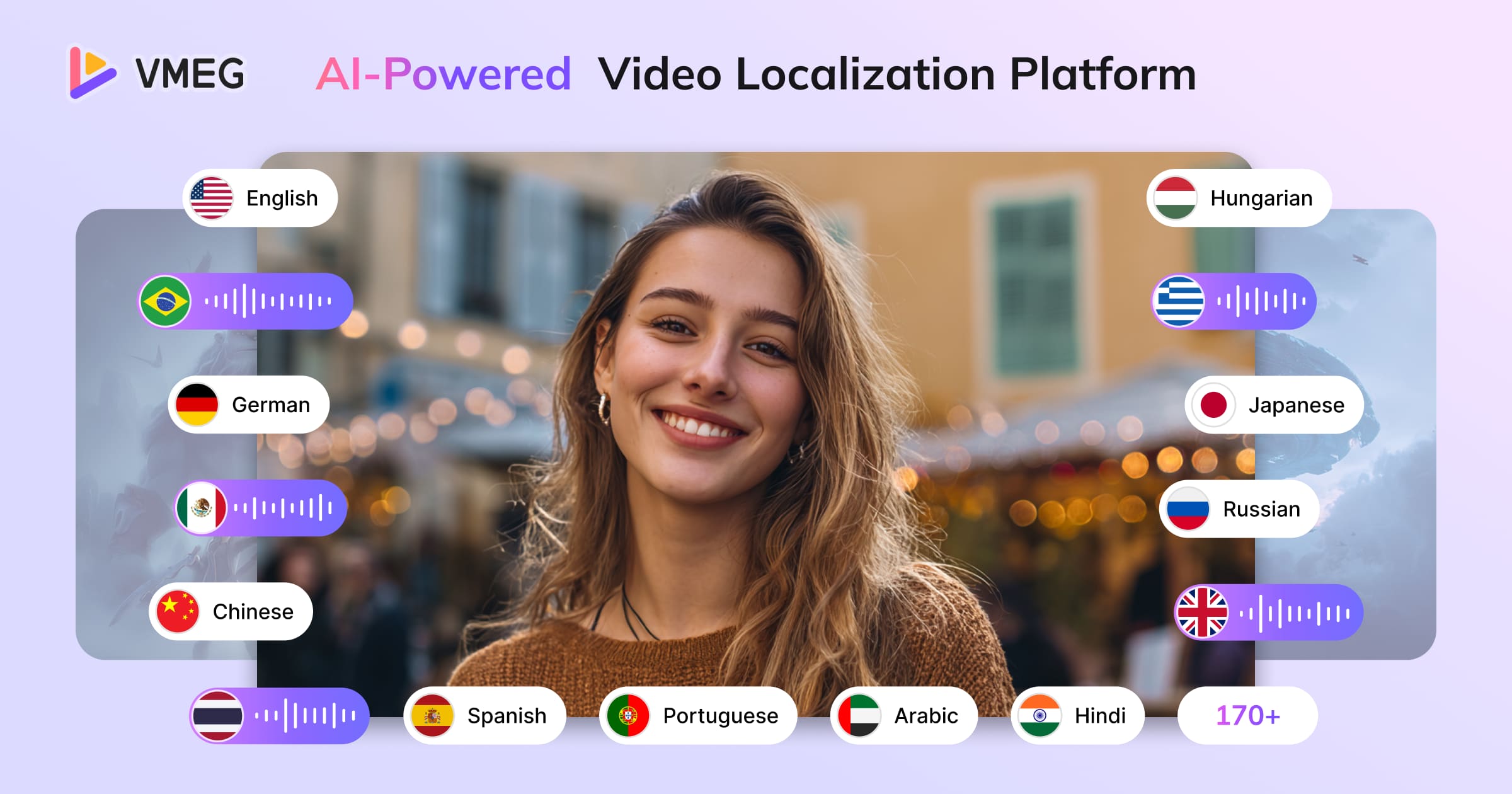
VMEG AI Video Translator is an online localization tool that turns videos in any supported format into multilingual content. It translates spoken content into 170+ languages and offers three main output options: a fully dubbed video, translated subtitles, or a separate audio track. Users can upload a file, paste a supported public video link, or pull an existing project from their workspace, making it flexible for creators, educators, and business teams. At the core of the tool is a studio-style dashboard where users can review translated scripts, edit text, adjust voice speed, volume, and tone, and assign voices per speaker. VMEG leverages 17,000+ AI voices and supports voice cloning to keep speakers recognizable across languages. It also detects multiple speakers in interviews, webinars, and conferences, while background music and non-speech audio can remain separate from the translated dialogue. Lip sync can be enabled to better match translated speech to the speaker's mouth movements. VMEG is positioned as a privacy-first, enterprise-ready platform. Customer data is encrypted using AES-256 at rest and TLS 1.3 in transit, isolated by workspace, and not used to train AI models by default. The tool also includes batch production and automation features, making it suitable for large-scale video localization workflows, global content distribution, and professional production standards.
- Zero-shot video generation capability
- AI-powered technology for video creation
- Open-source software for community collaboration
- Research-oriented and based on ICCV 2023 presentation
- All-in-one localization workflow replaces separate transcription, translation, voiceover, and editing tools
- Supports 170+ languages and 17,000+ AI voices with flexible output formats
- Voice cloning and multi-speaker separation keep dialogue natural and recognizable
- Lip sync alignment makes dubbed videos look more polished and human-like
- Limited user interface and user experience
- Requires technical expertise for usage and customization
- Limited support options available
- Pricing, credits, and usage limits are not transparent until you sign in to your VMEG account
- Video length and file-size limits depend on your account and processing settings, which can restrict large projects
- Advanced features like lip sync and voice cloning may not be available in every workflow and require exploring the dashboard
- Public video links only work for supported sources and you must have permission to process the content
More alternatives & similar tools
Alternatives to Text2Video-Zero
View all →


Alternatives to VMEG AI Video Translator
View all →
The Verdict
AI-generated from listing dataText2Video‑Zero is a free, open‑source tool for researchers to generate videos from text prompts, while VMEG AI Video Translator is a paid SaaS that localizes existing videos into 170+ languages with dubbing and lip‑sync.
Key differences
- •Text2Video‑Zero creates new video content from text; VMEG translates and dubs existing video content.
- •Pricing: Text2Video‑Zero is free; VMEG’s cost and usage limits are not disclosed.
- •Ease of use: Text2Video‑Zero requires technical expertise and self‑hosting; VMEG offers an online studio with a ready UI.
- •Security: VMEG provides explicit AES‑256 encryption and workspace isolation; Text2Video‑Zero has no stated security features.
- •Target audience: Text2Video‑Zero is aimed at researchers/developers; VMEG targets content creators and YouTubers.
Pricing & value
Text2Video‑Zero is free; VMEG’s pricing is unknown and likely subscription‑based.
Ease of use / learning curve
VMEG offers an online studio for non‑technical users; Text2Video‑Zero has limited UI and needs coding.
Features & depth
VMEG provides translation, dubbing, voice cloning, lip‑sync, subtitles; Text2Video‑Zero only generates video from text.
Integrations & ecosystem
Text2Video‑Zero is open‑source with API and GitHub repo; VMEG lists no integration details.
Support
Both offer limited info: Text2Video‑Zero via GitHub Issues; VMEG’s support not specified.
Security & privacy
VMEG specifies AES‑256 at rest, TLS 1.3, workspace isolation; Text2Video‑Zero has no security claims.
Scalability
VMEG runs on AWS with enterprise‑grade infrastructure; Text2Video‑Zero relies on user’s self‑hosted resources.
Choose Text2Video-Zero if…
Researchers or developers who need a free, self‑hosted tool to generate videos from text prompts.
Choose VMEG AI Video Translator if…
Content creators needing an easy, cloud‑based solution to translate, dub, and subtitle existing videos.
Common questions
What is the cost to use each product?
Text2Video‑Zero is free; VMEG’s pricing and usage limits are not disclosed publicly.
Do I need programming skills to get started?
Yes for Text2Video‑Zero (self‑hosted, Python code); VMEG provides a web UI requiring no coding.
Can either tool translate videos into other languages?
Only VMEG offers translation, dubbing, and subtitle generation; Text2Video‑Zero does not provide translation features.