


The Age of Decadence vs The Bard's Tale II: The Destiny Knight
Side-by-side comparison of features, pricing, ratings, and alternatives.
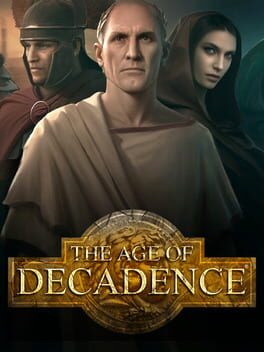
The Age of Decadence is a pseudo‑isometric 3D turn‑based role‑playing game set in a grim, low‑magic world inspired by the fall of the Roman Empire. Players navigate a shattered landscape of rival factions, ancient mysteries, and brutal politics, shaping the story through deep dialogue trees and consequential actions.\n\nDesigned by Iron Tower Studio, the game emphasizes strategic combat, extensive skill customization, and multiple solutions to quests, offering seven distinct endings and a world that reacts dynamically to the player’s decisions.
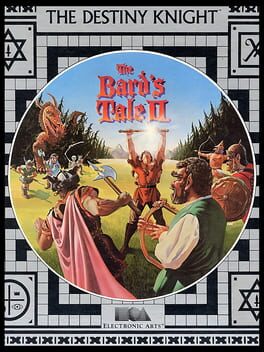
The Bard's Tale II: The Destiny Knight expands the classic RPG formula with a massive wilderness to explore, full‑color scrolling mazes, and a brand‑new Archmage class boasting eight powerful spells. Players battle wolves, slime‑ball conjurers, and other fantasy foes while navigating 25 intricate mazes between six cities. The game challenges players with a mapping system unlike any previous fantasy title, demanding careful navigation and strategic spell use. Developed by Interplay Productions and published by Electronic Arts in 1986, it remains a single‑player, turn‑based adventure for retro enthusiasts.
- Deep, consequence‑rich dialogue system
- Robust skill and class customization
- Multiple quest solutions encourage replayability
- Rich, immersive world inspired by historical collapse
- Huge wilderness map with unique navigation challenge
- New Archmage class adds fresh spell variety
- 25 colorful scrolling mazes provide extensive content
- Authentic retro graphics and music for nostalgia
- Steep learning curve for new players
- Limited visual polish compared to modern titles
- Sparse tutorial leaves some mechanics unclear
- High difficulty curve may deter newcomers
- Limited save system can make long sessions risky
- Single‑player only, no multiplayer options
More alternatives & similar tools
Alternatives to The Age of Decadence
View all →No alternatives listed yet. Browse similar tools →
Alternatives to The Bard's Tale II: The Destiny Knight
View all →
Journey through time‑warped realms to stop the Mad God Tarjan.
Embark on a classic fantasy RPG adventure with multiple party members.
Epic real‑time RPG adventure blending fantasy and sci‑fi on a single journey.
The Verdict
AI-generated from listing dataBoth are single‑player, turn‑based RPGs, but A offers classic retro wilderness exploration, while B provides deep, consequence‑driven storytelling and skill customization.
Key differences
- •A focuses on a massive wilderness map and scrolling mazes; B emphasizes branching dialogue and faction politics.
- •A introduces a new Archmage class with eight spells; B offers a broad skill system covering combat, stealth, and magic.
- •A’s graphics and music are retro 1986 style; B has modern but modest visual polish.
- •A has a high difficulty curve and limited save system; B also has a steep learning curve but includes multiple quest solutions and endings.
Pricing & value
A price not specified; B costs $19.99, making direct price comparison impossible.
Gameplay & fun factor
B provides tactical turn‑based combat plus extensive dialogue choices, offering more varied player agency.
Content & replayability
B includes seven endings, multiple quest solutions, and mod support; A has fixed wilderness and mazes.
Difficulty & accessibility
A’s high difficulty and limited saves may deter newcomers, but its mechanics are straightforward classic RPG.
Graphics & performance
B uses modern graphics (though limited polish); A uses authentic 1986 retro graphics.
Multiplayer / co‑op
Both are single‑player only.
Choose The Age of Decadence if…
Players seeking deep story choices, faction dynamics, and modern skill customization.
Choose The Bard's Tale II: The Destiny Knight if…
Fans of classic 80s turn‑based RPGs who want nostalgic graphics and a huge wilderness to explore.
Common questions
What is the price of each game?
A's price is not specified; B costs $19.99 (one‑time purchase).
Which game offers more replay value?
B offers multiple endings, varied quest solutions, and mod support, giving higher replayability than A.
Are either of the games multiplayer?
Both are single‑player only.