


Ultima III: Exodus vs Ultima IV: Quest of the Avatar
Side-by-side comparison of features, pricing, ratings, and alternatives.
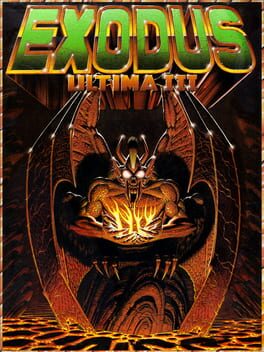

In Ultima III: Exodus, players answer Lord British’s call to confront a new, terrifying menace rising from the southwestern seas. The fiery island of Exodus harbors dark forces that threaten the peace of the Kingdom of Britannia, and only a brave party can uncover its secrets and defeat the evil within. Explore a richly detailed fantasy world, battle Orc raids, pirate fleets, and the mysterious entity from the depths of Hell. Build your party, gather powerful artifacts, and unravel the ancient manuscript fragments that hint at a sinister alliance between Mondain and Minax.
Ultima IV invites players to explore the newly formed kingdom of Britannia, where the ultimate goal is not to slay a final villain but to embody the Eight Virtues and become the Avatar. The game blends classic top‑down exploration with first‑person dungeon crawling, offering a rich narrative driven by moral choices and character development. With color graphics, a robust virtue system, and the ability to recruit NPCs into your party, Ultima IV set new standards for role‑playing games in 1985 and remains a benchmark for ethical gameplay and open‑world design.
- Rich, lore‑heavy storyline
- Strategic turn‑based combat
- Deep party customization
- Authentic retro graphics and music
- Innovative virtue system that rewards moral play
- Rich open‑world with diverse locations
- Iconic retro graphics and music
- Deep NPC interaction without character creation
- Limited modern UI conveniences
- High difficulty curve for newcomers
- Single‑player only
- Interface can feel dated for modern players
- Limited combat variety compared to contemporary RPGs
- No official multiplayer or co‑op support
More alternatives & similar tools
Alternatives to Ultima III: Exodus
View all →Embark on a moral quest to become the Avatar in a vibrant open‑world fantasy RPG.

A whimsical fantasy adventure where Malcolm seeks sweet revenge
Embark on a new generation quest to retrieve the Orb of Earithin

Travel through time to stop Minax and restore Earth’s history.
Alternatives to Ultima IV: Quest of the Avatar
View all →Embark on a heroic quest to stop the fiery island of Exodus threatening Britannia

The epic conclusion to the classic Wizardry saga, blending deep role‑playing with a rich fantasy world.

Explore shattered realms to free Castle Britannia from the Guardian’s blackrock spell

The Verdict
AI-generated from listing dataBoth are classic single‑player RPGs; choose Ultima IV for a virtue‑driven open world, or Ultima III for turn‑based combat and party customization.
Key differences
- •Virtue system vs turn‑based combat mechanics
- •Open‑world exploration with moongates (IV) vs overworld map with islands (III)
- •Party composition: NPC allies without class selection (IV) vs customizable four‑hero party (III)
- •Release era: 1985 (IV) vs 1983 (III) – slightly newer UI in IV
- •Critic score provided for IV (85/100); none listed for III
Gameplay & fun factor
IV offers virtue‑based moral play; III offers strategic turn‑based battles – different but equally engaging.
Platform availability
No platform data provided for either title.
Pricing & value
IV listed at $19.99; price for III not specified, making IV the only known cost.
Multiplayer / co‑op
Both are single‑player only.
Content & replayability
IV’s open world and virtue paths vs III’s branching narrative – each offers distinct replay hooks.
Difficulty & accessibility
III noted for a high difficulty curve; IV’s difficulty not highlighted.
Graphics & performance
Both feature authentic early‑80s pixel graphics and retro soundtracks.
Choose Ultima III: Exodus if…
Players who prefer classic turn‑based combat, deep party customization, and a lore‑heavy story.
Choose Ultima IV: Quest of the Avatar if…
Players who value moral choices, open‑world exploration, and a single‑hero experience.
Common questions
What is the price of each game?
Ultima IV is listed at $19.99; Ultima III price is not specified in the provided data.
Is there any multiplayer or co‑op option?
Both games are single‑player only.
Which game is harder for new players?
Ultima III is described as having a high difficulty curve, while no difficulty comment is given for Ultima IV.