


A Mind Forever Voyaging vs Timequest
Side-by-side comparison of features, pricing, ratings, and alternatives.
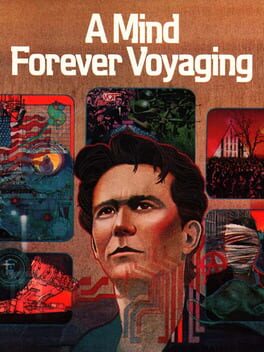
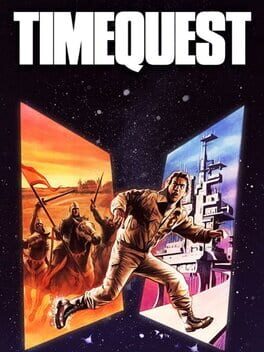
A Mind Forever Voyaging is an interactive fiction game released in 1985 by Infocom. Set in the year 2031, you awaken from a simulated life to test a controversial political plan, exploring a bleak world of economic stagnation, urban decay, and looming authoritarianism.
Timequest is an interactive fiction game for MS-DOS where players step into the boots of a Temporal Corps private. Tasked with saving civilization, you must use a time machine called an interkron to track down the rogue Lieutenant Zeke S. Vettenmyer across millennia of human history. Vettenmyer has maliciously altered critical historical events, threatening to unravel the very fabric of the present. Explore various eras, solve intricate temporal puzzles, and reverse the catastrophic changes before your own existence is erased from the timestream.
- Deep political commentary
- Rich, descriptive prose
- Complex simulation of future scenarios
- Classic Infocom text parser
- Engaging time-travel sci-fi narrative spanning 3,000 years
- Challenging puzzles that require careful historical deduction
- Classic retro MS-DOS aesthetic and text adventure style
- Intriguing plot involving rogue temporal agents and altered timelines
- Text‑only interface may deter modern players
- Limited replayability after story completion
- Requires patience with command input
- Text-based interface may feel dated to modern gamers
- Steep difficulty curve common in classic 90s adventure titles
- Limited to single-player offline experiences
More alternatives & similar tools
Alternatives to A Mind Forever Voyaging
View all →Alternatives to Timequest
View all →A 1985 Infocom text adventure that simulates a dystopian future to critique politics

Travel through time to save the world from an ancient destructive force in this classic JRPG.

Adventure meets action in a time‑bending Indiana Jones quest
The Verdict
AI-generated from listing dataBoth are classic text adventures, but A offers a politically charged simulation with modern Mac support, while B delivers a sprawling time‑travel puzzle story rooted in 1990s MS‑DOS style.
Key differences
- •A focuses on political commentary set in a dystopian 2031 simulation; B centers on time‑travel across 3,000 years.
- •A runs on modern Mac via emulation; B is a native MS‑DOS title with no listed modern platform support.
- •A’s price is known ($9.99); B’s price is not specified.
- •A’s replayability is limited after story completion; B’s longer timeline may provide more content to explore.
- •A’s puzzles are driven by a sophisticated Infocom parser; B emphasizes challenging historical deduction puzzles.
Pricing & value
A costs $9.99; B price not specified, so value cannot be directly compared.
Platform availability
A runs on modern Mac via emulation; B is a native MS‑DOS title with no modern platform info.
Gameplay & fun factor
Both are text‑only interactive fiction; enjoyment depends on preference for political simulation vs time‑travel puzzles.
Multiplayer / co‑op
Both are single‑player experiences.
Content & replayability
B spans 3,000 years of events, offering more narrative breadth than A’s single simulation.
Difficulty & accessibility
A’s Infocom parser is praised for sophistication; B is noted for a steep difficulty curve.
Graphics & performance
Both are text‑only interfaces with no graphics.
Choose A Mind Forever Voyaging if…
Fans who want a politically themed, classic Infocom adventure and modern Mac compatibility.
Choose Timequest if…
Players seeking an extensive time‑travel narrative with challenging historical puzzles.
Common questions
What is the cost of each game?
A Mind Forever Voyaging costs $9.99; Timequest price is not specified in the provided data.
Can I play these games on a current Windows PC?
A runs on modern Mac via emulation; no Windows support is mentioned. Timequest is a native MS‑DOS title with no listed modern OS support.
Which game offers more content to explore after finishing the main story?
Timequest spans 3,000 years of historical settings, likely providing more post‑completion content than A's single simulation.