


Adobe After Effects vs DaVinci Resolve
Side-by-side comparison of features, pricing, ratings, and alternatives.
Adobe After Effects is software for motion graphics, compositing and visual effects, used for titles, animation and video post-production. It is sold by subscription through Adobe Creative Cloud for Windows and macOS.
DaVinci Resolve is a professional-grade video editor famous for its industry-leading color grading, combining editing, color, visual effects, and audio post-production in a single application. Its free version is remarkably capable, making pro tools accessible to hobbyists and studios alike.
Free version available; DaVinci Resolve Studio is a $295 one-time purchase.
- Industry standard for motion graphics and compositing
- Large ecosystem of plugins and templates
- Works closely with Premiere Pro and Photoshop
- Best-in-class color grading
- Extremely capable free version
- All-in-one edit/color/audio/VFX
- One-time purchase for Studio (no subscription)
- Subscription only
- Steep learning curve
- Previews can be slow on complex compositions
- Steep learning curve
- Demands a powerful GPU
- Heavier than lightweight editors
What reviewers say
Adobe After Effects Reviews
No reviews yet.
DaVinci Resolve Reviews
4.7 (3)Solid choice
We rolled out DaVinci Resolve last quarter. One-time purchase for Studio (no subscription). No real complaints. Would recommend.
Great video-editing
DaVinci Resolve has been part of our stack. Extremely capable free version. Minor gripe: heavier than lightweight editors. Would recommend.
Solid choice
DaVinci Resolve has been part of our stack. Extremely capable free version. No real complaints. Would recommend.
More alternatives & similar tools
Alternatives to Adobe After Effects
View all →

Alternatives to DaVinci Resolve
View all →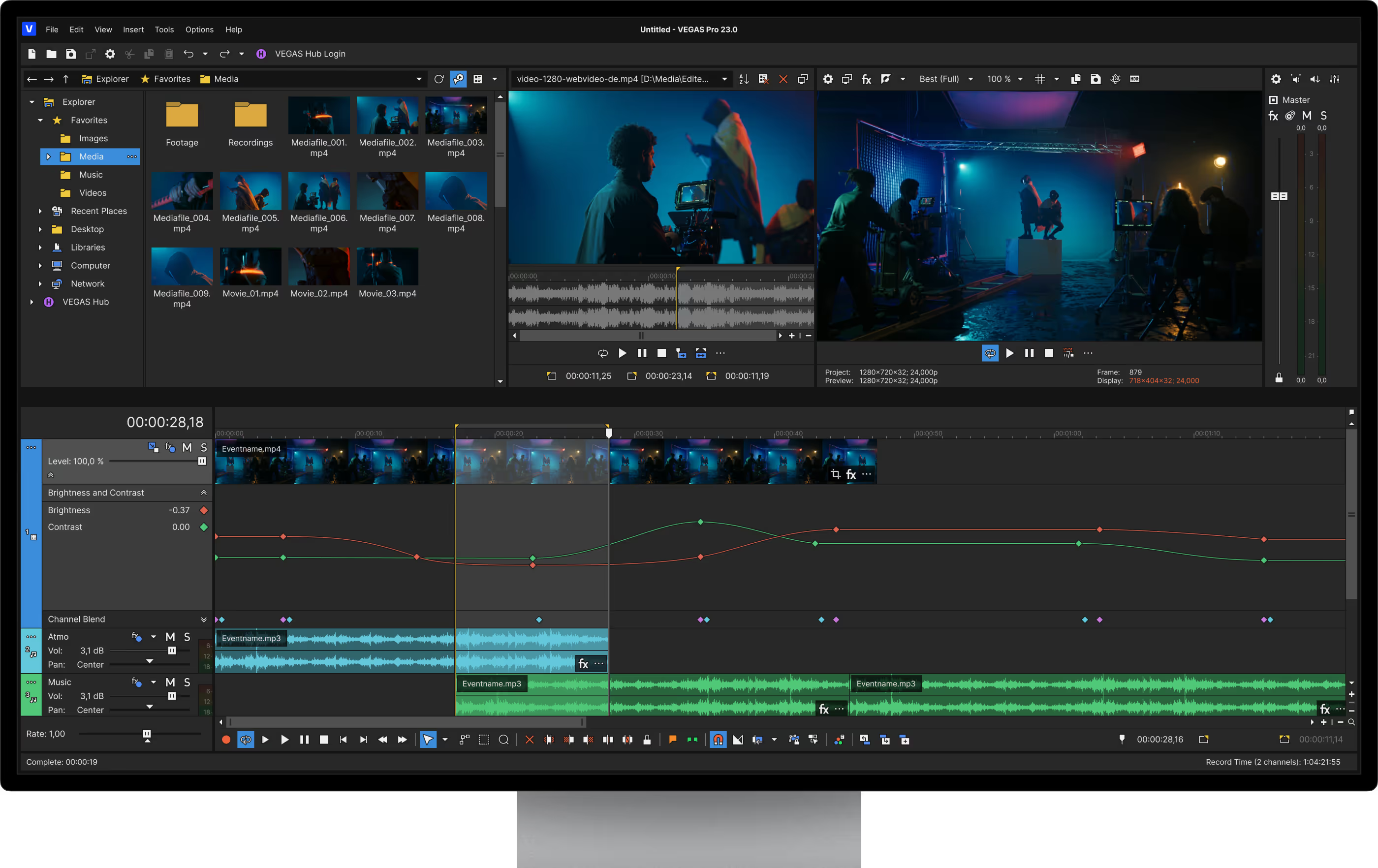

The Verdict
AI-generated from listing dataDaVinci Resolve offers a powerful free tier and a one‑time purchase, while After Effects requires a subscription and focuses on motion graphics integration.
Key differences
- •Free version vs. subscription model
- •Color grading depth vs. motion‑graphics specialization
- •All‑in‑one editing/audio/VFX vs. dedicated compositing tool
- •Cross‑platform desktop app vs. Adobe Creative Cloud ecosystem
- •Hardware demands (GPU‑intensive vs. less specified)
Pricing & value
Resolve provides a free tier and a one‑time $295 purchase; After Effects is subscription‑only.
Ease of use / learning curve
Both have steep learning curves; no data indicates one is easier.
Features & depth
Resolve includes editing, color, audio, VFX in one app; After Effects focuses on motion graphics/compositing.
Integrations & ecosystem
After Effects integrates tightly with Premiere Pro, Photoshop, and a large plugin marketplace.
Collaboration
After Effects is part of Adobe Creative Cloud, which offers cloud‑based collaboration tools.
Scalability
Resolve runs on Windows, macOS, Linux and scales with GPU power; no subscription limits.
Support
After Effects benefits from Adobe’s enterprise support; Resolve’s support details not specified.
Choose Adobe After Effects if…
Motion designers who rely on Adobe’s plugin ecosystem and need tight integration with Premiere Pro or Photoshop.
Choose DaVinci Resolve if…
Video editors or filmmakers who need editing, color, audio, VFX in one app and want a free or one‑time cost.
Common questions
Is there a free version of DaVinci Resolve?
Yes, Resolve offers a free tier with most core features; the Studio version costs $295 one‑time.
Do I have to subscribe to use After Effects?
Yes, After Effects is only available via a subscription model.
Which tool is better for color grading?
DaVinci Resolve is noted for industry‑leading color grading on its Color page.