


Baldur's Gate vs Eye of the Beholder III: Assault on Myth Drannor
Side-by-side comparison of features, pricing, ratings, and alternatives.
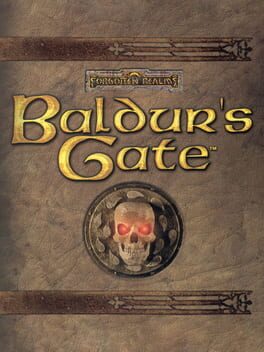
Baldur's Gate is a seminal isometric role-playing game set in the Forgotten Realms universe of Dungeons & Dragons. Players control a custom protagonist venturing across the Sword Coast to uncover a dangerous political conspiracy and unravel the mystery surrounding their own sinister lineage. Featuring an expansive world filled with intricate lore, mysterious dungeons, and vibrant cities, the game established a new standard for computer RPGs. Combat combines real-time action with a tactical pause feature, enabling precise party control during intense encounters against fantastical beasts and hostile factions. Players can recruit up to six companions, balance party alignment, and navigate moral choices while enjoying rich storytelling across Linux, PC, iOS, and Mac platforms.
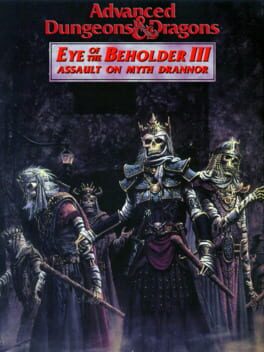
Explore the legendary city of Myth Drannor from a true first‑person perspective in this 3‑D AD&D 2nd Edition RPG. Move through dense forests, open doors, and interact with the environment as you guide your party of classic fantasy heroes. Combat is real‑time and tactical: melee characters swing swords and maces, while spellcasters unleash magic from holy symbols and spellbooks. Every action is seen through your eyes, delivering an immersive adventure in the Forgotten Realms.
- Deep tactical combat system using real-time-with-pause controls.
- Expansive fantasy narrative with rich companion banter and alignment dynamics.
- Authentic implementation of Dungeons & Dragons rules and lore.
- Flexible cross-platform support across Linux, PC, Mac, and iOS.
- First‑person perspective adds immersion
- Authentic AD&D 2nd Edition rules
- Fully 3‑D environments for its era
- Cross‑platform support
- Steep initial learning curve for players unfamiliar with AD&D 2nd Edition rules.
- Pathfinding AI can occasionally cause party members to get stuck in tight corridors.
- Retro 1998 graphics and UI may feel dated to modern audiences.
- Dated graphics by modern standards
- Limited UI can feel clunky
- Single‑player only
More alternatives & similar tools
Alternatives to Baldur's Gate
View all →
Alternatives to Eye of the Beholder III: Assault on Myth Drannor
View all →Embark on an epic Dungeons & Dragons tactical RPG adventure along the iconic Sword Coast.
The Verdict
AI-generated from listing dataBaldur's Gate offers far more content, party depth, and co‑op play, while Eye of the Beholder III delivers a niche first‑person AD&D experience with limited scope.
Key differences
- •Perspective: Eye of the Beholder III is first‑person; Baldur's Gate uses classic isometric view.
- •Party size: Eye of the Beholder III follows a fixed party; Baldur's Gate lets you recruit up to six companions.
- •Multiplayer: Eye of the Beholder III is single‑player only; Baldur's Gate includes cooperative online play.
- •Content breadth: Baldur's Gate features an expansive open world, hundreds of spells/items; Eye of the Beholder III has a smaller, single‑location adventure.
- •Release era and graphics: Eye of the Beholder III (1993) has older graphics than Baldur's Gate (1998).
Gameplay & fun factor
Baldur's Gate provides deep tactical combat, party management, and expansive story versus limited single‑party action in Eye of the Beholder III.
Platform availability
Both run on Linux, Windows, macOS; Baldur's Gate adds iOS support, giving it broader reach.
Pricing & value
Eye of the Beholder III price not specified; Baldur's Gate costs $19.99, making direct value comparison impossible.
Multiplayer / co‑op
Baldur's Gate supports single‑player and cooperative multiplayer; Eye of the Beholder III is single‑player only.
Content & replayability
Baldur's Gate offers an open world, many spells, items, and six companion slots, far exceeding Eye of the Beholder III's limited scope.
Difficulty & accessibility
Both use AD&D 2nd Edition rules; Eye of the Beholder III has a clunky UI, Baldur's Gate has a steep learning curve.
Graphics & performance
Eye of the Beholder III (1993) has older graphics; Baldur's Gate (1998) is newer, though both are retro by modern standards.
Choose Baldur's Gate if…
Players seeking a rich story, party customization, co‑op play, and higher overall content value.
Choose Eye of the Beholder III: Assault on Myth Drannor if…
Fans who want a pure first‑person AD&D experience and are fine with single‑player, dated UI, and limited content.
Common questions
What is the price of Eye of the Beholder III?
The price is not specified in the provided information.
Does Baldur's Gate support cooperative multiplayer?
Yes, Baldur's Gate includes single‑player and cooperative multiplayer modes.
Which game has a known critic score?
Baldur's Gate has a critic score of 91/100; no critic score is listed for Eye of the Beholder III.