


Battleground 3: Waterloo vs Battles in Normandy
Side-by-side comparison of features, pricing, ratings, and alternatives.
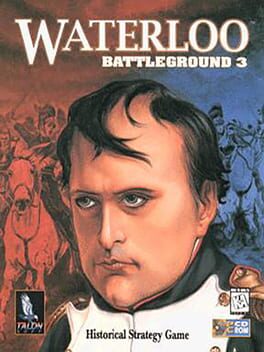
Battleground 3: Waterloo lets players reenact the famous 1815 battle with detailed unit management and authentic terrain. The game blends deep strategic planning with a user‑friendly interface, making it accessible for both veterans and newcomers to historical wargames. Set on a hex‑grid map, the title offers both single‑player campaigns against AI and multiplayer skirmishes, delivering endless replayability for history buffs and strategy enthusiasts alike.
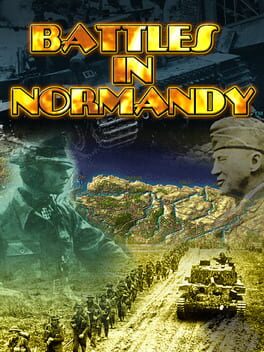
Battles in Normandy is a historically‑accurate turn‑based strategy game that puts players in charge of Allied operations during the 1944 Normandy invasion. The game features a hex‑grid map, realistic unit statistics, and a deep order‑of‑battle system that rewards careful planning. Developed by Strategic Studies Group and published by Matrix Games, the title offers both single‑player scenarios and multiplayer battles, allowing enthusiasts to recreate historic engagements or devise their own tactics against friends.
- Deep strategic depth
- Accurate historical representation
- Robust multiplayer options
- Extensive scenario editor
- Deep historical accuracy
- Robust multiplayer options
- Extensive unit variety
- Custom scenario editor
- Steep learning curve for newcomers
- Limited graphics by modern standards
- No official mod support beyond built‑in editor
- Steep learning curve for newcomers
- Outdated graphics
- Limited UI customization
More alternatives & similar tools
Alternatives to Battleground 3: Waterloo
View all →
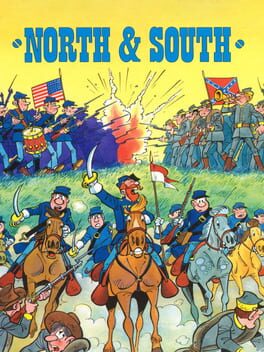
Command Union or Confederate forces in a humorous, strategic Civil War turn-based wargame.
Alternatives to Battles in Normandy
View all →
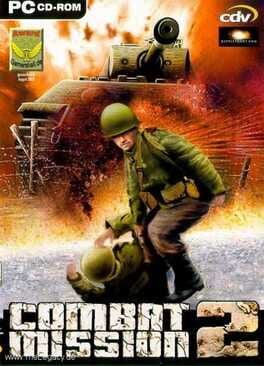
World War II tactical combat brought to life in turn‑based detail
Relive the brutal 1944 Korsun Pocket clash in deep turn‑based strategy

Relive the daring D-Day parachute drops in a realistic strategy simulation.
The Verdict
AI-generated from listing dataBoth games offer deep, historically‑focused turn‑based strategy, but Battles in Normandy (A) provides broader unit variety and richer logistics, while Battleground 3: Waterloo (B) is older with a simpler scope focused on Napoleonic regiments.
Key differences
- •Era covered: WWII (A) vs Napoleonic 1815 (B).
- •Unit depth: A includes infantry, armor, supply mechanics; B focuses on regiments and formation.
- •Release age: A (2004) is newer than B (1996), affecting UI and graphics expectations.
- •Multiplayer capacity: A offers hot‑seat and online play; B supports up to 8 players hot‑seat or networked.
- •Scenario editor: Both have editors, but A’s editor is noted for community sharing.
Gameplay & fun factor
A’s hex map, logistics, and varied unit types create deeper tactical choices than B’s regiment‑level focus.
Platform availability
Both are PC‑only; no other platforms listed for either.
Price & value
A costs $39.99; B has no listed price, so A’s known cost offers clearer value assessment.
Multiplayer / co‑op
A supports both hot‑seat and online play; B only mentions hot‑seat or networked matches without online matchmaking.
Content & replayability
A includes extensive unit roster, supply mechanics, and a community‑shared scenario editor; B’s content is narrower.
Difficulty & accessibility
Both note a steep learning curve for newcomers and no specific accessibility aids.
Graphics & performance
B’s graphics are described as limited by modern standards, but A is explicitly called outdated, making both comparable; B is slightly newer.
Choose Battleground 3: Waterloo if…
Buyers preferring Napoleonic battles with simpler unit management.
Choose Battles in Normandy if…
Buyers who want WWII depth, logistics, and online multiplayer.
Common questions
What is the cost of each game?
Battles in Normandy is priced at $39.99; Battleground 3: Waterloo’s price is not specified.
Can I play online with friends?
Yes, Battles in Normandy offers online multiplayer; Battleground 3: Waterloo only supports hot‑seat or LAN.
Which game has more detailed unit variety?
Battles in Normandy includes infantry, armor, and supply mechanics, while Battleground 3: Waterloo focuses on regiments.