


Bedlam vs Burai Fighter
Side-by-side comparison of features, pricing, ratings, and alternatives.
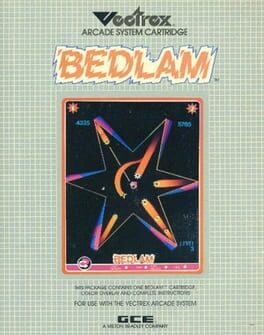
Bedlam flips the classic Tempest formula, placing your ship in the center of a sector while enemy craft surge outward from the edges. You steer left and right, using a Fast Rotate button to spin quickly and a single-use Zap to clear the screen when overwhelmed. The game features multiple enemy types, sector variations, and a simple ship‑loss mechanic that ends the game when all reserves are gone, offering both single‑player and multiplayer challenges for arcade enthusiasts.
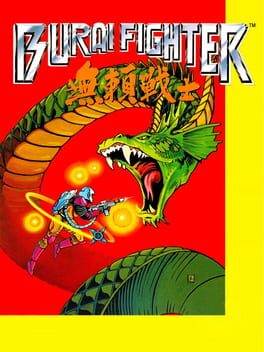
In a distant corner of the galaxy, the super‑intelligent Burai race creates endless hordes of robo‑mutants to conquer the universe. As the lone pilot, you must infiltrate their seven manufacturing bases, defeat monstrous guardians like the Giganticrab, Jawsipede, and Fangskull, and finally confront the terrifying Slimedragon. Armed with a proton pack, laser cannon, and a growing arsenal of upgrades, you fight through wave after wave of mutant rogues in fast‑paced, side‑scrolling shooter action. The game delivers classic arcade thrills with a sci‑fi twist, perfect for fans of retro action shooters.
- Innovative reverse gameplay
- Simple yet deep control scheme
- One‑time screen‑clear Zap adds strategic depth
- Supports both solo and multiplayer sessions
- Fast‑paced, addictive arcade action
- Varied boss designs keep gameplay fresh
- Simple controls with deep weapon upgrade system
- Retro pixel art and soundtrack evoke 90s nostalgia
- Limited platform availability
- Only one Zap per sector can feel restrictive
- Graphics are intentionally retro, may not appeal to all
- Limited to single‑player mode
- No modern difficulty settings or accessibility options
- Graphics may feel dated to newer players
More alternatives & similar tools
Alternatives to Bedlam
View all →

Alternatives to Burai Fighter
View all →
The Verdict
AI-generated from listing dataBoth are retro arcade shooters with a one‑time purchase, but Bedlam offers multiplayer and a unique reverse‑center gameplay, while Burai Fighter provides more varied weapons and boss battles but is single‑player only.
Key differences
- •Bedlam features a fixed‑center ship with a fast‑rotate mechanic; Burai Fighter uses traditional forward‑facing movement.
- •Multiplayer: Bedlam supports competitive play; Burai Fighter is single‑player only.
- •Weapon system: Burai Fighter includes upgradeable lasers and proton packs; Bedlam has only a single Zap screen‑clear per sector.
- •Content scope: Burai Fighter has seven bases and distinct bosses; Bedlam’s content is defined by sector patterns without boss fights.
- •Release era: Bedlam (1983) uses retro vector graphics; Burai Fighter (1990) uses pixel art, affecting visual style.
Gameplay & fun factor
Both deliver fast arcade action; Bedlam’s reverse center play is novel, Burai’s weapon upgrades add depth.
Platform availability
Bedlam lists limited platform availability; Burai Fighter’s platforms are not specified, so Bedlam is at least known.
Price & value
Both are one‑time paid games; no price differences are provided.
Multiplayer / co‑op
Bedlam supports single‑player and multiplayer; Burai Fighter is single‑player only.
Content & replayability
Burai Fighter offers seven bases, unique bosses, and weapon upgrades, giving more varied content than Bedlam’s sector patterns.
Difficulty & accessibility
Bedlam’s simple control scheme and single Zap per sector may be easier for newcomers; Burai lacks modern difficulty settings.
Graphics & performance
Burai Fighter uses retro pixel art reminiscent of 90s; Bedlam’s vector‑style graphics are older and may feel more dated.
Choose Bedlam if…
Players who want multiplayer competition and a unique reverse‑center shooting mechanic.
Choose Burai Fighter if…
Players who prefer richer weapon upgrades, multiple bosses, and single‑player focused depth.
Common questions
Do either of the games support multiplayer?
Bedlam supports both single‑player and multiplayer; Burai Fighter is single‑player only.
Which game offers more content or levels?
Burai Fighter includes seven distinct bases with unique bosses, while Bedlam’s content is organized into sectors with varying enemy patterns.
Is there any difference in visual style?
Bedlam uses retro vector‑style graphics; Burai Fighter uses retro pixel art and a 90s‑style soundtrack.