


Carmen Sandiego: The Secret of the Stolen Drums vs Where in the World Is Carmen Sandiego?
Side-by-side comparison of features, pricing, ratings, and alternatives.
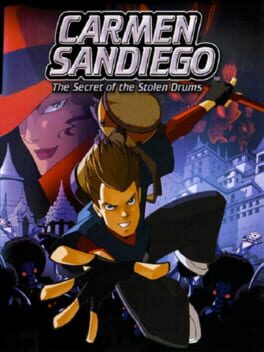
Join A.C.M.E. agent‑in‑training Cole Gannon, along with Jules Argent and Shadow Hawkins, on a globe‑trotting quest to thwart Carmen Sandiego’s plan to steal the legendary drums. From New York museums to New Zealand beaches and the ruins of Machu Picchu, players use acrobatics, stealth, and martial arts to uncover clues and protect treasure. The game blends platforming action with educational puzzles, offering a family‑friendly experience that teaches geography and critical thinking while delivering thrilling adventure gameplay.
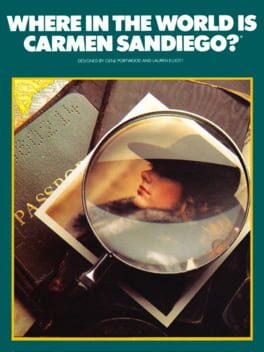
Travel the world solving clues in this iconic 1985 puzzle adventure that teaches geography while you chase a master thief. The game blends detective work with fun facts, making learning an engaging quest for kids and curious minds alike.
- Engaging blend of action and learning
- Rich, varied global environments
- Solid stealth and platform mechanics
- Family‑friendly ESRB E rating
- Educational content is seamlessly integrated with gameplay
- Engaging detective storyline keeps players motivated
- Simple controls are accessible for young children
- Replayability through varying clue difficulty
- Graphics are dated by modern standards
- Linear level design limits replayability
- Occasional camera glitches in tight spaces
- Graphics are dated by modern standards
- Limited to single‑player experience
- No official multiplayer or online leaderboards
More alternatives & similar tools
Alternatives to Carmen Sandiego: The Secret of the Stolen Drums
View all →Track Carmen across the globe in a classic educational mystery adventure.
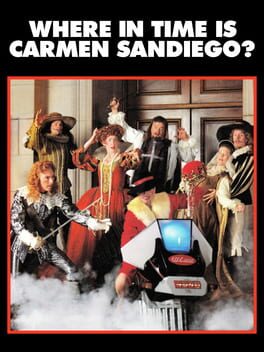
Travel through history to catch Carmen Sandiego before she vanishes!
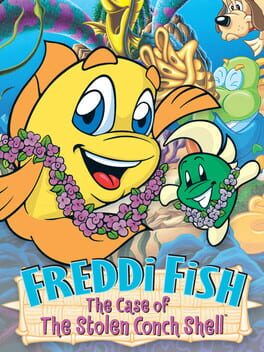
Solve the mystery of the missing Great Conch Shell with Freddi and Luther!
Alternatives to Where in the World Is Carmen Sandiego?
View all →Travel the globe, solve puzzles, and stop Carmen’s drum heist in this action‑adventure mystery.
Travel through history to catch Carmen Sandiego before she vanishes!
The Verdict
AI-generated from listing dataBoth titles are classic, single‑player, educational Carmen Sandiego games; choose A for action‑platform gameplay, B for classic map‑based detective puzzles.
Key differences
- •Gameplay style: A mixes platforming, stealth and combat; B is point‑and‑click map navigation.
- •Release era: A (2004) offers 3D environments; B (1985) is a 2D/text‑based interface.
- •Replayability: A limited by linear levels; B varies with adjustable clue difficulty and time‑track.
- •Price info: B lists $19.99 MSRP; A’s price not specified.
- •Graphics: A uses dated 3D graphics; B uses older 2D graphics, both considered dated.
Gameplay & fun factor
A adds platforming, stealth and combat, giving more active gameplay than B’s static map selection.
Platform availability
Both are single‑player PC titles; no platform details provided for A, B is legacy PC.
Price & value
B lists a concrete MSRP of $19.99; A’s price is not specified, making B’s cost clearer.
Multiplayer / co‑op
Both are single‑player only.
Content & replayability
B offers adjustable clue difficulty and time‑based scoring, increasing replay value over A’s linear levels.
Difficulty & accessibility
B’s simple point‑and‑click controls and multiple difficulty levels suit younger or less‑experienced players.
Graphics & performance
A’s 2004 3D graphics are newer than B’s 1985 2D visuals, though both are described as dated.
Choose Carmen Sandiego: The Secret of the Stolen Drums if…
Kids or families wanting an active, adventure‑platform experience with stealth elements.
Choose Where in the World Is Carmen Sandiego? if…
Parents seeking a straightforward, puzzle‑focused geography lesson with adjustable difficulty.
Common questions
Which game is cheaper?
B lists a price of $19.99; A’s price is not provided, so B has the known lower cost.
Do either of the games support multiplayer?
No; both are single‑player only.
Which title is better for teaching geography to young children?
B focuses on map‑based clues, a built‑in reference database, and adjustable difficulty, making it more directly educational for young learners.