


Colony Wars vs Colony Wars: Vengeance
Side-by-side comparison of features, pricing, ratings, and alternatives.
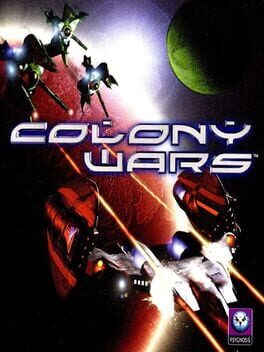
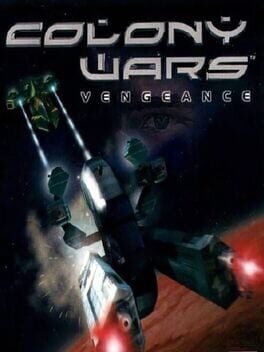
Colony Wars puts you in the cockpit of futuristic fighters, letting you switch between first‑person and third‑person views as you battle across the galaxy. The campaign features multiple endings, branching storylines, and advanced lighting effects that were groundbreaking on the original PlayStation.
After the fall of the Earth Empire, the Sol system lies in ruins, torn apart by warring factions. Commander Kron rallies the survivors, promising vengeance and a chance to escape the sealed solar prison. Pilot a customizable fighter in cockpit view, battling across space and atmospheric missions. Equip diverse weapons, use tractor beams, and navigate with 360° movement in a fast‑paced, inertia‑free combat system.
- Deep branching storyline
- Innovative thruster and drift mechanics
- Distinct shield and armor systems
- Impressive graphics for its era
- Deep weapon customization
- Both space and atmospheric missions
- Responsive inertia‑free controls
- Strong single‑player narrative
- Single‑player only
- Controls can feel dated
- Limited platform availability
- Graphics dated by modern standards
- Limited to single‑player only
- No multiplayer or co‑op modes
More alternatives & similar tools
Alternatives to Colony Wars
View all →
Alternatives to Colony Wars: Vengeance
View all →The Verdict
AI-generated from listing dataColony Wars: Vengeance (A) offers inertia‑free controls and atmospheric missions with deep weapon customization, while Colony Wars (B) provides Newtonian physics, branching storylines, and shield/armor systems; choose based on whether you prefer fast, responsive combat or a more simulation‑heavy, story‑rich experience.
Key differences
- •Control model: A uses inertia‑free handling; B simulates basic Newtonian physics.
- •Mission environments: A includes both space and planetary atmospheres; B focuses on space only.
- •Customization vs systems: A lets you equip and cycle weapons and use tractor beams; B features separate shield and armor meters and requires strategic weapon switching.
- •Story depth: A has a linear narrative about uniting clans; B offers branching missions that change based on performance.
- •Graphics style: A uses retro 1998 graphics; B boasts “impressive graphics for its era” with advanced lighting and particles.
Gameplay & fun factor
Both deliver engaging space combat; A is faster with inertia‑free controls, B offers realistic physics and branching missions.
Platform availability
Neither product lists platforms; availability cannot be distinguished from the provided facts.
Price & value
Both priced at $49.99 with one‑time purchase; value depends on preferred features.
Multiplayer / co‑op
Both are single‑player only.
Content & replayability
B’s branching storyline and multiple mission outcomes increase replay value over A’s linear campaign.
Difficulty & accessibility
A’s inertia‑free controls are generally easier for newcomers than B’s Newtonian physics.
Graphics & performance
B is described as having advanced lighting and particle effects for its era, whereas A uses dated retro graphics.
Choose Colony Wars if…
Players who value realistic physics, branching storylines, and deeper shield/armor management.
Choose Colony Wars: Vengeance if…
Players who want fast, responsive combat, atmospheric missions, and extensive weapon customization.
Common questions
Do either of the games support multiplayer?
No; both are single‑player only according to the specifications.
Which game offers more replay value?
Colony Wars (B) has a branching storyline that changes based on mission performance, giving higher replayability.
Is there a difference in control difficulty?
Yes; A uses inertia‑free controls that are easier for newcomers, while B simulates Newtonian physics, which can be harder to master.