


Conception II: Children of the Seven Stars vs Conception: Ore no Kodomo wo Undekure!
Side-by-side comparison of features, pricing, ratings, and alternatives.
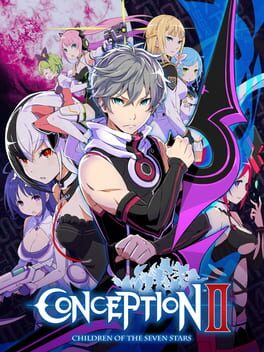
You play as Wake Archus, a high‑school student marked by the Star God, who can conceive powerful Star Children by bonding with his talented classmates. The game blends turn‑based combat with strategic positioning, letting you target enemy weak points or go for high‑risk attacks. Set in a fantasy world plagued by Dusk Circles, the single‑player experience mixes RPG progression, erotic romance elements, and a deep story about loss, friendship, and the hidden forces behind the monster outbreaks.
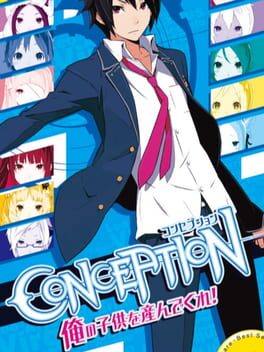
Conception: Ore no Kodomo wo Undekure! is a Japanese role‑playing game where players assume the role of Itsuki, a student at Granvania National Star God Academy. By building relationships with pure, innocent girls, you can create Star Children who accompany you on dungeon‑crawling adventures. The game blends dating‑sim elements with traditional turn‑based combat, letting you explore fantastical dungeons, summon your Star Children, and defeat corrupt impurities that threaten the world. All of this unfolds in a single‑player experience with a whimsical anime aesthetic.
- Unique star‑child conception system
- Rich romantic subplots
- Strategic positioning adds tactical depth
- Atmospheric fantasy art and music
- Deep relationship system adds replay value
- Unique Star Child summoning mechanic
- Charming anime art direction
- Strategic turn‑based combat
- Erotic content limits audience
- Combat can become repetitive
- Story pacing uneven in later chapters
- Limited to single‑player mode
- Dating elements may not appeal to all RPG fans
- Repetitive dungeon layouts in later stages
More alternatives & similar tools
Alternatives to Conception II: Children of the Seven Stars
View all →Charm girls, raise Star Children, and battle impurities in a fantasy RPG
Alternatives to Conception: Ore no Kodomo wo Undekure!
View all →Harness ether to birth Star Children and battle demons in a romance‑filled RPG.
The Verdict
AI-generated from listing dataBoth are single‑player JRPGs with a Star Child mechanic, but Conception II adds erotic romance and tactical positioning, while Conception focuses on anime dating and turn‑based combat.
Key differences
- •Content rating: A is ESRB M/PEGI 16 with erotic scenes; B is CERO C (15+) with milder anime dating.
- •Combat style: A uses positional placement for tactical depth; B uses turn‑based combat with real‑time Star Child summons.
- •Art & tone: A emphasizes atmospheric fantasy art and romance; B features bright anime art and whimsical storytelling.
- •Critical reception: A has a documented critic score (60/100); B has no listed critic score.
- •Release date: A released in 2013, B in 2012, indicating slightly older engine for B.
Pricing & value
Both are one‑time paid titles; price not specified, so value cannot be distinguished.
Gameplay & fun factor
A offers tactical positioning and unique star‑child skill trees, adding more strategic depth than B's turn‑based combat.
Platform availability
Neither product lists platforms; assume similar availability.
Multiplayer / co‑op
Both are single‑player only.
Content & replayability
B’s multiple romance routes and multiple endings provide higher replay value than A’s uneven pacing.
Difficulty & accessibility
B’s turn‑based system is generally more accessible than A’s tactical positioning, which may be harder for newcomers.
Graphics & performance
Both described with atmospheric/fantasy art; no performance metrics provided.
Choose Conception II: Children of the Seven Stars if…
Players who want mature romance, tactical combat, and don’t mind erotic content.
Choose Conception: Ore no Kodomo wo Undekure! if…
Players who prefer lighter anime dating, turn‑based combat, and broader age suitability.
Common questions
Is either game multiplayer?
Both are single‑player only.
Which game has a higher age rating?
Conception II (A) is ESRB M/PEGI 16, while Conception (B) is CERO C (15+).
Do both games offer multiple endings?
Yes, both have multiple endings tied to the Star Children you raise, but B emphasizes this more for replayability.