


Crackdown 3 vs State of Emergency
Side-by-side comparison of features, pricing, ratings, and alternatives.
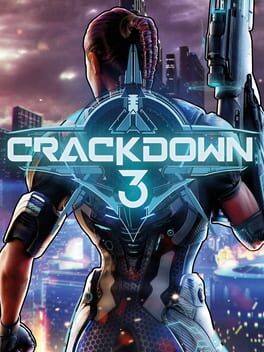

Stop crime as a super‑powered Agent in the hyper‑powered sandbox of New Providence, where you can race through streets, transform vehicles and wreak havoc with destructive abilities. Ten years after Crackdown 2, a global power outage draws the Agency back to battle a mysterious terrorist organization, Terra Nova. The game offers a single‑player campaign and a cooperative multiplayer mode that lets you team up with friends to cause massive destruction, all set in a sci‑fi open‑world city that reacts to your actions.
State of Emergency drops you into a riotous city where you pick one of five distinct characters—each with their own backstory—to complete a range of wild missions, from rescues to targeted assassinations. The game blends hack‑and‑slash combat with open‑world mayhem, letting you wield everything from shotguns to improvised street props. With split‑screen multiplayer on PC and PlayStation 2, you can team up or compete in destructive mayhem, using an arsenal of weapons and environmental objects to crush gang members, skinheads, and corporate forces. The game’s gritty urban setting and varied mission design keep the action fresh and relentless.
- Massive, destructible open world
- Co‑operative multiplayer adds replay value
- Variety of super‑powered abilities
- Cross‑play between PC and Xbox One
- Huge variety of weapons and improvised tools
- Five distinct playable characters
- Split‑screen multiplayer adds replay value
- Diverse mission types keep gameplay fresh
- Critics gave it mixed reviews, score 62/100
- Destruction mechanics can feel repetitive after extended play
- Multiplayer matchmaking sometimes slow
- Graphics are dated by modern standards
- AI can be inconsistent during large crowds
- Level design can feel repetitive after many hours
More alternatives & similar tools
Alternatives to Crackdown 3
View all →Alternatives to State of Emergency
View all →
Unleash chaotic urban warfare in a sequel that amps up the action and multiplayer mayhem.

The Verdict
AI-generated from listing dataCrackdown 3 offers a modern, destructible open‑world with co‑op and cross‑play for $59.99, while State of Emergency is a dated 2002 beat‑'em‑up with split‑screen for $49.99.
Key differences
- •Destructible open‑world vs static urban levels
- •Co‑operative online (up to 4) vs local split‑screen (2)
- •Cross‑play PC/Xbox One vs PC/PS2 only
- •Release era: 2019 modern graphics vs 2002 dated graphics
- •Price: $59.99 vs $49.99
Gameplay & fun factor
Crackdown 3 features super‑powered abilities and large‑scale destruction, offering more varied chaos than State of Emergency's beat‑'em‑up.
Platform availability
Crackdown 3 runs on PC and Xbox One with cross‑play; State of Emergency limited to PC and PS2.
Price & value
State of Emergency costs $49.99 versus Crackdown 3’s $59.99, a $10 difference.
Multiplayer / co‑op
Crackdown 3 supports online co‑op for up to four and competitive modes; State of Emergency only split‑screen for two.
Content & replayability
Crackdown 3’s massive open world and varied abilities give longer replay loops than State of Emergency’s mission set.
Difficulty & accessibility
Both rated M/PEGI 18; no specific difficulty data provided.
Graphics & performance
Crackdown 3 released 2019 with modern graphics; State of Emergency’s graphics are dated.
Choose Crackdown 3 if…
Players wanting modern, large‑scale destruction and online co‑op.
Choose State of Emergency if…
Budget‑focused gamers who prefer classic beat‑'em‑up style and local couch play.
Common questions
Is the higher price of Crackdown 3 justified?
It adds modern graphics, cross‑play, larger open world, and up‑to‑four online co‑op, which State of Emergency lacks.
Can I play with friends on different consoles?
Yes, Crackdown 3 supports cross‑play between PC and Xbox One; State of Emergency only offers split‑screen on the same console.
Which game has better replay value?
Crackdown 3, thanks to its massive destructible world, varied super‑powers, and both co‑op and competitive modes.