


Datadog vs Jaeger
Side-by-side comparison of features, pricing, ratings, and alternatives.
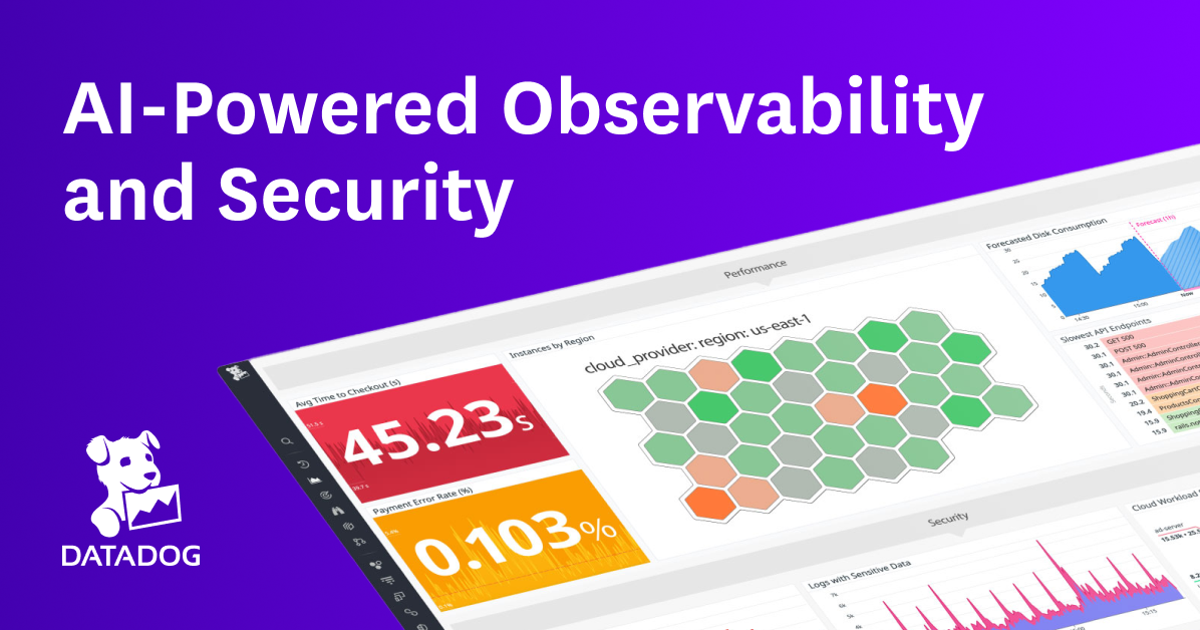
Datadog is a cloud‑based observability platform that provides monitoring of servers, containers, databases, and services. It aggregates metrics, traces, and logs into a single pane. The service offers real‑time dashboards, AI‑driven alerts, and integrations with major cloud providers, helping teams troubleshoot performance issues and ensure reliability.
Jaeger is an open-source, end-to-end distributed tracing platform. It is used for monitoring and troubleshooting microservices-based distributed systems. Jaeger provides a comprehensive view of the system's performance and latency, allowing developers to identify and resolve issues quickly.
- Comprehensive integration library
- Unified view of metrics, logs, and traces
- Scalable SaaS architecture with minimal maintenance
- Advanced AI alerts reduce noise
- Comprehensive view of system performance and latency
- Real-time monitoring and alerting capabilities
- Supports multiple data storage options
- Easy to integrate with other tools and systems
- Pricing can become expensive at scale
- Learning curve for complex dashboard configurations
- Limited on‑premises deployment options
- Steep learning curve for new users
- Requires significant resources to deploy and manage
- Limited support for non-microservices architectures
More alternatives & similar tools
Alternatives to Datadog
View all →



Alternatives to Jaeger
View all →
The Verdict
AI-generated from listing dataJaeger offers a free, self‑hosted tracing solution with strong microservices focus, while Datadog provides a paid SaaS platform that unifies metrics, logs, and traces with extensive integrations.
Key differences
- •Deployment model: Jaeger is self‑hosted open source; Datadog is cloud/SaaS only.
- •Scope of observability: Jaeger handles tracing only; Datadog combines metrics, logs, and tracing.
- •Pricing structure: Jaeger is free; Datadog uses a freemium model that can become costly at scale.
- •Integration breadth: Datadog supports 450+ integrations; Jaeger lists only a few (Kubernetes, Docker, Prometheus).
- •Support channels: Datadog offers 24/7 phone/live chat; Jaeger provides only email and documentation.
Pricing & value
Jaeger is completely free and open source; Datadog’s freemium can incur significant costs as usage grows.
Ease of use / learning curve
Datadog’s SaaS UI requires less setup than Jaeger’s self‑hosted deployment, which has a steep learning curve.
Features & depth
Datadog unifies metrics, logs, and traces plus AI alerts; Jaeger focuses solely on tracing.
Integrations & ecosystem
Datadog lists 450+ integrations (AWS, Azure, GCP, etc.); Jaeger mentions only Kubernetes, Docker, Prometheus.
Collaboration
Datadog includes incident management, Slack/PagerDuty integration; Jaeger lacks built‑in collaboration features.
Scalability
Datadog’s SaaS scales automatically; Jaeger requires users to provision and manage storage resources.
Support
Datadog offers 24/7 phone, live chat, and email; Jaeger provides only email and documentation.
Choose Datadog if…
Enterprises wanting an all‑in‑one, managed observability platform with extensive integrations.
Choose Jaeger if…
Teams needing cost‑free, open‑source tracing and willing to manage infrastructure.
Common questions
Can I run Jaeger on‑premises while using Datadog for other data?
Jaeger is self‑hosted and can be deployed on‑premises; Datadog is SaaS only, so hybrid use requires separate setups.
Which tool is cheaper as my service scales?
Jaeger remains free regardless of scale; Datadog’s costs increase with the number of hosts, metrics, and logs.
Do both products support Kubernetes?
Yes. Jaeger integrates with Kubernetes; Datadog also lists Kubernetes among its key integrations.