


Dishonored vs Thief
Side-by-side comparison of features, pricing, ratings, and alternatives.
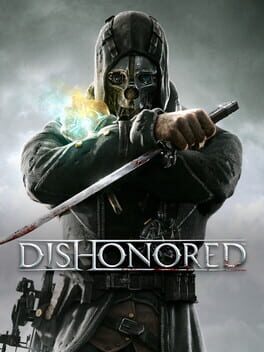
Set in the industrial city of Dunwall, Dishonored puts you in the shoes of Corvo Attano, a royal protector framed for murder. Use a blend of stealth, combat, and supernatural abilities to exact revenge and uncover conspiracies. The game rewards creative problem‑solving, letting you approach each mission with lethal precision or silent finesse, while your moral choices reshape the world around you.
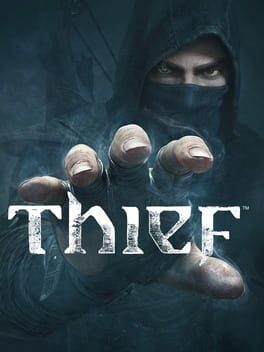
Thief is a first-person stealth action-adventure game developed by Eidos Montréal. Players take control of Garrett, a master thief navigating a plague-ridden, oppressive city ruled by a tyrant known as the Baron. By relying on stealth rather than force, players must infiltrate high-security estates, steal valuable riches, and uncover a dark political conspiracy. Utilizing an array of specialized arrows, lockpicks, and environmental awareness, Garrett moves through shadows to evade guards or take them down silently. The game features open-ended mission design, dynamic light-and-shadow mechanics, and customizable challenge settings that cater to both new players and purist stealth fans.
- Rich, atmospheric world design
- Deep moral choice system
- Highly flexible gameplay approaches
- Engaging supernatural abilities
- Atmospheric Victorian-Gothic visual design and lighting effects
- Highly customizable difficulty settings for stealth purists
- Satisfying hands-on lockpicking and stealing mechanics
- Diverse elemental arrow options for environmental manipulation
- Stealth can be challenging for beginners
- Limited multiplayer content (single‑player only)
- Some missions feel linear despite open design
- Inconsistent enemy artificial intelligence behavior
- City map hub is fragmented by frequent loading screens
- Clumsy melee combat system when stealth fails
More alternatives & similar tools
Alternatives to Dishonored
View all →
Alternatives to Thief
View all →
Step into the shadows as master thief Garrett in this landmark first-person stealth immersive simulator.
Master the shadows in a pioneering first-person stealth action game set in a dark steampunk fantasy world.
The Verdict
AI-generated from listing dataDishonored offers richer narrative depth, supernatural powers, and higher critical acclaim at double the price, while Thief provides a tighter, classic stealth experience at a lower cost.
Key differences
- •Supernatural abilities vs. purely gadget‑based stealth (Dishonored has Blink, Bend Time, etc.; Thief relies on lightgem and elemental arrows).
- •Narrative impact: Dishonored’s choices alter city state and endings; Thief’s story is static.
- •Critical reception: Dishonored 85/100 vs. Thief 64/100.
- •Price: Dishonored $39.99, Thief $19.99.
- •Difficulty customization: Thief offers granular HUD and kill bans; Dishonored has no comparable options.
Gameplay & fun factor
Dishonored combines stealth, combat, and supernatural powers, delivering more varied playstyles than Thief’s pure stealth focus.
Platform availability
Both are single‑player PC titles; no platform differences are specified.
Price & value
Thief costs $19.99 versus Dishonored $39.99, offering half the price for a complete game.
Multiplayer / co‑op
Both are single‑player only; no multiplayer content for either.
Content & replayability
Dishonored’s branching outcomes and dynamic mission system give higher replay value than Thief’s static narrative.
Difficulty & accessibility
Thief provides extensive difficulty toggles (HUD removal, kill bans), whereas Dishonored lacks comparable customization.
Graphics & performance
No specific graphics or performance data are provided for either game.
Choose Dishonored if…
Players who want story impact, supernatural powers, and higher critical quality.
Choose Thief if…
Budget‑focused stealth purists who value fine‑tuned difficulty controls.
Common questions
Which game is cheaper?
Thief is $19.99; Dishonored is $39.99.
Do either games have multiplayer?
Both are single‑player only.
Which title offers more replay value?
Dishonored, because player choices change city state and endings, unlike Thief’s static story.