


Dokapon Kingdom vs Pokémon Conquest
Side-by-side comparison of features, pricing, ratings, and alternatives.
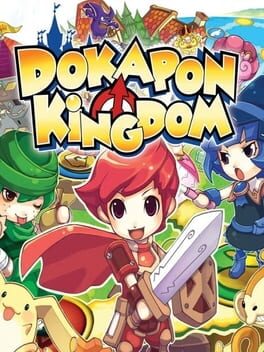

Dokapon Kingdom blends classic role‑playing elements with board‑game style movement, letting players explore a whimsical kingdom while competing for victory. Each turn you roll dice, move across the map, and engage in turn‑based battles or mini‑games that can boost your stats or sabotage rivals. The game supports up to four friends locally, offering a mix of strategy, luck, and humor as you race to become the ultimate ruler. Its colorful art style and quirky characters make it a perfect choice for family game nights or casual gaming sessions.
Pokémon Conquest blends turn‑based strategy with the world of Pokémon, letting you lead a warlord of the Primus Kingdom across the 17 Kingdoms of the Ransei region. Each kingdom is tied to a specific Pokémon type, and you must recruit, battle, and conquer to stop the tyrant Nobunaga from destroying the land. The game offers both single‑player campaigns and multiplayer modes, featuring RPG elements, historical fantasy settings, and kid‑friendly challenges. Developed by Koei Tecmo Games and published by The Pokémon Company and Nintendo, it earned a respectable 74/100 critic score upon its 2012 release.
- Entertaining blend of RPG and board‑game mechanics
- Supports up to four local players
- Wide variety of mini‑games keeps gameplay fresh
- Simple controls suitable for all ages
- Deep strategic depth with simple controls
- Unique blend of Pokémon and warlord themes
- Varied kingdom types encourage replayability
- Kid‑friendly difficulty with optional challenge
- Limited to local multiplayer, no online play
- Graphics are dated by modern standards
- Random dice rolls can sometimes feel overly luck‑based
- Limited platform availability
- Multiplayer can be slow to set up
- Story pacing may feel linear for seasoned strategists
More alternatives & similar tools
Alternatives to Dokapon Kingdom
View all →
A Japanese RPG‑board hybrid where dice and quizzes decide your fate.
Alternatives to Pokémon Conquest
View all →The Verdict
AI-generated from listing dataPokémon Conquest offers deeper strategic turn‑based combat with broader multiplayer options, while Dokapon Kingdom focuses on chaotic board‑game fun for local groups.
Key differences
- •Combat style: grid‑based turn‑based vs dice‑driven board movement
- •Multiplayer: both solo and multiplayer in Conquest vs only local multiplayer in practice (spec lists single‑player only) for Dokapon
- •Target audience age rating: ESRB E (all ages) vs ESRB E10+ (older children)
- •Critical reception: 74/100 vs 63/100
- •Release era and graphics: 2012 modern title vs 2007 dated visuals
Gameplay & fun factor
Conquest blends RPG and strategy with type‑based tactics; Dokapon relies heavily on luck from dice rolls.
Platform availability
Both are limited to a single platform (unspecified), no difference in availability.
Price & value
Both priced at $39.99, offering one‑time purchase.
Multiplayer / co‑op
Conquest lists both single‑player and multiplayer; Dokapon’s spec lists only single‑player.
Content & replayability
Conquest features 17 kingdoms, warlord progression, and type combos; Dokapon offers mini‑games but fewer core scenarios.
Difficulty & accessibility
Conquest is rated ESRB E with kid‑friendly difficulty; Dokapon is E10+ and includes luck‑heavy mechanics.
Graphics & performance
Dokapon is older (2007) and noted as dated; Conquest (2012) has relatively newer visuals.
Choose Dokapon Kingdom if…
Casual groups seeking quick, party‑style sessions with mini‑games.
Choose Pokémon Conquest if…
Strategy‑oriented players who want both solo and multiplayer depth.
Common questions
Do either games support online multiplayer?
Neither game lists online multiplayer; Conquest has multiplayer mode but setup may be slow, Dokapon is limited to local play.
Which game has a higher critic rating?
Pokémon Conquest has a critic score of 74/100, compared to Dokapon Kingdom's 63/100.
Are both games suitable for young children?
Conquest is ESRB E (all ages); Dokapon is ESRB E10+, recommended for ages 10 and up.