


Dragon's Lair 3D: Return to the Lair vs Scaler
Side-by-side comparison of features, pricing, ratings, and alternatives.
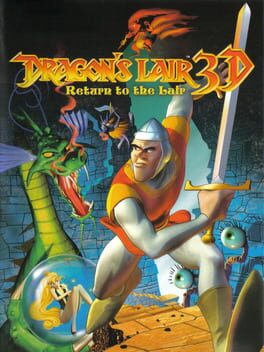
Dragon's Lair 3D: Return to the Lair brings the classic 1983 laserdisc arcade experience into a fully 3‑D world, using cel shading to preserve the original’s hand‑drawn aesthetic. Players guide Dirk the Daring through Mordroc’s castle, solving puzzles and battling new enemies while enjoying new animated sequences from Don Bluth. The game was released in November 2002 for PC and PlayStation 2, offering a single‑player action‑adventure experience that blends platforming, fantasy storytelling, and nostalgic references to the original arcade title.
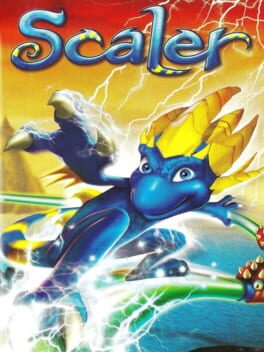
Scaler follows 12‑year‑old Bobby "Scaler" Jenkins as he uncovers an evil plot by a dimensional reptilian villain. After being captured and transformed into a lizard‑like being, Bobby gains unique abilities to fight the alien army and save both worlds. The game blends whimsical fantasy with sci‑fi elements, delivering colorful 3D platforming on the PlayStation 2. Though niche, it’s praised for its inventive mechanics and striking visual style, making it a memorable hidden gem for fans of classic platformers.
- Faithful visual homage to the original
- New puzzles add fresh gameplay depth
- Don Bluth’s animation enhances storytelling
- Unique lizard transformation mechanic
- Colorful and distinctive visual style
- Engaging boss encounters
- Family‑friendly rating
- Low critic score reflects dated controls
- Limited replayability after story completion
- Graphics may feel dated compared to modern titles
- Limited replayability after completion
- Occasional camera control issues
- Some puzzles feel repetitive
More alternatives & similar tools
Alternatives to Dragon's Lair 3D: Return to the Lair
View all →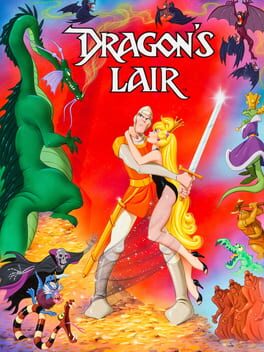
Alternatives to Scaler
View all →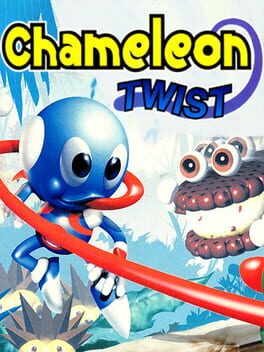
Enter Mordroc's castle in a cel‑shaded adventure to rescue Princess Daphne.
Soar through the Dragon Lands and defeat Gnasty Gnorc in this classic platformer.
The Verdict
AI-generated from listing dataScaler offers a higher critic score, family‑friendly rating, and more modern visuals, while Dragon's Lair 3D provides nostalgic appeal but dated controls and lower scores.
Key differences
- •Critic score: 60/100 for Scaler vs 37/100 for Dragon's Lair 3D.
- •Age rating: ESRB E (everyone) for Scaler vs ESRB T (teen) for Dragon's Lair 3D.
- •Unique mechanic: Scaler features a lizard‑transformation ability; Dragon's Lair relies on classic platforming without such novelty.
- •Visual style: Scaler uses vibrant, hand‑crafted 3D visuals; Dragon's Lair uses cel‑shading that may feel dated.
- •Release era: Scaler (2004) generally newer than Dragon's Lair 3D (2002), reflected in graphics and design.
Gameplay & fun factor
Scaler’s transformation mechanic and varied boss fights add fresh gameplay; Dragon's Lair relies on dated platforming.
Platform availability
Both are single‑player PC titles; no differing platform support is specified.
Price & value
Scaler lists an MSRP of $19.99; Dragon's Lair price not specified, making Scaler’s cost clearer.
Multiplayer / co‑op
Both are single‑player only.
Content & replayability
Both note limited replayability, but Scaler’s unlockable abilities and secret levels give slightly more post‑game content.
Difficulty & accessibility
Scaler has an ESRB E rating suggesting easier access; Dragon's Lair’s T rating and noted dated controls imply higher difficulty.
Graphics & performance
Scaler’s vibrant, hand‑crafted visuals are described as modern; Dragon's Lair’s cel‑shading is called potentially dated.
Choose Dragon's Lair 3D: Return to the Lair if…
Fans seeking faithful retro arcade nostalgia and Don Bluth animation, willing to tolerate dated controls.
Choose Scaler if…
Players wanting a more polished, family‑friendly platformer with unique mechanics and better critical reception.
Common questions
Which game is cheaper?
Scaler’s price is listed at $19.99; Dragon's Lair 3D price is not specified.
Is either game suitable for young children?
Scaler has an ESRB E rating (everyone); Dragon's Lair 3D is rated ESRB T (teen).
Do either of the games offer multiplayer?
Both are single‑player only.