


Eye of the Beholder vs Ravenloft: Strahd's Possession
Side-by-side comparison of features, pricing, ratings, and alternatives.
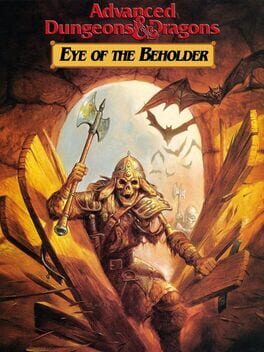
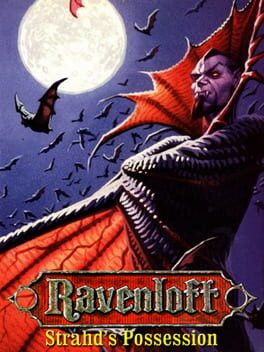
Eye of the Beholder drops you into the labyrinthine sewers and catacombs beneath Waterdeep, using the Advanced Dungeons & Dragons 2nd Edition rules to deliver a deep role‑playing experience. The game blends real‑time combat with strategic party management, letting you guide a band of adventurers through deadly traps and monsters. Built on Westwood Associates' 3‑D engine, the title offers a single‑player fantasy quest that challenges both tactical thinking and classic RPG storytelling, all available on modern PC and Linux platforms.
Lord Dhelt of Elturel hires you to retrieve the stolen Hole Symbol of Helm, only to be whisked away into a hostile, mist‑filled realm. Explore the unknown, battle foes in real‑time combat, and unravel the secrets of the amulet that binds you. Create or choose from pre‑determined heroes, recruit allies, and manage a party of up to four characters using traditional AD&D races and classes. Navigate a fully 3D world with mouse‑oriented controls and experience a nostalgic blend of strategy, adventure, and fantasy action.
- Authentic AD&D mechanics
- Fully 3‑D environments for its era
- Deep party and inventory management
- Available on both PC and Linux
- Authentic AD&D ruleset
- Deep party customization
- Real‑time combat adds excitement
- Rich 3D exploration
- Outdated user interface by modern standards
- Limited to single‑player only
- Graphics may appear dated on high‑resolution displays
- Dated graphics by modern standards
- Limited to single‑player mode
- Steep learning curve for newcomers
More alternatives & similar tools
Alternatives to Eye of the Beholder
View all →
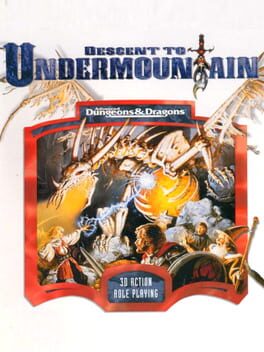
First‑person AD&D adventure in a fully 3‑D Forgotten Realms forest
Alternatives to Ravenloft: Strahd's Possession
View all →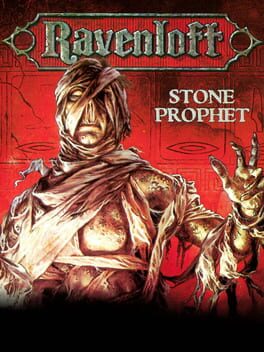
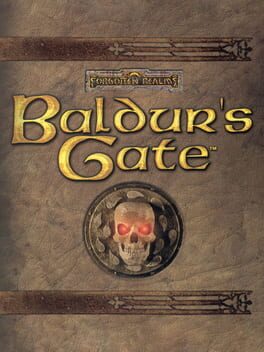
Embark on an epic Dungeons & Dragons tactical RPG adventure along the iconic Sword Coast.
The Verdict
AI-generated from listing dataBoth are classic single‑player AD&D RPGs with similar pricing, but Eye of the Beholder offers a richer party‑management system and broader OS support, while Ravenloft adds a mystery‑driven story but with a slightly lower age rating.
Key differences
- •Eye of the Beholder supports both PC and Linux; Ravenloft lists only PC.
- •Eye of the Beholder uses AD&D 2nd Edition rules; Ravenloft’s rule specifics are not detailed beyond "classic AD&D".
- •Ravenloft emphasizes a mystery storyline and choice‑reactive quests; Eye of the Beholder focuses on dungeon crawling in Waterdeep’s sewers.
- •Eye of the Beholder was released in 1991, Ravenloft in 1994, giving Eye of the Beholder an older engine and graphics.
- •Age rating differs: Eye of the Beholder is ESRB T, Ravenloft is ESRB E.
Gameplay & fun factor
Eye of the Beholder offers deeper party and inventory management with AD&D 2nd Edition mechanics.
Platform availability
Supports both PC and Linux; Ravenloft only lists PC.
Price & value
Both are paid one‑time purchases with no price differences given.
Multiplayer / co‑op
Both are single‑player only.
Content & replayability
Ravenloft features a choice‑reactive mystery questline, adding narrative variability.
Difficulty & accessibility
Ravenloft is rated ESRB E, indicating a lower age rating and potentially easier entry.
Graphics & performance
Eye of the Beholder’s 3‑D environments were advanced for 1991; both are dated by modern standards.
Choose Eye of the Beholder if…
Players who want deeper AD&D mechanics, Linux support, and classic dungeon‑crawling depth.
Choose Ravenloft: Strahd's Possession if…
Players who prefer a story‑driven mystery with a lower age rating and slightly newer engine.
Common questions
Do either of these games support modern operating systems?
Eye of the Beholder explicitly supports PC and Linux via modern compatibility layers; Ravenloft’s OS support is not specified.
Which game has a lower age rating?
Ravenloft: Strahd's Possession is rated ESRB E, while Eye of the Beholder is rated ESRB T.
Is there any multiplayer or co‑op option?
Both titles are single‑player only.