


Façade vs Little Computer People
Side-by-side comparison of features, pricing, ratings, and alternatives.
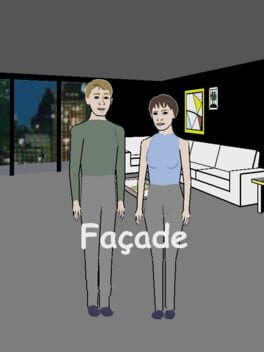

Façade is an artificial intelligence-based art and research experiment in electronic narrative, created by Procedural Arts. It attempts to move beyond traditional branching or hyperlinked storytelling to deliver a fully realized, one-act interactive drama. Players type free-form natural language input to converse with two characters, Grace and Trip, in their apartment as their long-standing marriage comes apart. Rather than selecting from preset dialogue options, the player shapes the story through conversation, physical movement within the apartment, and social choices, with the AI characters responding to tone, topic, and behavior. The experience is designed as a single dramatic arc, emphasizing emotional nuance and the dynamics of relationships over puzzles or combat.
Little Computer People is a social simulation game from 1985 that presents a fully furnished house on a computer. Based on the idea that every computer has an 'occupant' (a Little Computer Person, or LCP), the game makes that occupant visible by providing them with accommodation. Each computer's LCP is unique and is usually accompanied by a dog as a pet. Players observe and interact with their resident as it goes about its daily life within the house, creating a sense of companionship and curiosity about the hidden inhabitant of the machine. Released as a 'House on a Disk,' it was developed by James Wickstead Design Associates and published by Activision and Pony Canyon for PC.
- Free-form typed conversation creates a sense of genuine agency.
- Characters react to tone and topic with emotionally nuanced responses.
- Serves as a notable early example of AI-driven interactive narrative.
- Compact single-act structure keeps the experience focused.
- Distinctive concept of a hidden computer occupant with its own house and pet
- Creates a surprising sense of companionship for an early PC title
- Open-ended design with no pressure to win or achieve objectives
- Historically notable as an early life-simulation game
- Natural language understanding can misinterpret inputs and break immersion.
- Dated graphics and interface compared to modern games.
- Replay value is limited once the single dramatic arc has been experienced.
- Limited interactivity compared with modern simulation games
- Dated graphics and interface reflecting its 1985 origins
- Critic reception was modest, with a Critic Score of 60/100
More alternatives & similar tools
Alternatives to Façade
View all →A fully furnished house on a disk where a resident 'Little Computer Person' and their dog live inside your computer.

Diagnose patients, prescribe treatments, and perform surgery as a hospital doctor in this 1988 medical simulator.

Alternatives to Little Computer People
View all →
Guide a mother lynx through a vast open tundra, raising and protecting her cubs in a survival journey of parenthood.

The premier VR seagull poop experience, a quirky simulator built around flinging droppings from the sky.
