


Family Orbit vs Qustodio
Side-by-side comparison of features, pricing, ratings, and alternatives.
Family Orbit is a comprehensive parental control and monitoring solution designed to help parents keep track of their children's digital activities. It offers a suite of tools to monitor mobile device usage, track real-time locations, and manage screen time across different platforms. With features like text message monitoring, web filtering, and geo-fencing, the software provides parents with actionable insights into their kids' online behavior while promoting safe digital habits and protecting them from cyber threats.
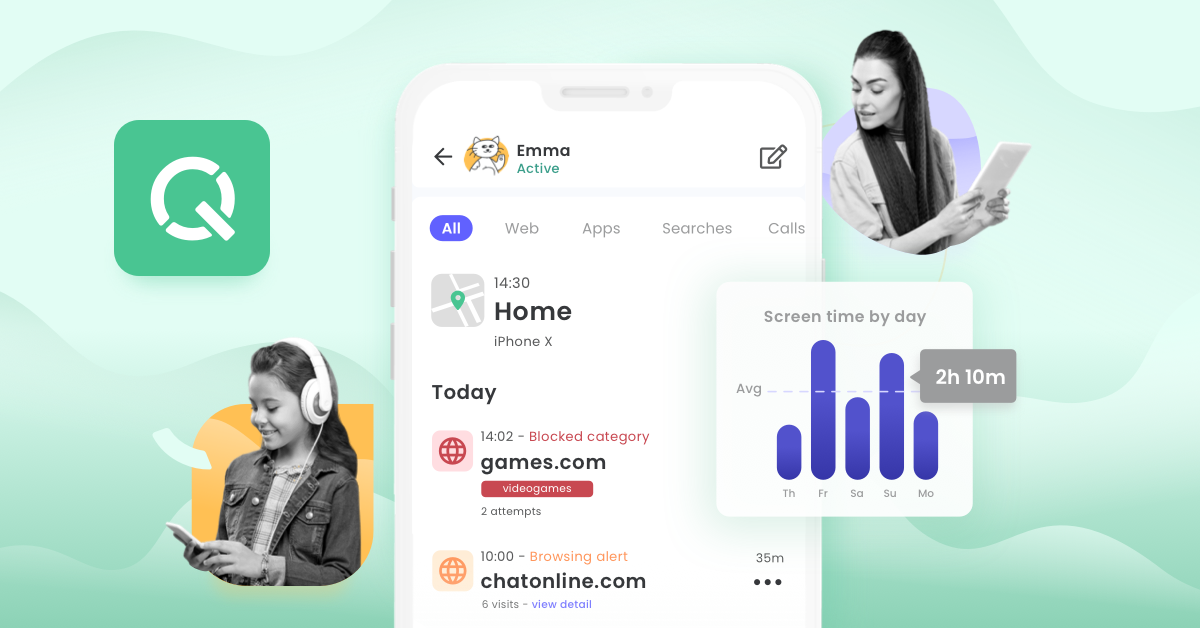
Qustodio is a leading parental control and digital wellbeing application designed to help parents monitor, manage, and secure their children's online activities across multiple devices. Trusted by millions of families, it provides robust tools to establish healthy screen time habits and protect kids from inappropriate content. The platform combines real-time location tracking, web filtering, and app blocking with detailed activity reports to give parents complete visibility and peace of mind. Whether accessed through a dedicated parent dashboard or installed on children's devices, Qustodio simplifies digital parenting in an increasingly connected world.
- Comprehensive tracking across multiple devices
- Real-time GPS location updates and history
- Effective web filtering and content blocking
- Detailed activity reports for parents
- Comprehensive cross-platform device coverage
- Detailed activity reports and insights
- Reliable real-time GPS tracking capabilities
- Customizable web filtering and scheduling tools
- Requires installation on the child's device
- Can be bypassed by tech-savvy teenagers
- Subscription pricing can be costly for multiple devices
- Can be expensive for the full premium feature set
- Tech-savvy children may find ways to bypass restrictions
- Battery drain can increase on mobile monitored devices
More alternatives & similar tools
Alternatives to Family Orbit
View all →

Alternatives to Qustodio
View all →
The Verdict
AI-generated from listing dataBoth tools offer robust parental controls, but Qustodio adds social‑media monitoring and a panic button, while Family Orbit focuses on messaging/call monitoring; the main trade‑off is feature breadth versus cost.
Key differences
- •Qustodio includes social media monitoring and a panic button; Family Orbit does not.
- •Family Orbit monitors texts, iMessages, and call logs; Qustodio does not.
- •Qustodio is freemium (basic free tier); Family Orbit is only paid subscription.
- •Both require installation on the child’s device, but Qustodio’s battery impact is noted as higher.
- •Family Orbit offers geo‑fencing alerts; Qustodio does not mention this feature.
Pricing & value
Qustodio offers a freemium tier, providing basic protection at no cost; Family Orbit has only paid subscription.
Ease of use / learning curve
Both are cloud SaaS with similar support options; no data on UI complexity.
Features & depth
Qustodio adds social media monitoring and panic button; Family Orbit adds call/text logs and geo‑fencing.
Integrations & ecosystem
Neither provides an API or open‑source components; integration capabilities are equivalent.
Support
Both offer email and support ticket channels; no differentiation in support quality mentioned.
Security & privacy
Both are cloud SaaS with no open‑source audit; privacy specifics not provided.
Scalability
Both designed for families; no information on enterprise‑scale limits.
Choose Family Orbit if…
Parents who prioritize text/call monitoring and geo‑fencing alerts, and accept a paid plan.
Choose Qustodio if…
Parents needing social‑media monitoring, panic button, and a free entry level.
Common questions
Is there a free version of either product?
Qustodio offers a freemium tier; Family Orbit is only available via paid subscription.
Can I monitor my child's texts and calls?
Family Orbit monitors incoming/outgoing texts, iMessages, and call logs; Qustodio does not provide this capability.
Which tool includes emergency alerts for the child?
Qustodio includes a built‑in panic button for children to send alerts; Family Orbit does not mention an emergency alert feature.