


Frontier: Elite II vs Frontier: First Encounters
Side-by-side comparison of features, pricing, ratings, and alternatives.
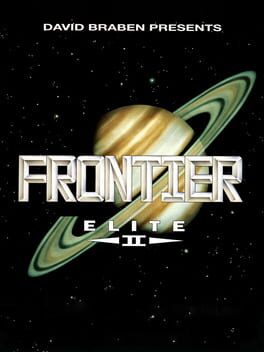

Frontier: Elite II puts you in command of a starship with limited funds, letting you trade, fight, hunt criminals, or serve governments across an astronomically large universe. The game offers virtually unrestricted freedom to travel to any of the roughly 100 billion planets and moons, making each journey unique. Its open‑world design and deep simulation mechanics deliver a timeless space adventure that rewards curiosity, skill, and strategic planning, all within a single‑player experience.
Frontier: First Encounters is the third installment of the Elite series, delivering open‑world space simulation with trading, combat, and exploration. Despite its ambitious scope, the game was plagued by bugs that affected the overall experience. Set in a richly detailed universe, players pilot their own ship, engage in strategic combat, and build a trading empire across countless star systems. The game remains a nostalgic title for fans of classic sci‑fi simulators.
- Massive, explorable universe
- Deep economic and trading systems
- Realistic flight and combat physics
- High replayability
- Deep open‑world galaxy with extensive exploration opportunities.
- Robust trading mechanics that reward strategic planning.
- Engaging space combat with varied ship classes.
- Mission editor adds replayability and community content.
- Steep learning curve for new players
- Outdated graphics by modern standards
- Limited documentation and tutorials
- Numerous bugs at launch that can disrupt gameplay.
- Outdated graphics and UI compared to modern standards.
- Limited multiplayer options; single‑player only.
More alternatives & similar tools
Alternatives to Frontier: Elite II
View all →
Explore the vast verse, trade, fight, and live out your sci-fi dreams in this open-world space MMO.
Alternatives to Frontier: First Encounters
View all →
The Verdict
AI-generated from listing dataBoth games are classic single‑player space sims priced the same, but Frontier: Elite II offers a vastly larger universe, while Frontier: First Encounters adds a mission editor and more modern (though still dated) UI features.
Key differences
- •Universe size: Elite II claims ~100 billion bodies vs. First Encounters’ “thousands” of systems.
- •Mission editor: only First Encounters provides a built‑in editor for custom scenarios.
- •Launch stability: First Encounters was noted for numerous bugs at launch; Elite II has no such bug note.
- •Release date: Elite II (1993) is older than First Encounters (1995), affecting tech baseline.
- •Graphics/UI: both are outdated, but First Encounters explicitly mentions an outdated UI compared to modern standards.
Gameplay & fun factor
Elite II’s massive 100 billion‑body galaxy promises deeper exploration than First Encounters’ thousands of systems.
Platform availability
Both are listed without platform specifics; no difference can be determined from the facts.
Price & value
Both cost $49.99 one‑time, offering identical price points.
Multiplayer / co‑op
Both are single‑player only; no multiplayer options are provided.
Content & replayability
First Encounters includes a mission editor and community‑shared content, boosting replay value beyond Elite II’s static missions.
Difficulty & accessibility
Elite II notes a steep learning curve, but First Encounters lists numerous launch bugs that can hinder accessibility.
Graphics & performance
Both are described as having outdated graphics; no clear superiority is stated.
Choose Frontier: Elite II if…
Players who prioritize massive exploration and a deep economic simulation.
Choose Frontier: First Encounters if…
Players who want custom missions, community content, and a slightly newer engine.
Common questions
Is there any multiplayer option?
Both games are single‑player only according to the specifications.
Which game offers more content for long‑term play?
First Encounters adds a mission editor and community‑shared scenarios, while Elite II relies on its larger galaxy.
Do the games differ in price?
No; both are priced at $49.99 one‑time.