


Game Party vs Medieval Games
Side-by-side comparison of features, pricing, ratings, and alternatives.
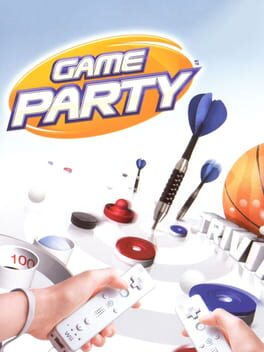
Game Party bundles five simple, fast‑paced games—Air Hockey, Hockey, Pinball, Basketball, and Mind‑Q—onto a single cartridge. Each title is designed for quick pick‑up play, making it perfect for parties and casual gatherings. Developed by FarSight Studios and published by Midway Games, the collection targets families and friends looking for easy‑to‑learn, competitive experiences. With an ESRB rating of E, it’s suitable for players of all ages.
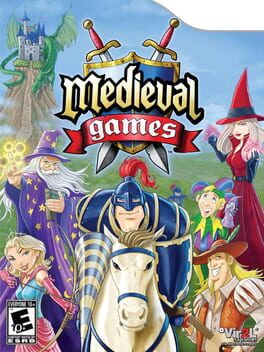
Relive the days of olde with a charming storybook world filled with dragons, castles, and swordfights. This collection offers 30 light‑hearted, medieval‑inspired mini games that are easy to pick up and perfect for family play. Enjoy split‑screen action with up to four friends, compete in tournament championships, and experience humor that keeps the fun rolling for players of all ages.
- Multiple game types keep sessions fresh.
- Easy-to-learn controls for all ages.
- Local multiplayer encourages social play.
- Compact cartridge offers great value.
- Great variety with 30 distinct mini‑games
- Supports up to four players locally
- Charming, family‑friendly art style
- Easy to learn controls
- Graphics are dated by modern standards.
- No online multiplayer options.
- Limited depth in each mini‑game.
- Limited to local multiplayer only
- No online matchmaking
- Graphics are simple and may feel dated
More alternatives & similar tools
Alternatives to Game Party
View all →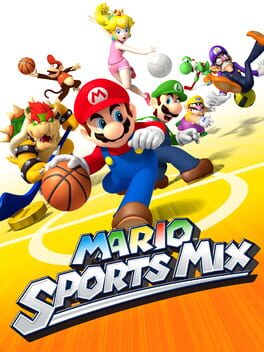
A party‑style sports collection featuring volleyball, hockey, dodgeball and basketball for friends and family.

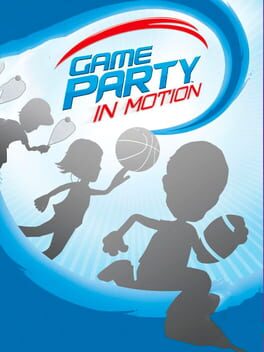
A fast‑paced party pack of 101 sports mini‑games for friends and family
Alternatives to Medieval Games
View all →
Wacky, wild competitions for the whole family to enjoy together
The Verdict
AI-generated from listing dataMedieval Games gives far more variety with 30 mini‑games and up to four local players, while Game Party offers only five games for two players but at similar price.
Key differences
- •Number of mini‑games: 30 vs 5
- •Maximum local players: up to 4 vs up to 2
- •Release dates: 2009 vs 2007 (no platform info)
- •Critic score provided only for Game Party (20/100)
- •Content depth: tournament mode across all games vs individual high‑score tables
Gameplay & fun factor
30 varied mini‑games keep sessions fresh versus only five distinct games.
Platform availability
Both listings give no specific platform details.
Pricing & value
Both are one‑time paid, but A delivers far more content for the same cost.
Multiplayer / co‑op
A supports up to four players split‑screen; B supports only two.
Content & replayability
A includes tournament mode across 30 games; B offers high‑score tables for five games.
Difficulty & accessibility
Both emphasize simple, intuitive controls suitable for children and casual gamers.
Graphics & performance
Both are described as having simple or dated graphics; no performance data provided.
Choose Game Party if…
Casual gamers who prefer a very small, classic‑arcade style collection for two players.
Choose Medieval Games if…
Families or groups wanting many quick mini‑games and up to four local players.
Common questions
What is the price difference?
Both are sold as a one‑time purchase; exact monetary amounts are not specified.
Can I play online?
No; both titles support only local multiplayer (split‑screen or shared screen).
Which offers more replay value?
Medieval Games, with 30 mini‑games and a tournament mode, provides significantly more replayability than Game Party’s five games.