


Imagine: Sweet 16 vs Mary-Kate and Ashley: Sweet 16 - Licensed to Drive
Side-by-side comparison of features, pricing, ratings, and alternatives.
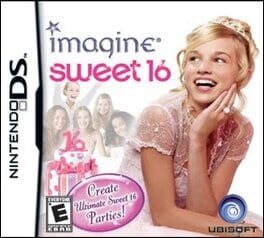
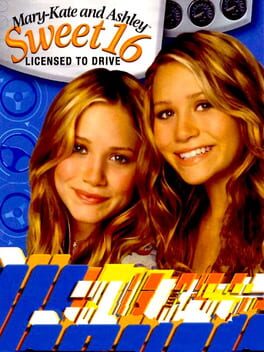
You are a sixteen‑year‑old navigating a new high school, and your biggest challenge is throwing the perfect Sweet Sixteen. Choose a theme, design decorations, and invite friends to create a memorable celebration. The game lets you manage every detail—from music playlists to party activities—while balancing school life and friendships. It’s a single‑player simulator that captures the excitement of planning your own milestone event.
After the board moves, a four‑player minigame decides who earns coins to buy helpful items, with modes that let you focus purely on the mini challenges. Whether you’re racing, windsurfing, or assembling a car, the game offers a playful mix of strategy and arcade fun for up to four players.
- Intuitive drag‑and‑drop party design tools.
- Wide variety of clothing and decoration options.
- Engaging mini‑games that affect party success.
- Lighthearted storyline suitable for all ages.
- Easy to pick up for all ages
- Variety of mini‑games keeps gameplay fresh
- Split‑screen supports up to four players on one console
- Board and mini‑game modes offer flexible play styles
- Limited replay value after completing the main party.
- Graphics are dated compared to modern titles.
- No multiplayer or online sharing features.
- Graphics are dated by modern standards
- Limited depth beyond the mini‑games
- No online multiplayer support
More alternatives & similar tools
Alternatives to Imagine: Sweet 16
View all →Drive, compete, and party with the Olsen twins in a teen‑filled board game adventure
Alternatives to Mary-Kate and Ashley: Sweet 16 - Licensed to Drive
View all →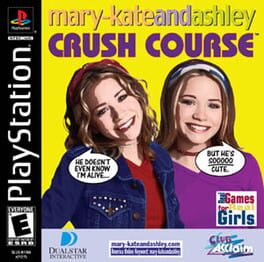
Help the twins piece together a torn map and party with cute boys in a fun adventure!
Plan, decorate, and host the ultimate Sweet Sixteen party in this teen life simulator.
The Verdict
AI-generated from listing dataImagine: Sweet 16 offers a single‑player party‑planning simulation, while Mary‑Kate and Ashley: Sweet 16 – Licensed to Drive provides a split‑screen board‑game/racing experience with multiplayer mini‑games.
Key differences
- •Gameplay focus: party design & life‑sim vs board‑game racing with mini‑games.
- •Multiplayer support: none in A, up to four players split‑screen in B.
- •Release era: A (2010) is newer than B (2002), affecting graphics and UI.
- •Content scope: A centers on one major Sweet‑16 event; B includes multiple board maps and recurring mini‑games.
- •Target audience nuance: A targets teen girls and casual sims; B targets kids/families seeking party board‑game fun.
Gameplay & fun factor
B offers varied board movement, competitive mini‑games, and split‑screen play, increasing immediate fun variety.
Platform availability
Both are single‑platform titles (unspecified), no data on broader platform support.
Price & value
Both are paid one‑time purchases; no price differences provided.
Multiplayer / co‑op
B supports single‑player and up to four‑player split‑screen; A is single‑player only.
Content & replayability
B’s multiple board maps and repeatable mini‑games give higher replay value than A’s single main party.
Difficulty & accessibility
A’s drag‑and‑drop design and simple storyline are described as intuitive and suitable for all ages.
Graphics & performance
A is newer (2010) but both are noted as having dated graphics; no clear advantage.
Choose Imagine: Sweet 16 if…
Players who want a solo, story‑driven party‑planning simulation with customization.
Choose Mary-Kate and Ashley: Sweet 16 - Licensed to Drive if…
Families or friends looking for a multiplayer board‑game/racing party with quick mini‑games.
Common questions
Can either game be played online with friends?
No. Both lack online multiplayer; only B offers local split‑screen multiplayer.
Which game offers more replay value after finishing the main content?
B, because it includes multiple board maps and repeatable mini‑games, whereas A has limited replay after the main party.
Are the graphics modern enough for today’s standards?
Both are described as having dated graphics; A is slightly newer (2010) but still not modern.