


Immortal Cities: Children of the Nile vs Pharaoh
Side-by-side comparison of features, pricing, ratings, and alternatives.
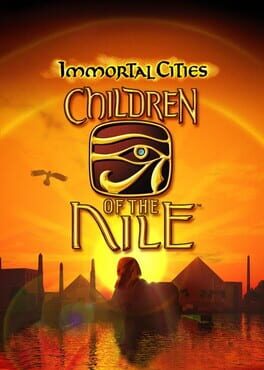
Immortal Cities: Children of the Nile lets you guide a civilization from its earliest hunter‑gatherer roots to a thriving empire, watching each citizen act as an independent being with their own needs and ambitions. Your decisions affect daily life, resource flow, and the grand monuments that define your legacy. The game blends deep simulation with strategic planning, requiring you to balance personal ambition with the welfare of your people. Every achievement is earned, not bought, making each triumph a true testament to your leadership over millennia.
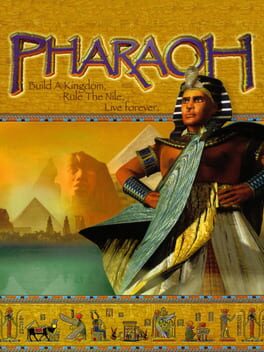
Pharaoh is a 1999 real‑time strategy and simulation game where players design, construct, and manage Egyptian cities from the Old Kingdom to the New Kingdom. Developed by Impressions Games and published by Sierra Entertainment, it blends city‑building mechanics with historical authenticity. The game offers a single‑player campaign that challenges you to balance resources, satisfy citizens, and complete monumental projects like pyramids and temples, all while navigating the unique challenges of ancient Egyptian civilization.
- Deep citizen simulation creates emergent gameplay
- Rich historical setting with authentic monuments
- Long gameplay span covering 2,000 years
- Strategic depth without multiplayer distractions
- Deep city‑building mechanics with historical detail
- Engaging single‑player campaign
- Varied building options and monuments
- Rich educational content about ancient Egypt
- Steep learning curve for new players
- Graphics are dated by modern standards
- Limited replay variety after mastering scenarios
- Outdated graphics by modern standards
- Steep learning curve for new players
- Limited to single‑player only
More alternatives & similar tools
Alternatives to Immortal Cities: Children of the Nile
View all →Alternatives to Pharaoh
View all →
Build a dynasty across 2,000 years as your citizens live, work, and shape history.
The Verdict
AI-generated from listing dataPharaoh offers a cheaper, classic RTS city‑builder with solid historical detail, while Immortal Cities provides a deeper, longer‑term simulation at a higher price.
Key differences
- •Price: Pharaoh $19.99 vs Immortal Cities $49.99.
- •Scope of gameplay: Immortal Cities spans 2,000 years with a multi‑generation dynasty; Pharaoh focuses on single‑era scenarios.
- •Citizen simulation: Immortal Cities features autonomous agents with personal needs; Pharaoh has simpler population management.
- •Critic reception: Immortal Cities scores 75/100, Pharaoh 70/100.
- •Graphics era: Both dated, but Immortal Cities is newer (2004) than Pharaoh (1999).
Pricing & value
Pharaoh costs $19.99, less than half Immortal Cities' $49.99 price.
Gameplay & fun factor
Immortal Cities adds dynasty, autonomous citizens, and 2,000‑year span, offering richer emergent gameplay.
Platform availability
Both are single‑player PC titles; no platform differences specified.
Multiplayer / co‑op
Both are single‑player only.
Content & replayability
Immortal Cities' multi‑generation system and long timeline give higher replay variety than Pharaoh's fixed scenarios.
Difficulty & accessibility
Both have steep learning curves; no advantage for either.
Graphics & performance
Immortal Cities (2004) is newer, so its graphics are slightly less outdated than Pharaoh's 1999 visuals.
Choose Immortal Cities: Children of the Nile if…
Players seeking deep citizen simulation, long‑term dynasty gameplay, and are willing to pay more.
Choose Pharaoh if…
Budget‑conscious players who want a classic RTS city‑builder with historical flavor.
Common questions
Which game is cheaper?
Pharaoh costs $19.99; Immortal Cities costs $49.99.
Which offers more historical depth and gameplay length?
Immortal Cities covers 2,000 years with a dynasty system, providing longer and deeper historical gameplay.
Do either of the games support multiplayer?
No. Both are single‑player only according to the specifications.