


Indianapolis 500 Legends vs Indianapolis 500: The Simulation
Side-by-side comparison of features, pricing, ratings, and alternatives.

Step into the golden era of Indianapolis racing from 1961 to 1971. Hand‑built speed machines roar seven inches off the ground, tearing through a moving minefield of crashes, spinning cars, and rolling tires. Experience the drama of 32 rivals on the world‑famous track, with split‑screen multiplayer that puts friends side‑by‑side in the fight to the finish. This arcade‑style racer captures the traditions, rivalries, and jaw‑dropping maneuvers that defined a historic decade of motorsport.
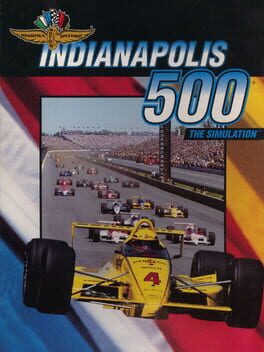
Indianapolis 500: The Simulation, released in 1989 by Papyrus Design Group and published by Electronic Arts, pioneered the shift from arcade racing to authentic motorsport simulation. Featuring 33 cars, realistic physics, and a first‑person cockpit view, it recreates the iconic Indy 500 experience on DOS and later Amiga systems. The game offers detailed car setup options, practice and qualifying sessions, and a replay mode, all while preserving the historic 1989 starting grid. Its theme music, composed by Rob Hubbard, adds a nostalgic touch to this groundbreaking title.
- Thrilling near‑180 mph arcade speed
- Authentic 1961‑1971 Indy atmosphere
- Split‑screen multiplayer adds social fun
- Diverse AI rivals keep races unpredictable
- Groundbreaking realism for its era
- Deep car setup system influences handling
- Accurate representation of the 1989 Indy grid
- Replay mode aids performance analysis
- Arcade physics may feel too simplified for hardcore sim fans
- Limited platform availability restricts some players
- No online multiplayer mode
- Limited to single‑player only
- Graphics are dated by modern standards
- No damage modeling during practice sessions
More alternatives & similar tools
Alternatives to Indianapolis 500 Legends
View all →
The first true Indy car racing simulation, bringing 1989 realism to your PC

Alternatives to Indianapolis 500: The Simulation
View all →Race the Indy 500 legends at 180 mph in arcade‑style, split‑screen action.
The Verdict
AI-generated from listing dataA offers fast arcade racing with split‑screen multiplayer and historic 1960s‑70s Indy action; B is a single‑player, highly detailed 1989 simulation with deep car setup.
Key differences
- •Multiplayer: A supports split‑screen two‑player; B is single‑player only.
- •Era & style: A is an arcade‑style 1961‑1971 experience; B is a realistic 1989 simulation.
- •Setup depth: B includes a detailed car‑setup menu; A has no mention of setup options.
- •Platform: A’s platform availability is limited (unspecified); B runs on PC only.
Gameplay & fun factor
A delivers high‑speed arcade action with split‑screen fun; B focuses on realism, appealing to niche simulation fans.
Platform availability
B runs on PC (explicit); A’s platform not specified, limiting confidence in broader availability.
Price & value
A’s MSRP is $19.99; B’s price not specified, making A’s cost clearer and likely lower.
Multiplayer / co‑op
A includes split‑screen multiplayer; B is single‑player only.
Content & replayability
B offers detailed car setup, qualifying, practice, and replay mode; A’s content limited to historic races.
Difficulty & accessibility
A’s arcade physics are more accessible; B’s deep setup may be harder for casual players.
Graphics & performance
B’s graphics are dated by modern standards; A’s graphics not described, but newer release suggests potentially better visuals.
Choose Indianapolis 500 Legends if…
Casual racers wanting fast, multiplayer fun with historic Indy flair.
Choose Indianapolis 500: The Simulation if…
Hardcore simulation fans seeking deep car setup and authentic 1989 Indy experience.
Common questions
Does either game support online multiplayer?
No; A only has split‑screen multiplayer, B is single‑player only.
What is the cost of each game?
A costs $19.99; B's price is not specified in the provided facts.
Which game offers more realistic car handling?
B provides a detailed setup system and is described as a true simulation, whereas A uses arcade‑style physics.