


Luxor 5th Passage vs Luxor MahJong
Side-by-side comparison of features, pricing, ratings, and alternatives.
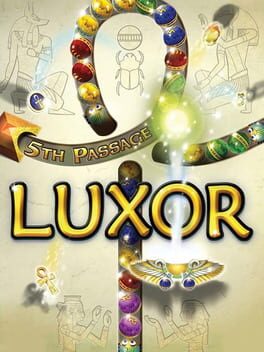
Luxor 5th Passage returns to the iconic marble‑shooting gameplay, placing you alongside the god Horus to fend off relentless waves of enemies. Set in a chaotic Egyptian kingdom, you must clear colored spheres before they reach the pyramid, using power‑ups and strategic aiming. The single‑player experience blends puzzle, action, and adventure elements, offering a historical backdrop that challenges both reflexes and pattern recognition. Perfect for quick sessions or longer playthroughs, the game delivers a nostalgic yet fresh take on the beloved series.
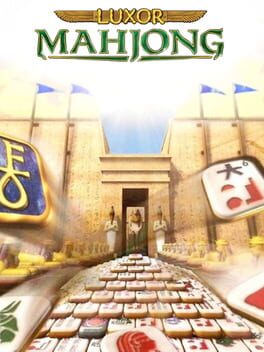
Luxor MahJong invites players on a tile‑matching quest across ancient Egypt, offering 200 uniquely challenging layouts. Choose from Adventure, Single, or Traditional modes to hunt for Golden Ankh keys, enjoy quick breaks, or relax with classic play. Five sacred tiles grant powerful boosts, testing your alertness as you climb from farmhand to Pharaoh. With point‑and‑click controls and strategic puzzle gameplay, this single‑player adventure delivers endless Egyptian fun.
- Addictive marble‑shooting mechanics
- Rich Egyptian-themed visuals
- Varied power‑ups keep gameplay fresh
- Smooth performance on PC and Linux
- Large variety of 200 challenging layouts
- Multiple game modes for different play styles
- Strategic sacred tile boosts add depth
- Easy point‑and‑click controls on PC
- Limited to single‑player mode
- No online leaderboards
- Repetitive level design after extended play
- Only available on PC
- No multiplayer or online features
- Graphics are dated compared to modern titles
More alternatives & similar tools
Alternatives to Luxor 5th Passage
View all →
Embark on a Silk Road adventure to recover Queen Nefertiti's lost artifacts
Alternatives to Luxor MahJong
View all →Embark on a Silk Road adventure to recover Queen Nefertiti's lost artifacts
The Verdict
AI-generated from listing dataLuxor 5th Passage offers fast‑paced marble‑shooting action, while Luxor MahJong provides a slower, tile‑matching puzzle experience; choose based on whether you prefer arcade shooting or classic Mahjong.
Key differences
- •Core gameplay: marble‑shooting shooter vs Mahjong tile‑matching.
- •Content volume: 5th Passage has progressive levels (unspecified count) vs MahJong’s 200 distinct layouts.
- •Game modes: 5th Passage only single‑player adventure; MahJong adds Single, Traditional, and Adventure modes.
- •Release age: 5th Passage (2010) is newer than MahJong (2006), affecting graphics perception.
Gameplay & fun factor
5th Passage delivers active shooting mechanics with power‑ups, offering more dynamic action than Mahjong's static tile matching.
Platform availability
5th Passage runs on PC and Linux; MahJong is only available on PC.
Price & value
Both are one‑time paid titles with no listed price difference; value depends on preferred gameplay.
Multiplayer / co‑op
Both are single‑player only; no multiplayer features in either.
Content & replayability
MahJong offers 200 unique tile layouts and multiple modes, providing more varied puzzle content than 5th Passage’s level progression.
Difficulty & accessibility
5th Passage includes a comprehensive tutorial and power‑ups that ease learning; Mahjong relies on player pattern recognition without tutorial detail.
Graphics & performance
5th Passage is newer (2010) with smoother performance on PC/Linux; MahJong’s graphics are described as dated.
Choose Luxor 5th Passage if…
Players who want fast, action‑oriented puzzle shooting with smooth PC/Linux performance.
Choose Luxor MahJong if…
Players who prefer classic Mahjong solitaire with many layouts and varied solo modes.
Common questions
Do either of the games support online leaderboards?
No; both are single‑player only with no online leaderboard features.
Which game runs on Linux?
Luxor 5th Passage explicitly supports Linux; Luxor MahJong is only listed for PC.
How many levels or puzzles does each game include?
MahJong provides 200 distinct tile layouts; 5th Passage’s exact level count isn’t specified, only that levels increase in difficulty.