


Luxor 5th Passage vs Luxor: Quest for the Afterlife
Side-by-side comparison of features, pricing, ratings, and alternatives.
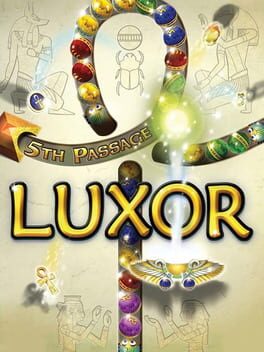
Luxor 5th Passage returns to the iconic marble‑shooting gameplay, placing you alongside the god Horus to fend off relentless waves of enemies. Set in a chaotic Egyptian kingdom, you must clear colored spheres before they reach the pyramid, using power‑ups and strategic aiming. The single‑player experience blends puzzle, action, and adventure elements, offering a historical backdrop that challenges both reflexes and pattern recognition. Perfect for quick sessions or longer playthroughs, the game delivers a nostalgic yet fresh take on the beloved series.
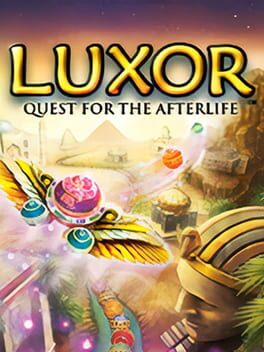
Travel beyond ancient Egypt in this action‑puzzle adventure, wielding Horus' falcon‑wing shooter to chase thieves across Persia, Syria, India and more. The game blends classic marble‑shooting mechanics with new Battle Mode challenges as you restore the sacred relics. The single‑player experience offers vibrant locations, kid‑friendly puzzles, and an engaging storyline that invites players of all ages to explore the mysteries of the Silk Road while mastering fast‑paced, strategic shooting gameplay.
- Addictive marble‑shooting mechanics
- Rich Egyptian-themed visuals
- Varied power‑ups keep gameplay fresh
- Smooth performance on PC and Linux
- Engaging storyline across diverse locations
- Kid‑friendly difficulty progression
- Bright, attractive visuals
- Varied puzzle mechanics keep gameplay fresh
- Limited to single‑player mode
- No online leaderboards
- Repetitive level design after extended play
- Limited to single‑player only
- No online multiplayer or co‑op mode
- Graphics may feel dated compared to modern titles
More alternatives & similar tools
Alternatives to Luxor 5th Passage
View all →

Embark on a Silk Road adventure to recover Queen Nefertiti's lost artifacts

Alternatives to Luxor: Quest for the Afterlife
View all →The Verdict
AI-generated from listing dataBoth are single‑player marble‑shooting puzzle games from the same developer, but Luxor 5th Passage offers a later release with Egyptian‑focused levels and known pricing, while Luxor: Quest for the Afterlife adds a broader world tour and kid‑friendly difficulty.
Key differences
- •Level setting: A stays in Egyptian mythos; B travels across Egypt, Persia, Syria, and India.
- •Release date: A (Nov 2010) is newer than B (May 2009).
- •Pricing info: A lists a MSRP of $19.99; B’s price is not specified.
- •Gameplay mode: B includes a Battle Mode against AI thieves; A does not mention this mode.
- •Target audience: A targets casual puzzle/action gamers; B is explicitly aimed at kids and casual players.
Gameplay & fun factor
B adds a Battle Mode and a multi‑regional storyline, giving more variety than A’s single Egyptian theme.
Platform availability
Both are PC titles with simple mouse controls; no other platforms are listed.
Price & value
A provides a clear MSRP ($19.99) while B’s price is not disclosed, making A’s cost more transparent.
Multiplayer / co‑op
Both are single‑player only; neither offers online or co‑op multiplayer.
Content & replayability
B’s broader geographic themes and Battle Mode suggest higher replay potential than A’s repetitive level design.
Difficulty & accessibility
B is described as having a kid‑friendly difficulty curve, whereas A’s difficulty is not specified and may be harder.
Graphics & performance
A mentions smooth performance on PC and Linux; B only notes vibrant HD graphics without performance details.
Choose Luxor 5th Passage if…
Players who want a polished, Egyptian‑themed puzzle game with known pricing and Linux support.
Choose Luxor: Quest for the Afterlife if…
Kids or casual gamers seeking varied locations, easier difficulty, and extra battle mode.
Common questions
Which game is cheaper?
Luxor 5th Passage lists an MSRP of $19.99; Luxor: Quest for the Afterlife does not specify a price.
Do either of the games support multiplayer?
No. Both are single‑player only.
Is there a version that runs on Linux?
Luxor 5th Passage explicitly mentions smooth performance on PC and Linux; Linux support is not mentioned for Quest for the Afterlife.