


Mouse Trap vs Pac-Man
Side-by-side comparison of features, pricing, ratings, and alternatives.
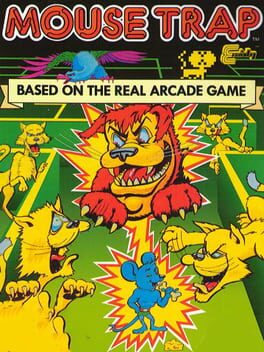
Mouse Trap is a 1981 arcade title from Exidy that challenges players to navigate a maze while avoiding a relentless cat, echoing the popular Pac‑Man formula. The game was later brought to home consoles by Coleco, appearing on the ColecoVision, Intellivision, and Atari 2600 systems, preserving its retro charm for a wider audience.
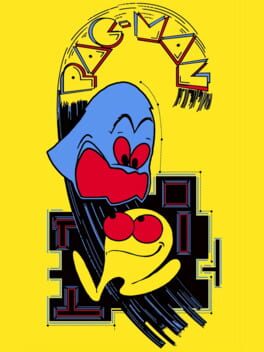
Pac-Man is a 1980 maze action video game developed and released by Namco for arcades. Players guide the iconic yellow character through a labyrinth, eating all the dots while avoiding four colored ghosts. Power Pellets turn the ghosts blue, letting Pac-Man chase them for extra points. The simple yet addictive gameplay has made it an enduring symbol of video game history.
- Authentic 1980s arcade experience
- Simple, easy‑to‑learn controls
- Challenging cat AI increases replay value
- Available on multiple classic platforms
- Iconic and instantly recognizable gameplay
- Easy to learn, hard to master
- Short sessions perfect for quick play
- Enduring high-score replay value
- Limited to single‑player mode
- Graphics are primitive by modern standards
- No official online leaderboards
- Limited visual variety compared to modern games
- No multiplayer mode
- Repetitive maze design after many plays
More alternatives & similar tools
Alternatives to Mouse Trap
View all →
Alternatives to Pac-Man
View all →
Help Ms. Pac-Man recover the Gems of Virtue before witch Mesmerelda claims the Enchanted Castle.
The Verdict
AI-generated from listing dataBoth are classic single‑player arcade maze games, but Pac‑Man offers broader iconic appeal and richer replay loops, while Mouse Trap delivers a more niche, authentic 1981 arcade experience with multiple retro console ports.
Key differences
- •Mouse Trap is a 1981 Exidy title with cat‑chase AI; Pac‑Man is a 1980 Namco hit featuring power‑pellet ghost mechanics.
- •Mouse Trap is ported to ColecoVision, Intellivision, and Atari 2600; Pac‑Man’s platform list isn’t specified.
- •Pac‑Man includes a critic score (79/100) and known high‑score competition; Mouse Trap lacks such ratings.
- •Mouse Trap’s graphics are described as primitive 8‑bit arcade reproductions; Pac‑Man’s graphics are iconic 8‑bit but more varied.
- •Both are paid one‑time, single‑player only, but Pac‑Man’s difficulty ramps with ghost speed and patterns, offering deeper long‑term challenge.
Gameplay & fun factor
Pac‑Man adds power‑pellets, ghost‑eating and evolving patterns, giving richer, more varied play than Mouse Trap’s simple cat chase.
Platform availability
Mouse Trap is explicitly ported to three classic consoles, while Pac‑Man’s supported platforms are not listed.
Pricing & value
Both are paid one‑time purchases; no price differences are provided.
Multiplayer / co‑op
Each game is single‑player only according to the specifications.
Content & replayability
Pac‑Man tracks high scores, adds power‑pellet strategy and increasing ghost speed, encouraging repeated attempts.
Difficulty & accessibility
Both use simple four‑direction controls and gradually increase challenge (cat speed vs. ghost speed).
Graphics & performance
Both use 8‑bit retro graphics; Mouse Trap is noted as primitive, Pac‑Man as iconic but similarly dated.
Choose Mouse Trap if…
Buyers who love authentic 1980s arcade ports and want to play on ColecoVision, Intellivision, or Atari 2600.
Choose Pac-Man if…
Buyers seeking the most recognizable arcade experience with deeper high‑score replay and ghost‑eating mechanics.
Common questions
Do either of these games support online leaderboards?
No; Mouse Trap has no official online leaderboards and Pac‑Man’s specifications do not mention them.
Which game offers more platform options?
Mouse Trap, which is ported to ColecoVision, Intellivision, and Atari 2600; Pac‑Man’s platforms are not specified.
Is there any critical rating to compare quality?
Only Pac‑Man lists a critic score (79/100); Mouse Trap provides no such rating.