


Pokémon Rumble vs Pokémon Rumble U
Side-by-side comparison of features, pricing, ratings, and alternatives.
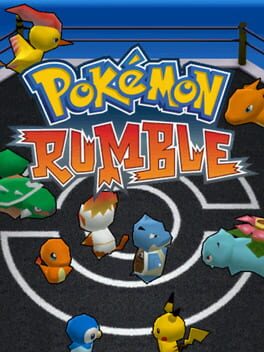
Pokémon Rumble is an action‑focused spin‑off where players control toy versions of Pokémon, battling hordes of enemies across colorful stages. The game emphasizes simple controls, cooperative play, and collecting new Pokémon to expand your roster. Released on WiiWare in 2009, the title offers both solo and multiplayer modes, letting friends team up locally to smash through waves of foes and earn upgrades. Its charm lies in the blend of familiar Pokémon characters with a light‑hearted hack‑and‑slash experience suitable for younger gamers and families.
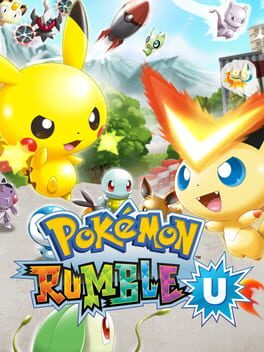
After a mishap in the Toy Pokémon Shop, several Pokémon capsules tumble down a river and wash up on a strange riverbank. Players guide their toy Pokémon heroes on a quest to return home, uncovering oddities along the way. The game blends fast‑paced beat ’em up action with RPG progression, offering both solo and cooperative play on the Wii U console.
- Easy to pick up and play
- Great for local co‑op fun
- Wide variety of Pokémon to collect
- Short, replayable stages
- Easy-to-learn controls suitable for young players
- Local co‑op encourages social play
- Large roster of recognizable Pokémon toys
- Short, bite‑sized levels for quick sessions
- Limited to local multiplayer only
- Graphics are dated by modern standards
- No online features
- Limited depth for hardcore gamers
- Repetitive combat can become monotonous
- No online multiplayer options
More alternatives & similar tools
Alternatives to Pokémon Rumble
View all →
Alternatives to Pokémon Rumble U
View all →The Verdict
AI-generated from listing dataBoth titles are local‑only, toy‑Pokémon beat‑em‑ups, but Pokémon Rumble U (A) adds split‑screen co‑op and a slightly lower age rating, while the original Pokémon Rumble (B) is older, cheaper, and lacks split‑screen support.
Key differences
- •A supports split‑screen co‑op for up to 4 players; B only mentions co‑op without split‑screen.
- •A was released in 2013 with a critic score (51/100); B is from 2009 and has no listed critic score.
- •B lists a clear MSRP of $8.00; A does not specify price.
- •Age rating differs: A is ESRB E (PEGI 7); B is ESRB E10+.
- •Multiplayer description: A includes “Multiplayer, Co‑operative, Split screen”; B lists “Multiplayer, Co‑operative” only.
Pricing & value
B explicitly lists an $8.00 MSRP; A’s price is not provided, making B the clearer value.
Multiplayer / co‑op
A offers split‑screen co‑op for four players, giving more flexible local play than B’s unspecified co‑op.
Gameplay & fun factor
Both feature similar toy‑Pokémon beat‑em‑up mechanics, over 100 collectable Pokémon, and short replayable stages.
Content & replayability
Both provide over 100 Pokémon toys and short stages; neither lists additional DLC or modes.
Difficulty & accessibility
A is rated ESRB E (PEGI 7) and marketed to younger kids, indicating slightly easier accessibility than B’s E10+ rating.
Graphics & performance
B is noted as having dated graphics, but no graphics info for A; without data, treat as tie.
Platform availability
Both are Nintendo titles for the same platform family; specific platforms not listed.
Choose Pokémon Rumble if…
Budget‑conscious buyers who prefer the cheaper, older title and don’t need split‑screen.
Choose Pokémon Rumble U if…
Families with young children who want four‑player split‑screen co‑op on a newer console.
Common questions
Which game is cheaper?
Pokémon Rumble (B) lists an MSRP of $8.00; Pokémon Rumble U (A) does not specify price.
Can I play with four friends on the same screen?
Yes, Pokémon Rumble U (A) supports split‑screen co‑op for up to four players; the original Rumble (B) does not mention split‑screen.
Is there a difference in age rating?
A is rated ESRB E (PEGI 7); B is rated ESRB E10+, making A slightly more suitable for younger kids.