


Populous vs Populous: The Beginning
Side-by-side comparison of features, pricing, ratings, and alternatives.

Populous lets you wield divine powers to raise and lower terrain, guide your followers, and crush rival deities. As the first true god‑game, it blends strategy, sandbox creation, and role‑playing elements into a timeless experience. Released in 1989, the game offers both single‑player campaigns and multiplayer battles, letting you experiment with world‑building or compete for supremacy on PC and Mac. Its fantasy setting and deep simulation mechanics still inspire modern titles today.
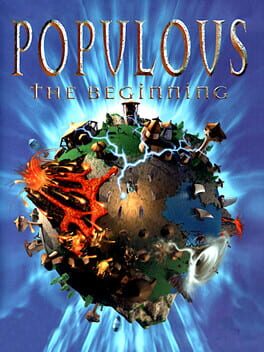
Populous: The Beginning puts you in the role of a shaman who directly commands the Blue tribe across a solar system of twenty‑five campaign missions. Using terrain deformation, magic spells, and smart villagers, you battle rival tribes to ultimately achieve deity status. The game blends real‑time strategy, role‑playing elements, and classic god‑game mechanics, offering both single‑player and multiplayer modes on PC and PlayStation 3.
- Innovative god‑game mechanics that defined a genre
- Deep terrain manipulation offers creative freedom
- Both single‑player and multiplayer modes provide replay value
- Retro charm with timeless strategic depth
- Innovative terrain deformation adds deep strategic layers
- Rich 3D visuals were groundbreaking for its time
- Blend of RTS and god‑game offers diverse gameplay
- Both single‑player and multiplayer options increase replay value
- Graphics are dated by modern standards
- Limited UI can be unintuitive for new players
- Multiplayer matchmaking is rudimentary
- AI of villagers can be inconsistent in complex situations
- Game design sometimes feels torn between RTS and god‑game
- Mixed reviews due to unclear genre focus
More alternatives & similar tools
Alternatives to Populous
View all →


Alternatives to Populous: The Beginning
View all →
The Verdict
AI-generated from listing dataPopulous offers the original 1989 god‑game experience with classic retro charm at a higher price, while Populous: The Beginning provides a later 3D upgrade with more missions and a lower one‑time cost.
Key differences
- •Graphics: 1989 retro 2D vs 1998 true 3D visuals.
- •Content: The Beginning includes 25 campaign missions across multiple planets; original Populous does not list mission count.
- •Pricing model: Populous costs $49.99 (subscription); The Beginning is $19.99 one‑time purchase.
- •Gameplay focus: Original emphasizes pure terrain manipulation; The Beginning adds shaman spells and unit customization.
- •Release era: 1989 classic vs 1998 sequel with newer tech.
Pricing & value
The Beginning is $19.99 one‑time, far cheaper than Populous' $49.99 subscription price.
Graphics & performance
The Beginning uses true 3D deformable terrain, described as groundbreaking, whereas Populous has dated retro graphics.
Content & replayability
The Beginning offers 25 distinct campaign missions on multiple planets; Populous lists no specific campaign count.
Multiplayer / co‑op
Both titles support single‑player and multiplayer head‑to‑head god battles.
Gameplay & fun factor
Populous introduced innovative god‑game mechanics that defined the genre, praised for deep terrain manipulation.
Difficulty & accessibility
Populous includes a built‑in tutorial; The Beginning’s AI is noted as inconsistent, making learning harder.
Platform availability
Both are listed as paid PC titles; no platform differences are specified.
Choose Populous if…
Buyers who value the historic, genre‑defining experience and don’t mind a higher price.
Choose Populous: The Beginning if…
Buyers who want modern 3D graphics, more missions, and a lower one‑time cost.
Common questions
Which game is cheaper?
Populous: The Beginning costs $19.99 one‑time; Populous costs $49.99 and uses a subscription model.
Do both games have multiplayer?
Yes, each supports single‑player and multiplayer head‑to‑head god battles.
Which title has more campaign content?
The Beginning provides 25 distinct campaign missions across multiple planets; the original Populous does not specify mission count.