


Rugrats: I Gotta Go Party vs Rugrats: Studio Tour
Side-by-side comparison of features, pricing, ratings, and alternatives.
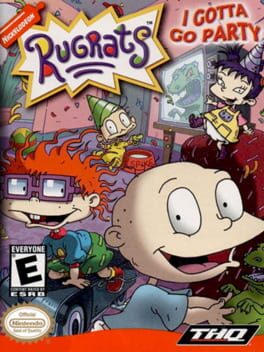

Join Tommy and his friends in a lively multiplayer hide‑and‑seek quest. Find each Rugrat to unlock a variety of wacky party mini‑games like Angelica’s Cookies and Phil’s Mud Pies. The game offers endless on‑the‑go fun for kids and families, with simple controls and colorful levels that keep the competition fresh and exciting.
Help the Rugrats prove they're more than babies as they hunt for Tommy's little brother Dil inside a bustling Hollywood movie studio. Play as Tommy, Chuckie, Phil, Lil, Angelica, and Susie across four themed sets—Diapies of Thunder, Captain Cookies, Lazy Saddles, and Outside Space—each packed with puzzles, collectibles, and hidden keys. With 16 varied scenarios, split‑screen multiplayer for up to four players, and a final Find Dil challenge, the game blends platforming, exploration, and light competition. Collect coins, cookies, chocolate milk, and more while navigating pirate mini‑golf, buried treasure, western round‑ups, and alien worlds.
- Engaging hide‑and‑seek core loop
- Wide variety of unlockable mini‑games
- Easy controls for young players
- Supports both solo and group play
- Colorful, kid‑friendly graphics.
- Varied themed levels keep gameplay fresh.
- Supports up to four players locally.
- Easy controls suitable for young children.
- Limited depth after all mini‑games are unlocked
- Graphics are simple and dated
- No online multiplayer support
- Limited to split‑screen; no online multiplayer.
- Repetitive collect‑and‑search mechanics after a while.
- Only available on older platforms.
More alternatives & similar tools
Alternatives to Rugrats: I Gotta Go Party
View all →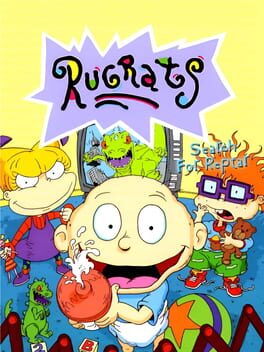
Alternatives to Rugrats: Studio Tour
View all →

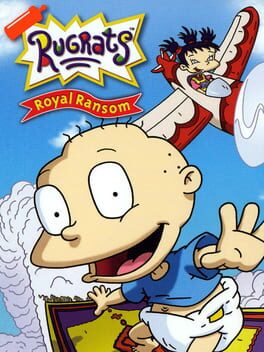
Side‑scrolling adventure where Rugrats babies explore fairy‑tale worlds
The Verdict
AI-generated from listing dataRugrats: I Gotta Go Party offers a cheaper, hide‑and‑seek focused experience, while Rugrats: Studio Tour provides more varied levels and supports up to four local players at a higher price.
Key differences
- •Price: $19.99 (Party) vs $29.99 (Studio Tour).
- •Multiplayer capacity: Party supports unspecified local multiplayer; Studio Tour supports split‑screen for up to four players.
- •Content scope: Party centers on hide‑and‑seek and unlockable mini‑games; Studio Tour offers four movie‑set worlds and 16 scenarios plus a final Dil rescue.
- •Release era: Party released 2002; Studio Tour released 1999, noted as only on older platforms.
- •Graphics description: Party noted as simple and dated; Studio Tour described as colorful kid‑friendly graphics.
Gameplay & fun factor
Both games target young kids with simple controls and themed adventures; each offers distinct core loops (hide‑seek vs movie‑set exploration).
Platform availability
Party has no stated platform limitation; Studio Tour is explicitly noted as only on older platforms.
Price & value
Party costs $19.99, $10 less than Studio Tour while providing comparable family‑friendly content.
Multiplayer / co‑op
Studio Tour supports split‑screen for up to four players; Party only mentions local multiplayer without a player count.
Content & replayability
Studio Tour offers four distinct worlds, 16 scenarios, and a final Dil rescue, giving more varied content than Party's hide‑and‑seek loop.
Difficulty & accessibility
Both games feature simple button controls designed for young children.
Graphics & performance
Studio Tour is described as colorful kid‑friendly graphics, whereas Party is noted as simple and dated.
Choose Rugrats: I Gotta Go Party if…
Buyers who prioritize lower cost and a straightforward hide‑and‑seek plus mini‑game experience for 1‑2 players.
Choose Rugrats: Studio Tour if…
Buyers who want more players (up to 4), broader level variety, and are okay paying extra.
Common questions
Which game is cheaper?
Rugrats: I Gotta Go Party costs $19.99; Rugrats: Studio Tour costs $29.99.
How many players can play together?
Studio Tour supports split‑screen for up to four local players; Party supports local multiplayer but does not specify a player limit.
Which game offers more varied content?
Studio Tour provides four movie‑set worlds, 16 scenarios, and a final Dil rescue, whereas Party focuses on hide‑and‑seek and unlockable mini‑games.