


Super Monkey Ball vs Super Monkey Ball: Step & Roll
Side-by-side comparison of features, pricing, ratings, and alternatives.
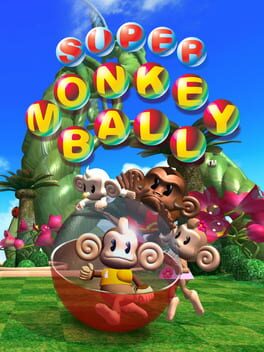
Super Monkey Ball is a 2001 platform party game where players guide a transparent ball containing one of four monkeys—AiAi, MeeMee, Baby, or GonGon—through maze‑like stages while racing against time. The game features both single‑player challenges and a variety of multiplayer minigames, making it ideal for quick sessions or longer party play. The title debuted as an arcade cabinet before becoming a launch title for the GameCube, showcasing Sega’s first published game on a Nintendo console and delivering precise analog stick control with its signature banana‑shaped controller.
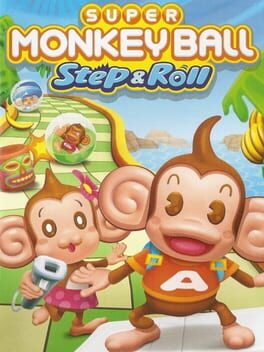
Super Monkey Ball: Step & Roll delivers the classic ball‑rolling fun with a fresh stack of challenges and a variety of mini‑games. The game supports split‑screen multiplayer and a co‑op mode where teammates can shoot obstacles away, adding a lively party feel. While the balance board integration promises a unique experience, it often feels more frustrating than rewarding, so skipping it still leaves a solid, enjoyable platform puzzle title.
- Intuitive tilt controls
- Replayable single‑player stages
- Variety of multiplayer minigames
- Charming character design
- Entertaining split‑screen multiplayer
- Varied mini‑games add replay value
- Co‑op mode enhances teamwork
- Limited depth beyond core mechanics
- Graphics dated by modern standards
- No online multiplayer support
- Balance board support can be frustrating
- Some mini‑games feel hit‑or‑miss
- Overall critic score is modest
More alternatives & similar tools
Alternatives to Super Monkey Ball
View all →
Alternatives to Super Monkey Ball: Step & Roll
View all →The Verdict
AI-generated from listing dataSuper Monkey Ball: Step & Roll (B) offers higher critic scores and more varied multiplayer modes, while the original Super Monkey Ball (A) provides classic arcade feel with simpler controls.
Key differences
- •Critic score: B (59) vs A (45).
- •Multiplayer: A has party minigames, no split-screen; B adds split-screen competitive and co‑op modes.
- •Control options: A uses simple tilt; B adds optional balance‑board support (can be frustrating).
- •Release era: A (2001) has dated graphics; B (2010) is newer with slightly improved visuals.
- •Content focus: A emphasizes single‑player stages and master stages; B emphasizes mini‑games and puzzle‑platforming.
Gameplay & fun factor
B adds puzzle platforming, obstacle shooting, and varied mini‑games, giving broader fun beyond core tilt rolling.
Platform availability
Both are paid, one‑time titles for the same console generation; no platform differences specified.
Price & value
Both are one‑time purchases; price not listed, so value cannot be distinguished.
Multiplayer / co‑op
B includes split‑screen competitive and co‑op modes; A only offers party minigames without split‑screen.
Content & replayability
B’s collection of mini‑games and progressive difficulty adds more replay loops than A’s limited stage set.
Difficulty & accessibility
A’s simple one‑button tilt controls are more accessible; B’s balance‑board can be frustrating for some.
Graphics & performance
B released in 2010, newer than A’s 2001 release, so graphics are less dated.
Choose Super Monkey Ball if…
Players who want a straightforward, easy‑to‑pick‑up arcade tilt game with classic charm.
Choose Super Monkey Ball: Step & Roll if…
Players seeking richer multiplayer options, puzzle variety, and newer presentation.
Common questions
Which game has better reviews?
Super Monkey Ball: Step & Roll (B) has a critic score of 59/100, higher than A’s 45/100.
Do either games support online multiplayer?
No; A explicitly lacks online multiplayer, and B only lists split‑screen and co‑op modes.
Is the balance‑board required for B?
No; it’s optional support, but can be frustrating for some players.