


Tiny Brains vs Trine
Side-by-side comparison of features, pricing, ratings, and alternatives.
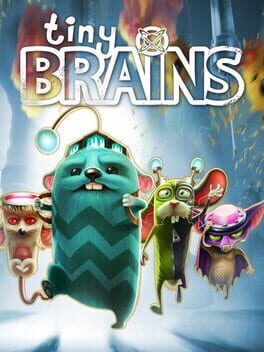
Tiny Brains is a cooperative puzzle adventure where four super‑powered lab animals must escape a mad scientist’s experiments. Players combine unique physics‑based abilities to navigate chaotic, trick‑filled mazes. The game supports both single‑player and multiplayer modes, featuring leaderboards, fast‑paced communication, and simple controls that welcome casual and hardcore gamers alike.
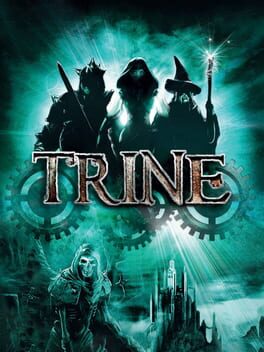
Trine is a physics‑based action platformer where three uniquely skilled heroes combine their abilities to solve hazardous puzzles and defeat threatening enemies. Set in a ruined kingdom beset by an undead army, players must use clever solutions and interactive physics to restore peace. The game offers both single‑player and cooperative multiplayer modes, letting friends team up to explore beautifully crafted fantasy environments while tackling challenging puzzles that demand teamwork and creativity.
- Creative physics‑based mechanics
- Supports both solo and co‑op play
- Easy to pick up controls
- Replayable puzzles with multiple solutions
- Engaging physics‑based puzzles
- Beautiful hand‑drawn art style
- Flexible single‑player and co‑op modes
- Rich character abilities encourage creativity
- Limited platform availability (no consoles beyond PS3/PS4)
- Graphics are modest and may feel dated
- Online matchmaking can be inconsistent
- Some puzzles can feel repetitive
- Limited difficulty scaling for expert players
- Older graphics may not appeal to modern visual expectations
More alternatives & similar tools
Alternatives to Tiny Brains
View all →Alternatives to Trine
View all →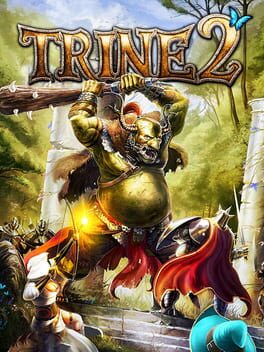
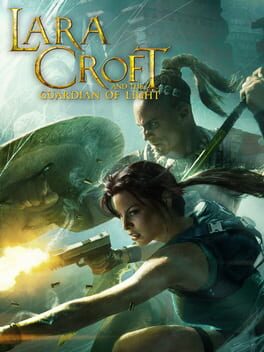
Co‑op action‑puzzle adventure where Lara teams up with a warrior to battle ancient evils
The Verdict
AI-generated from listing dataBoth games cost $19.99 and offer physics‑based puzzles, but Trine scores higher with critics and richer art, while Tiny Brains lets up to four players cooperate and has simpler controls.
Key differences
- •Co‑op capacity: Tiny Brains supports up to 4 players, Trine up to 3.
- •Critical reception: Trine 85/100 vs Tiny Brains 66/100.
- •Art style: Trine uses hand‑drawn fantasy visuals; Tiny Brains has modest, dated graphics.
- •Platform reach: Tiny Brains is limited to PS3/PS4 and PC (no other consoles mentioned).
- •Difficulty scaling: Tiny Brains is noted for easy accessibility; Trine’s difficulty may feel limited for experts.
Pricing & value
Both are paid one‑time purchases at $19.99.
Gameplay & fun factor
Trine’s higher critic score (85) suggests a more polished overall experience.
Platform availability
Tiny Brains is limited to PS3/PS4 (and unspecified PC); Trine’s platforms are not listed, implying broader reach.
Multiplayer / co‑op
Tiny Brains allows up to four players; Trine caps at three.
Content & replayability
Trine adds spells, weapons, upgrades and a progression system, enhancing replay value.
Difficulty & accessibility
Tiny Brains features simple button layouts and easy accessibility; Trine’s difficulty scaling is limited for experts.
Graphics & performance
Trine’s hand‑drawn art is praised, while Tiny Brains’ graphics are described as modest and dated.
Choose Tiny Brains if…
Players who want larger (up to 4) co‑op sessions and very easy controls.
Choose Trine if…
Players who prioritize critical acclaim, richer art and progression, and can work with up to 3 players.
Common questions
Do the games cost the same?
Yes, both are priced at $19.99 as a one‑time purchase.
How many people can play together?
Tiny Brains supports up to four players; Trine supports up to three.
Which game has better reviews?
Trine has a higher critic score (85/100) compared to Tiny Brains (66/100).