


Trauma Center: Second Opinion vs Trauma Center: Under the Knife
Side-by-side comparison of features, pricing, ratings, and alternatives.
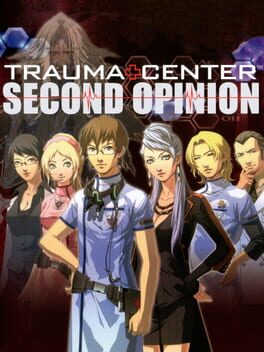
Trauma Center: Second Opinion is an intense medical simulation game that combines puzzle-solving with fast-paced action. Players assume the role of Dr. Derek Stiles as he uses his mysterious 'Healing Touch' ability to eradicate a deadly artificial disease known as GUILT. Originally released as a launch window title for the Nintendo Wii, the game reimagines surgery through motion controls, requiring precise incisions, suturing, and tumor extractions under extreme time pressure.
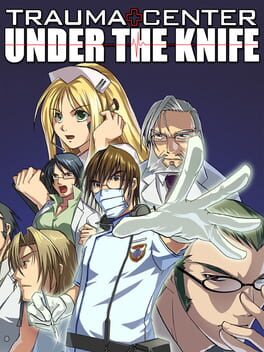
Trauma Center: Under the Knife is a dramatic medical simulation game that puts players in the role of a young surgeon gifted with the miraculous ability known as the Healing Touch. Using the Nintendo DS touchscreen, players must perform intricate, high-pressure surgeries to save patients from a deadly new disease known as GUILT, racing against the clock while managing vital signs and unexpected complications. The game blends intense arcade-action mechanics with a compelling visual novel narrative, exploring medical ethics, personal growth, and a sci-fi bioterrorism plot. Every incision, suture, and tumor removal requires precision and steady nerves, making split-second decisions the difference between life and death on the operating table.
- Engaging and unique use of motion controls
- High-tension, thrilling gameplay loop
- Compelling medical drama storyline
- Rewarding difficulty progression
- Incisive and highly engaging touchscreen gameplay mechanics
- Compelling sci-fi medical thriller storyline
- Satisfying difficulty curve that rewards precision
- Unique concept rarely explored in video games
- Can cause hand fatigue during long play sessions
- Steep difficulty spike in later chapters
- Strict time limits may frustrate some players
- High difficulty can cause frustration during later levels
- Stylus controls occasionally demand extreme hand precision
- Limited replayability once all operations are mastered
More alternatives & similar tools
Alternatives to Trauma Center: Second Opinion
View all →Step into the scrubs of Dr. Derek Stiles in this intense medical thriller.
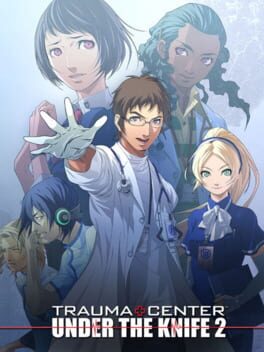
Perform high-intensity surgeries and save lives against the clock in this thrilling medical drama.
Alternatives to Trauma Center: Under the Knife
View all →
Navigate deadly nightmares and relationship drama in this thrilling puzzle-platformer.
Perform high-intensity surgeries and save lives against the clock in this thrilling medical drama.
Perform high-stakes surgeries using the Wii Remote as a surgical instrument.
The Verdict
AI-generated from listing dataProduct A offers a cheaper, solid DS experience with precise stylus controls, while Product B adds motion‑control novelty and higher reviews at a higher price.
Key differences
- •Platform: DS (A) vs Wii (B)
- •Control scheme: stylus touchscreen (A) vs Wii Remote/Nunchuk motion (B)
- •Critic score: 75/100 (A) vs 88/100 (B)
- •Price: $34.99 (A) vs $49.99 (B)
- •Replay content: secret operations & alternate paths in B, limited replay after mastery in A
Gameplay & fun factor
B’s motion controls create a more immersive surgical feel, praised by critics (88/100).
Platform availability
A runs on Nintendo DS, a handheld with broader portability than the Wii.
Price & value
A costs $34.99 versus B’s $49.99, offering similar core experience for less money.
Multiplayer / co‑op
Both are single‑player only.
Content & replayability
B includes unlockable secret operations and alternate story paths; A has limited replay after mastery.
Difficulty & accessibility
A’s stylus precision can be demanding, but B adds steep difficulty spikes and hand‑fatigue from motion controls.
Graphics & performance
Wii hardware generally delivers higher visual fidelity than the DS.
Choose Trauma Center: Second Opinion if…
Players willing to pay more for motion‑control immersion and higher critical acclaim.
Choose Trauma Center: Under the Knife if…
Budget‑focused players who prefer precise touchscreen surgery on a handheld.
Common questions
Is the higher price of Product B justified?
B costs $49.99, $15 more than A, but offers motion controls, higher critic score (88 vs 75), and extra secret content.
Which game is easier on the hands for long sessions?
A uses a stylus, which is less fatiguing than B’s motion‑control scheme that can cause hand fatigue.
Can I replay the games after finishing the main story?
B provides unlockable secret operations and alternate paths; A has limited replayability once all operations are mastered.