




What is ChartDB?
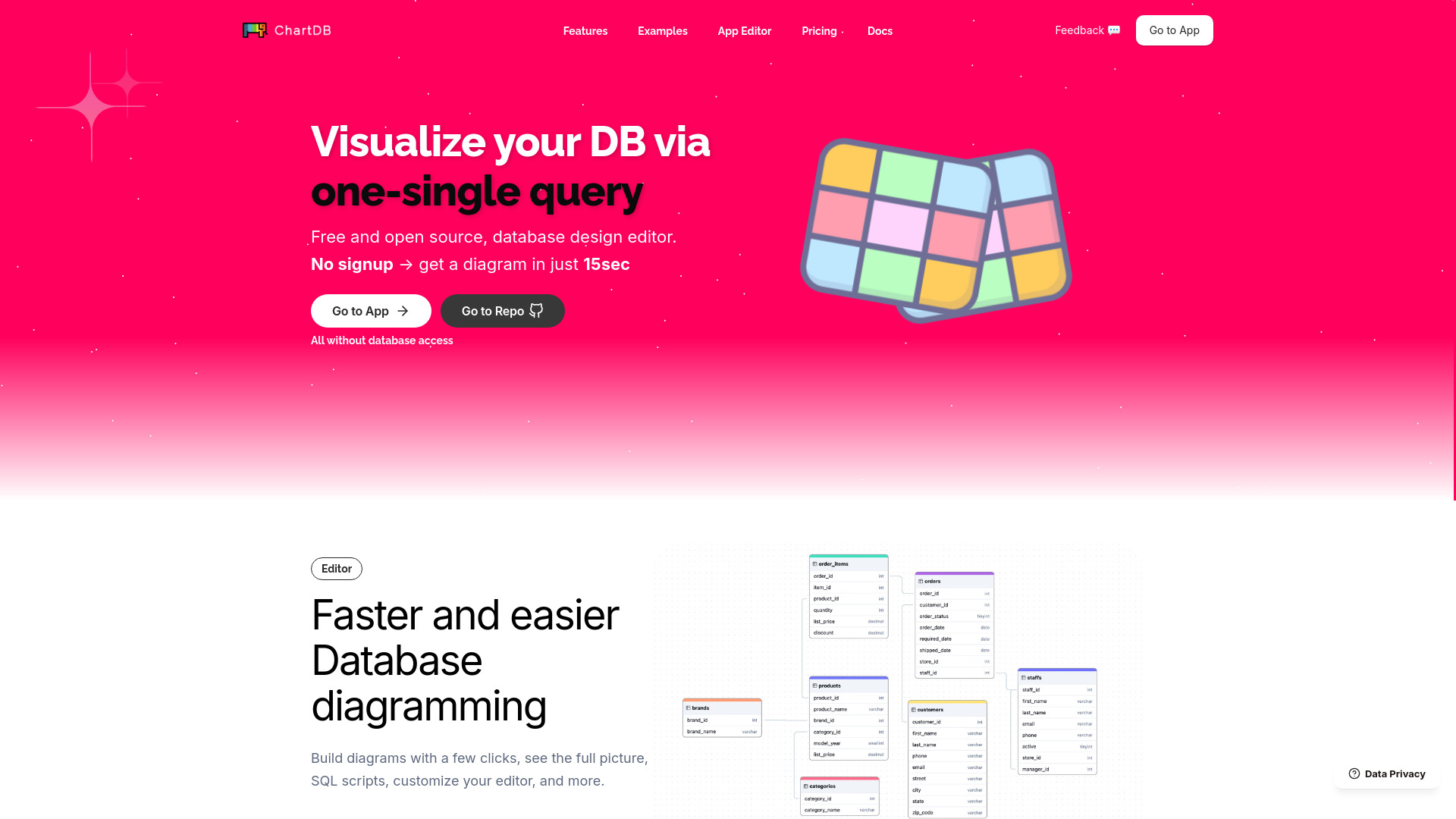
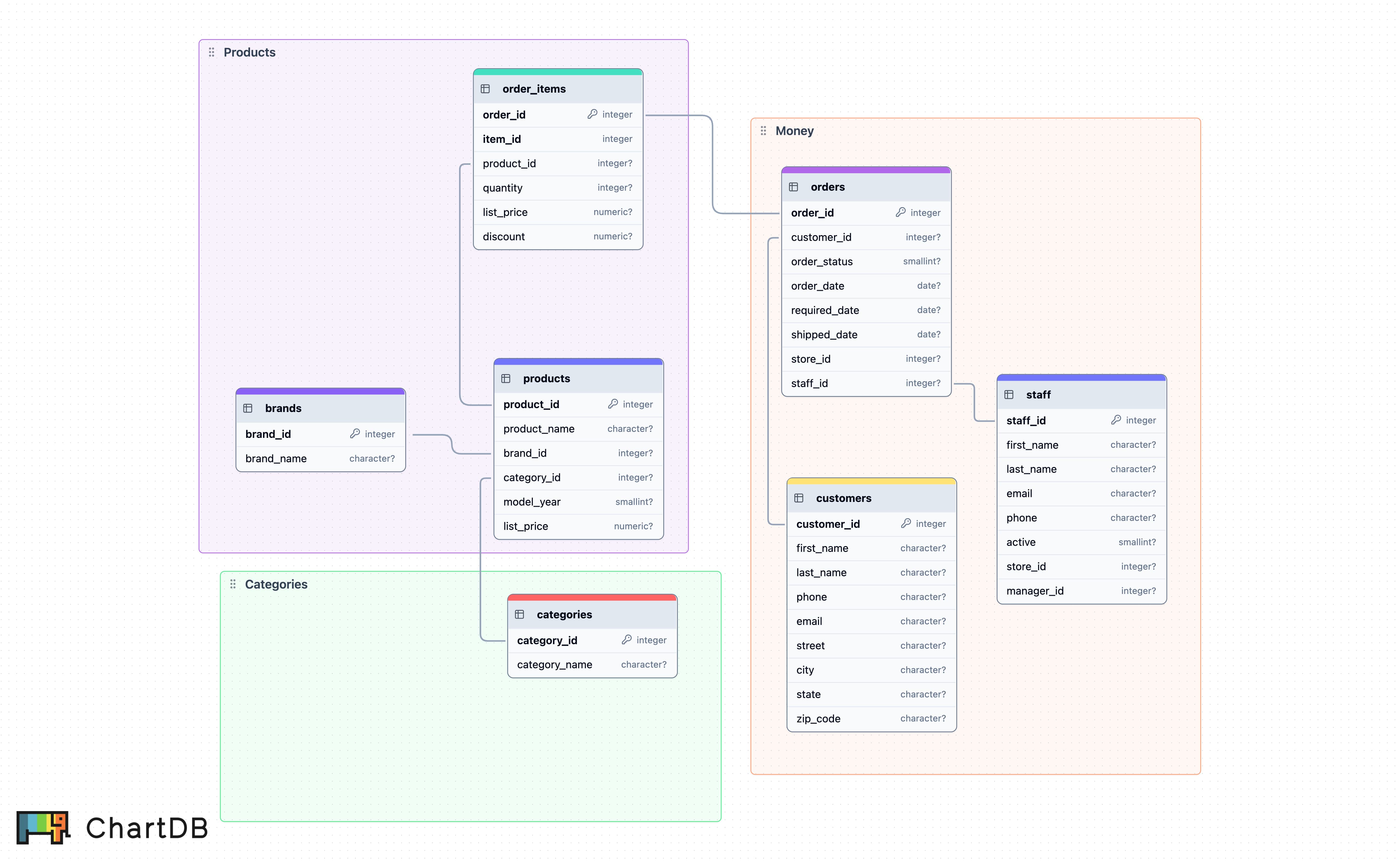
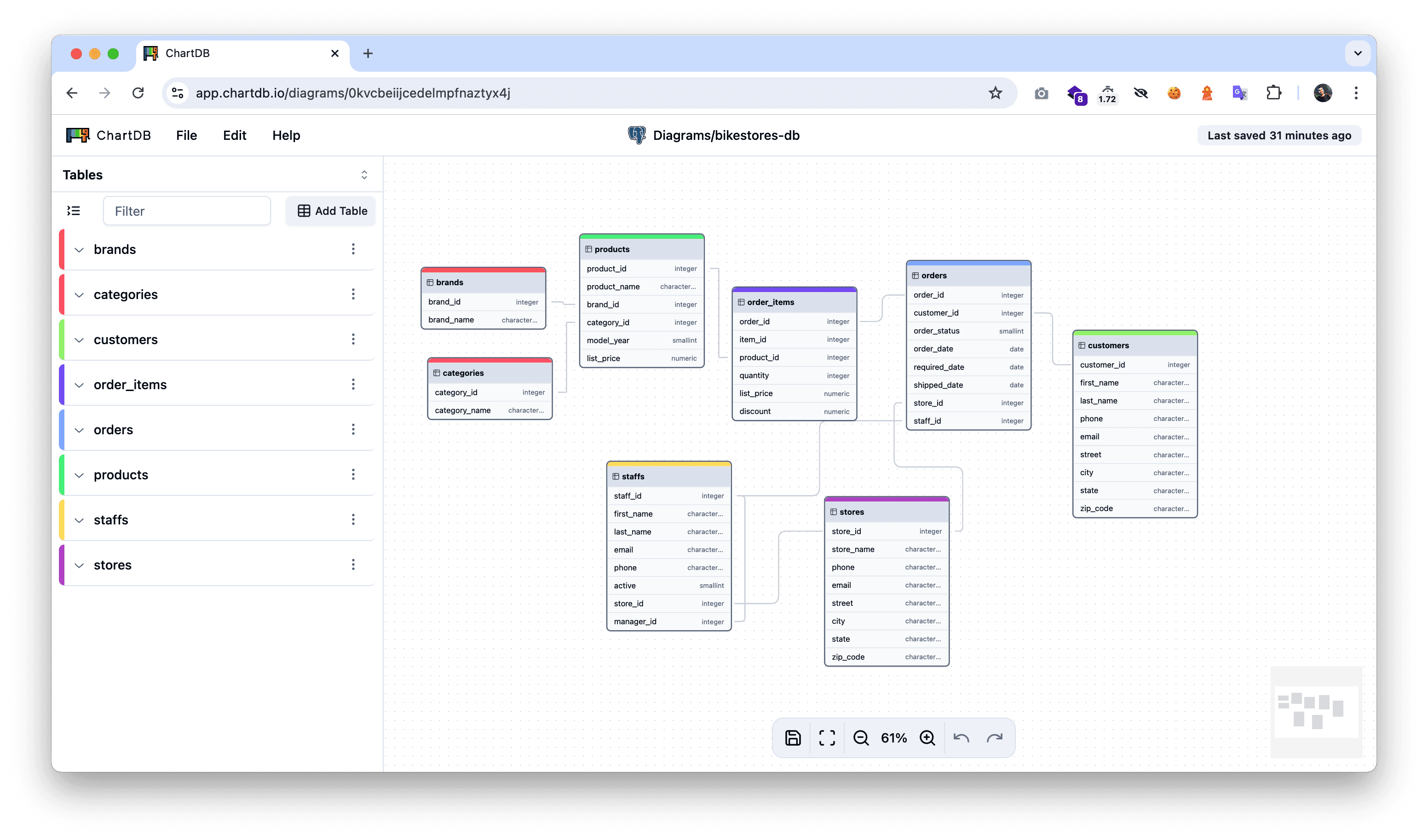
ChartDB is a database schema diagram visualizer and data modeling tool that lets engineers turn their database structure into an interactive entity-relationship diagram (ERD) in seconds. It is offered both as a browser-based cloud service and as a free, open-source self-hosted application. The core promise is that you can understand and document a database without granting the tool direct access to your data, since it works from a single schema-fetching query. The cloud version runs entirely in the browser and is designed for ease of use and team accessibility. Users import their schema by running one query against their database, after which ChartDB renders the tables, columns, and relationships as an editable diagram. From there, teams can edit the diagram, add notes and subject areas, export the design as SQL DDL scripts for schema migration, or export it as an image for documentation. The platform supports MySQL, MariaDB, PostgreSQL, SQL Server, SQLite, and several cloud data warehouses, with an AI-assisted editor and shareable preview images. The self-hosted edition, which has earned more than 19,000 stars on GitHub, suits organizations with strict security or customization requirements, since all data and configuration stay on infrastructure they control. ChartDB is best suited to developers, database administrators, and data teams who need quick visual documentation, collaborative schema design, or a safe way to plan migrations without exposing production data.
SpecificationsAI-estimated
Key Features of ChartDB
Use Cases for ChartDB
Documenting an existing database
Generate an up-to-date ERD of a legacy or production schema to onboard new engineers quickly.
Planning schema migrations
Design changes visually and export DDL scripts to run against the target database.
Team collaboration on data models
Share diagram previews and collaborate on schema design across engineering and product teams.
Designing new databases
Model entities and relationships from scratch before writing any SQL.
Security-conscious schema review
Visualize structure without granting access to the underlying data, using the self-hosted edition if needed.
Embedding diagrams in documentation
Export images of the schema for Confluence, Notion, or internal wikis.
How to use ChartDB?
Choose a deployment
Use the browser-based cloud version or install the free self-hosted edition.
Select your database engine
Pick the DBMS you are working with, such as PostgreSQL or MySQL.
Run the schema query
Execute the provided single query against your database to fetch the schema structure.
Import and edit the diagram
Load the results into ChartDB and refine the layout, notes, and relationships.
Export or share
Download SQL DDL scripts or images, or share a preview with your team.
Pros & Cons of ChartDB
Pros
- Generates an ER diagram in roughly 15 seconds using a single schema-fetching query
- Works without direct database access, reducing security exposure
- Free, open-source self-hosted option with a large GitHub community (19K+ stars)
- Exports diagrams as SQL DDL scripts for migrations or as images for documentation
Cons
- Some features such as the Examples library are still marked as work in progress
- Supports relational databases and cloud warehouses but not every database engine
- Self-hosting requires setup and maintenance effort compared with the cloud version
Frequently Asked Questions
Does ChartDB modify my database?
No. ChartDB only reads the schema structure through a single query and does not change your database.
Do I need to give ChartDB access to my data?
No. It works without direct database access, only requiring the schema-fetching query to be run.
Can I embed a live ERD in Notion, Miro, or Confluence?
You can export diagrams as images to include in these tools; the site's FAQ addresses embedding options.
Can I try a ChartDB Cloud plan for free?
The site offers a no-credit-card-required trial and a free self-hosted edition.
How do I keep my diagrams in sync with the database?
Re-run the schema import query whenever your database structure changes to refresh the diagram.
Which databases are supported?
Relational databases including MySQL, MariaDB, PostgreSQL, SQL Server, and SQLite are fully supported, with additional support for several cloud data warehouses.
Is ChartDB open source?
The self-hosted edition is free and open source, with over 19,000 stars on GitHub.
Pricing Overview
View full pricing →The page offers a free cloud tier ('Start for free', no credit card required) and a free, open-source self-hosted option, but states no specific dollar prices or paid plan tiers.
Detailed plans are not listed. Visit the official website for pricing information.
Reviews & Ratings0.0
No reviews yet. Be the first to write one!
Top Alternatives & Similar Software
View all alternatives & similar software→No alternatives available yet.
People also viewed


Related searches
Is this your tool?
Claim this page to update details, reply to user reviews, and drive more traffic to your product.
Claim this Product →
Tags
Explore Related Topics
Keep up with ChartDB alternatives
New alternatives, pricing changes and the week's biggest movers - one email every Tuesday.