


Dolphin vs filebrowser
Side-by-side comparison of features, pricing, ratings, and alternatives.
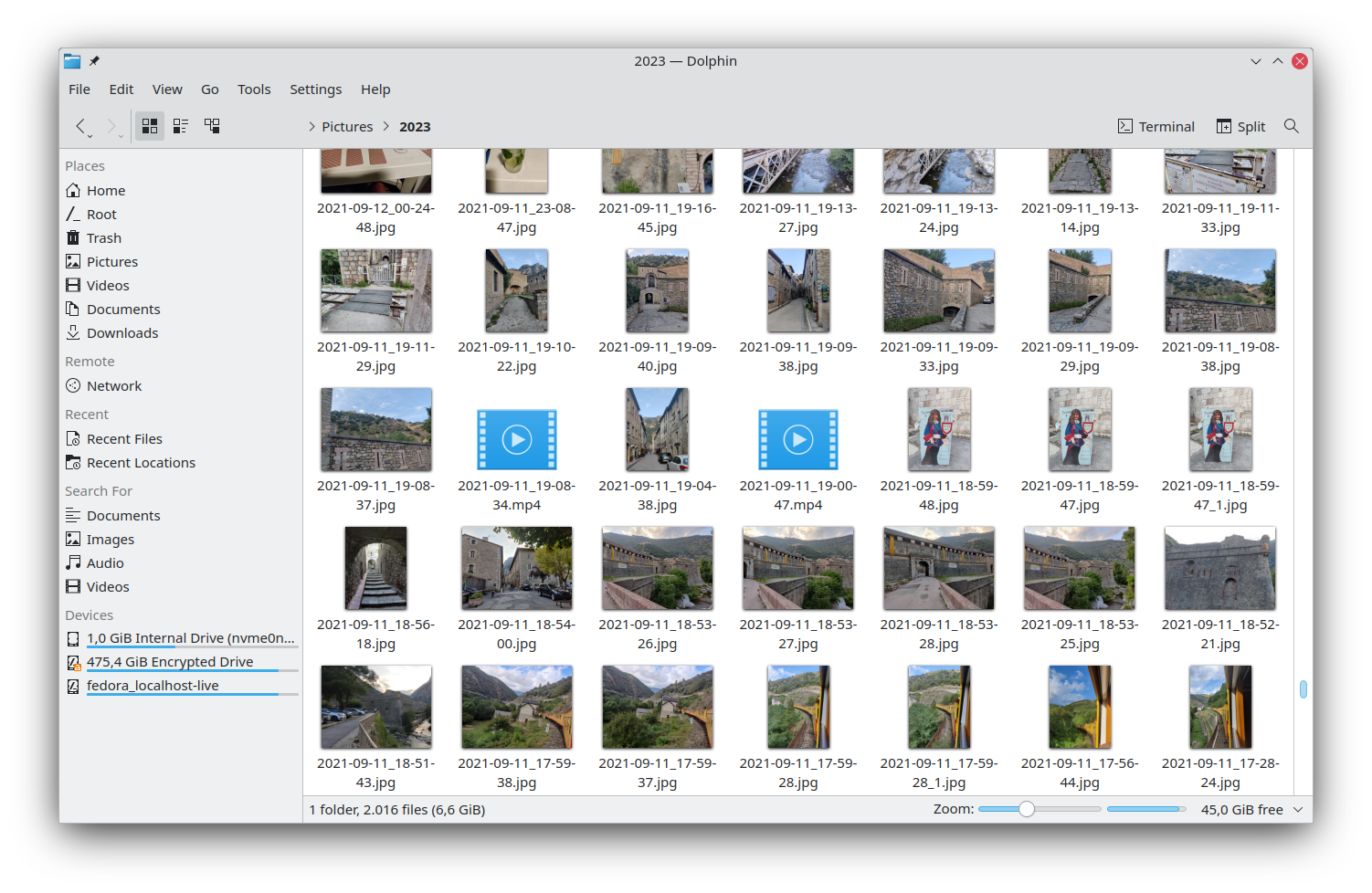

Dolphin is the default file manager for the KDE Plasma desktop, offering a clean interface and powerful navigation tools. It integrates tightly with KDE technologies to provide a seamless experience on Linux systems. Designed for both casual users and power users, Dolphin supports tabbed browsing, split view, and extensive customization through plugins and scripts, making file management efficient and adaptable.
Filebrowser is an open‑source, web‑based file manager that you can run on any server. It provides a clean UI for browsing, uploading, and sharing files without needing a desktop client. Designed for simplicity, it lets users manage directories, set permissions, and generate shareable links directly from the browser, making collaboration easy for small groups.
- Highly customizable via service menus and plugins
- Native integration with KDE Plasma
- Supports multiple tabs and split view
- Free and open‑source
- Fully open‑source and free to use
- Easy to self‑host with Docker or binary
- Simple UI suitable for non‑technical users
- Fine‑grained permission controls
- Limited to Linux/KDE environments
- No official Windows/macOS native version
- Lacks a public API for external extensions
- Limited advanced collaboration features compared to SaaS solutions
- No built‑in real‑time editing of documents
- Community support only, no guaranteed SLA
More alternatives & similar tools
Alternatives to Dolphin
View all →
Alternatives to filebrowser
View all →

The Verdict
AI-generated from listing dataFilebrowser is a self‑hosted web file manager ideal for small teams needing simple UI and API access, while Dolphin is a KDE‑native desktop manager for power users on Linux.
Key differences
- •Deployment model: filebrowser runs as a self‑hosted web service; Dolphin is a desktop app for KDE.
- •Access method: filebrowser works in any browser with REST API; Dolphin requires a local KDE environment and has no public API.
- •Collaboration features: filebrowser offers user accounts, granular permissions, and public links; Dolphin lacks built‑in sharing or permission controls.
- •Platform scope: filebrowser is OS‑agnostic via Docker; Dolphin runs only on Linux/KDE.
- •Integration focus: filebrowser provides API for automation; Dolphin integrates tightly with KDE Plasma and KIO.
Pricing & value
Both are free and open‑source, offering no licensing cost.
Ease of use / learning curve
Filebrowser’s web UI is designed for non‑technical users; Dolphin requires KDE familiarity.
Features & depth
Dolphin provides advanced file previews, split‑view, batch rename, and KDE service menus not found in filebrowser.
Integrations & ecosystem
Dolphin integrates natively with KDE Plasma, Qt, KIO, and GVfs; filebrowser only offers a REST API.
Collaboration
Filebrowser includes user accounts, granular permissions, and public link generation; Dolphin lacks collaboration tools.
Scalability
Filebrowser can be deployed on any Linux server or Docker, supporting multiple users; Dolphin is limited to a single desktop session.
Support
Both rely on community support (GitHub or forums) with no guaranteed SLA.
Choose Dolphin if…
Linux power users who live in KDE and want deep desktop integration.
Choose filebrowser if…
Small teams needing web‑based file sharing, API automation, and cross‑platform access.
Common questions
Can I access the file manager from any device?
Filebrowser is web‑based, so any modern browser can connect; Dolphin runs only on a local KDE desktop.
Do either of these tools provide an API for automation?
Filebrowser includes a RESTful API; Dolphin does not offer a public API.
Is there any cost to use either product?
Both are free and open‑source with community‑only support.