


Europa Universalis vs Pride of Nations
Side-by-side comparison of features, pricing, ratings, and alternatives.
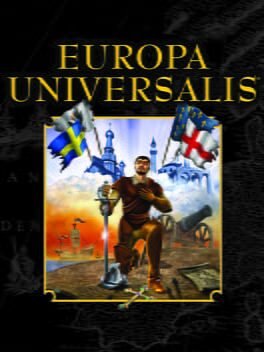
Based on a classic French board game of the same name, Europa Universalis plunges players into the intricate complexities of early modern world history. Controlling a civilization from 1492 to 1792, you must navigate diplomacy, warfare, trade, and domestic administration to build a lasting global empire. Developed by Paradox Development Studio, the game simulates all aspects of world history across a massive geopolitical landscape. Players must manage resources, forge strategic alliances, and lead their nation through centuries of historical events and emergent conflicts.
Pride of Nations is a deep historical grand strategy game set during the tumultuous colonial era of the nineteenth century. Players assume complete control of a major world power, steering its political, economic, military, and social development across decades of intense geopolitical rivalry. Utilizing the robust AGEod engine, the game challenges users to manage complex supply chains, build massive infrastructure, colonize distant territories, and wage strategic warfare. With intricate diplomatic options and a faithful recreation of historical events, it offers a challenging simulation for dedicated history enthusiasts.
- Deep and immersive historical simulation based on a classic board game
- Comprehensive control over trade, diplomacy, and warfare
- Extensive timeframe spanning three centuries of world history
- Supports both single-player and multiplayer gameplay modes
- Deeply immersive and historically accurate 19th-century setting
- Complex economic and logistical simulation models
- Engaging grand strategy gameplay with high replayability
- Includes both robust single-player and multiplayer modes
- Steep learning curve for newcomers to grand strategy games
- Interface and graphics show their age given the 2000 release date
- Micromanagement can become overwhelming during extensive campaigns
- Steep learning curve due to complex mechanics
- User interface can feel dense and unintuitive for beginners
- Turn processing times can be long during late-game stages
More alternatives & similar tools
Alternatives to Europa Universalis
View all →
Guide a 19th-century nation through industrialization and global colonization.
Rule your land and dominate the world with unparalleled freedom, depth and historical accuracy.
Alternatives to Pride of Nations
View all →Rule your land and dominate the world with unparalleled freedom, depth and historical accuracy.
Take control of a civilization between 1492 and 1792 in this historical strategy game.
The Verdict
AI-generated from listing dataEuropa Universalis offers a broader historical span and family‑friendly rating, while Pride of Nations focuses on a deeper 19th‑century economy at a lower known price.
Key differences
- •Historical scope: EU covers 1492‑1792; PoN is limited to the 19th century.
- •Price transparency: PoN lists $19.99 MSRP; EU price not specified.
- •Age rating: EU is ESRB E (everyone); PoN is ESRB T (teen).
- •Release era: EU released 2000 with dated graphics; PoN released 2011, implying newer UI.
- •Developer branding: EU by Paradox Development Studio; PoN by Paradox France (different studios).
Pricing & value
PoN states a $19.99 MSRP; EU price is not disclosed, making PoN the clearer, cheaper option.
Gameplay & fun factor
Both are grand‑strategy, turn‑based games with deep diplomacy, trade, and warfare mechanics.
Multiplayer / co‑op
Both support single‑player and multiplayer modes per specifications.
Content & replayability
EU spans three centuries, offering a wider range of scenarios than PoN’s 19th‑century focus.
Difficulty & accessibility
EU has an ESRB E rating, indicating broader accessibility; PoN is rated T.
Graphics & performance
EU’s graphics are noted as dated (2000 release); PoN, released 2011, likely has more modern visuals.
Platform availability
No platform data provided for either title.
Choose Europa Universalis if…
Buyers wanting a longer historical timeline and family‑friendly content.
Choose Pride of Nations if…
Buyers seeking a cheaper, newer‑looking 19th‑century economic simulation.
Common questions
Which game is cheaper?
Pride of Nations lists a price of $19.99; Europa Universalis price is not specified.
Is either game suitable for younger players?
Europa Universalis is ESRB E (everyone); Pride of Nations is ESRB T (teen).
Which offers a broader historical period?
Europa Universalis covers 1492‑1792, while Pride of Nations focuses on the 19th century.