


Europa Universalis vs Rise of Prussia
Side-by-side comparison of features, pricing, ratings, and alternatives.
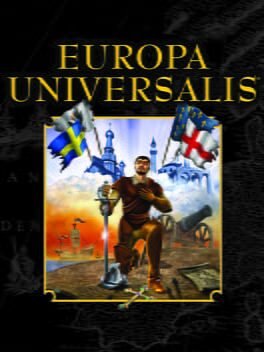
Based on a classic French board game of the same name, Europa Universalis plunges players into the intricate complexities of early modern world history. Controlling a civilization from 1492 to 1792, you must navigate diplomacy, warfare, trade, and domestic administration to build a lasting global empire. Developed by Paradox Development Studio, the game simulates all aspects of world history across a massive geopolitical landscape. Players must manage resources, forge strategic alliances, and lead their nation through centuries of historical events and emergent conflicts.
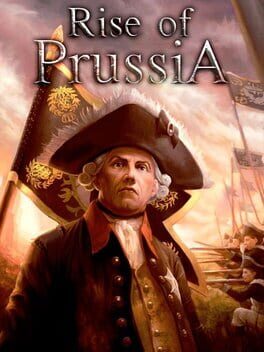
Rise of Prussia is a historical grand strategy wargame developed by Paradox France and published by Paradox Interactive. Following in the footsteps of acclaimed titles like Birth of America and Napoleon's Campaigns, it immerses players in the intense military conflicts of Europe between 1756 and 1763. Players take control of either Frederick the Great's Prussian forces or their formidable coalition opponents across a massive, highly detailed map of 18th-century Europe. Featuring realistic logistical challenges, historical commanders, weather systems, and deep strategic mechanics, the game offers an authentic simulation of eighteenth-century warfare.
- Deep and immersive historical simulation based on a classic board game
- Comprehensive control over trade, diplomacy, and warfare
- Extensive timeframe spanning three centuries of world history
- Supports both single-player and multiplayer gameplay modes
- Deep and historically accurate simulation of 18th-century warfare
- Massive and detailed map covering the Seven Years' War theater
- Intricate logistics and supply line mechanics add meaningful strategy
- Includes authentic historical commanders and units
- Steep learning curve for newcomers to grand strategy games
- Interface and graphics show their age given the 2000 release date
- Micromanagement can become overwhelming during extensive campaigns
- Steep learning curve typical of complex grand strategy wargames
- Dated user interface by modern gaming standards
- Niche appeal focused strictly on historical wargaming enthusiasts
More alternatives & similar tools
Alternatives to Europa Universalis
View all →
Guide a 19th-century nation through industrialization and global colonization.
Rule your land and dominate the world with unparalleled freedom, depth and historical accuracy.
Alternatives to Rise of Prussia
View all →Take control of a civilization between 1492 and 1792 in this historical strategy game.

The Verdict
AI-generated from listing dataEuropa Universalis offers a broader, centuries‑spanning grand‑strategy experience, while Rise of Prussia delivers a focused, detailed 18th‑century war simulation.
Key differences
- •Scope of play: EU covers 1492‑1792 worldwide; Rise of Prussia limits to the Seven Years' War in Europe.
- •Gameplay focus: EU blends trade, diplomacy, domestic policy with warfare; Rise of Prussia concentrates on logistics and battlefield tactics.
- •Release era: EU released 2000 with older graphics; Rise of Prussia released 2010, still dated but newer.
- •Map size: EU spans global regions; Rise of Prussia provides a massive, historically accurate Central European map.
- •Target audience: EU appeals to grand‑strategy/history fans; Rise of Prussia targets niche wargame enthusiasts.
Gameplay & fun factor
EU combines multiple systems (trade, diplomacy, domestic policy) offering varied fun beyond pure warfare.
Platform availability
Both are PC titles; no platform data provided to differentiate.
Price & value
Both are one‑time paid games; price details not specified.
Multiplayer / co‑op
Both support single‑player and multiplayer modes.
Content & replayability
EU's three‑century timeframe and multiple systems give higher replay potential than a single war.
Difficulty & accessibility
Rise of Prussia’s niche focus may be slightly less overwhelming than EU’s extensive micromanagement.
Graphics & performance
Rise of Prussia (2010) is newer than EU (2000), so its graphics are comparatively less dated.
Choose Europa Universalis if…
Players who want a wide‑range grand strategy with trade, diplomacy, and long‑term empire building.
Choose Rise of Prussia if…
Players who crave a deep, historically accurate 18th‑century European war simulation.
Common questions
Which game has a broader historical timeframe?
Europa Universalis spans 1492‑1792, while Rise of Prussia covers only the Seven Years' War (1756‑1763).
Do both games support multiplayer?
Yes, each lists single‑player and multiplayer modes.
Is one game more graphics‑modern than the other?
Rise of Prussia (released 2010) is newer than Europa Universalis (released 2000), so its graphics are relatively more modern.