


Europa Universalis vs Sid Meier's Civilization IV
Side-by-side comparison of features, pricing, ratings, and alternatives.
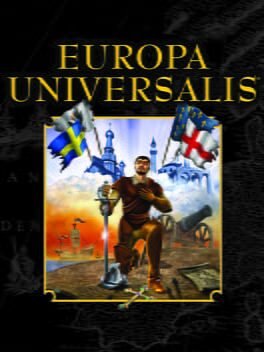
Based on a classic French board game of the same name, Europa Universalis plunges players into the intricate complexities of early modern world history. Controlling a civilization from 1492 to 1792, you must navigate diplomacy, warfare, trade, and domestic administration to build a lasting global empire. Developed by Paradox Development Studio, the game simulates all aspects of world history across a massive geopolitical landscape. Players must manage resources, forge strategic alliances, and lead their nation through centuries of historical events and emergent conflicts.
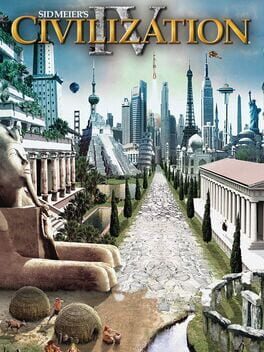
Sid Meier's Civilization IV lets you lead a civilization from the ancient era to the modern age, making strategic decisions about technology, culture, and warfare. Its deep turn‑based gameplay and rich historical setting provide endless replayability for both newcomers and veteran strategists.
- Deep and immersive historical simulation based on a classic board game
- Comprehensive control over trade, diplomacy, and warfare
- Extensive timeframe spanning three centuries of world history
- Supports both single-player and multiplayer gameplay modes
- Deep strategic depth
- High replay value
- Robust modding community
- Rich historical content
- Steep learning curve for newcomers to grand strategy games
- Interface and graphics show their age given the 2000 release date
- Micromanagement can become overwhelming during extensive campaigns
- Steep learning curve for beginners
- Long game sessions can be time‑intensive
- Graphics are dated by modern standards
More alternatives & similar tools
Alternatives to Europa Universalis
View all →
Guide a 19th-century nation through industrialization and global colonization.
Rule your land and dominate the world with unparalleled freedom, depth and historical accuracy.

Alternatives to Sid Meier's Civilization IV
View all →Take control of a civilization between 1492 and 1792 in this historical strategy game.
The ultimate expansion that deepens strategy, adds new civilizations, and expands multiplayer horizons.
The Verdict
AI-generated from listing dataBoth are deep, turn‑based grand strategy 4X games, but Europa Universalis focuses on a narrower 1492‑1792 period with older graphics, while Civilization IV spans 6000 years, offers extensive modding and higher critic scores.
Key differences
- •Historical scope: EU covers 1492‑1792; Civ IV covers 6000 years.
- •Modding support: Civ IV highlights robust community mods; EU has no modding mention.
- •Release era & graphics: EU (2000) shows older graphics; Civ IV (2005) is newer but still dated.
- •Critical reception: Civ IV lists a 95/100 critic score; EU provides no score.
- •Pricing detail: Civ IV specifies $39.99 MSRP; EU only notes paid one‑time, no price.
Gameplay & fun factor
Civ IV offers 6000‑year span, tech trees, city building, and leader personalities, providing broader strategic variety.
Platform availability
Both list only single‑player and multiplayer modes; no platform specifics given.
Price & value
Civ IV states a $39.99 MSRP, giving clear cost; EU only says paid one‑time, no price.
Multiplayer / co‑op
Both support single‑player and multiplayer; no further distinction provided.
Content & replayability
Civ IV’s 6000‑year timeline, procedural maps, and strong mod community boost replay value.
Difficulty & accessibility
EU’s older interface may be less intuitive, but both note steep learning curves; no clear advantage.
Graphics & performance
Civ IV (2005) is newer than EU (2000), so its graphics are relatively less dated.
Choose Europa Universalis if…
Players who want a focused early‑modern era simulation and prefer Paradox’s grand‑strategy depth.
Choose Sid Meier's Civilization IV if…
Players seeking a broader historical canvas, extensive modding, and higher critical acclaim.
Common questions
Which game is cheaper?
Civ IV lists a $39.99 MSRP; EU only notes paid one‑time with no price, so Civ IV’s cost is known.
Do both support multiplayer?
Yes, each mentions single‑player and multiplayer modes.
Which has more community mods?
Civ IV explicitly highlights a robust modding community; EU provides no modding information.