OXO vs Tennis for Two
Side-by-side comparison of features, pricing, ratings, and alternatives.

OXO is a historic computer game created in 1952 by Alexander S. Douglas for the EDSAC computer. It simulates a game of Noughts and Crosses (tic‑tac‑toe) and is the earliest known title to display graphics on a video monitor. Players interact using a rotary telephone controller while the 35×16 dot‑matrix CRT shows the board and the AI opponent's moves. Today it can be experienced on modern PCs via emulation, offering a glimpse into early interactive computing and AI.
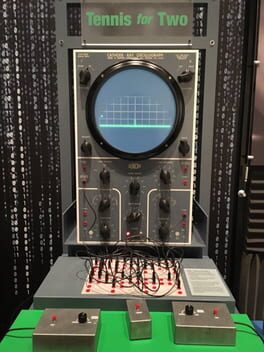
Tennis for Two is an interactive two‑player tennis simulation created by Brookhaven Lab physicist William Higinbothh in 1958. Displayed on a five‑inch oscilloscope, players used rotary dials and a button to control the angle and power of their virtual racquets. Often credited as the world’s first video game, it offered a side‑view court where players could serve, volley, and watch the ball’s trajectory calculated by an analog computer. Hundreds lined up at Brookhaven’s open day to experience this pioneering blend of science and entertainment.
- Shows the origins of video game graphics.
- Simple yet strategic gameplay.
- Historical significance as the first visual computer game.
- Free and runs on modern PCs via emulation.
- Pioneering piece of video‑game history.
- Simple, intuitive controls for immediate fun.
- Real‑time physics calculated by analog hardware.
- Encourages social interaction with head‑to‑head play.
- Very limited visual fidelity by today's standards.
- Input method (rotary phone) is simulated and may feel unintuitive.
- Single‑player only; no multiplayer mode.
- Limited visual fidelity – only a small oscilloscope screen.
- No modern features such as sound, scoring, or AI opponents.
- Requires original hardware or emulation to experience.