


Stuart Smith's Adventure Construction Set vs The Bard's Tale Construction Set
Side-by-side comparison of features, pricing, ratings, and alternatives.
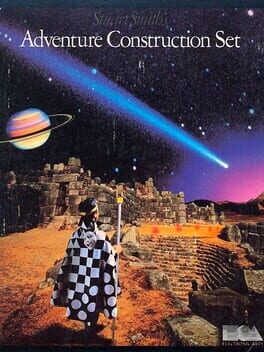
Stuart Smith's Adventure Construction Set lets you dive into eight ready‑made adventures, from ancient Egypt to sci‑fi galaxy rescues, or craft your own worlds using three versatile construction kits. With a massive map capacity, hundreds of creatures, props, and text messages, the tool offers limitless storytelling possibilities for solo players.
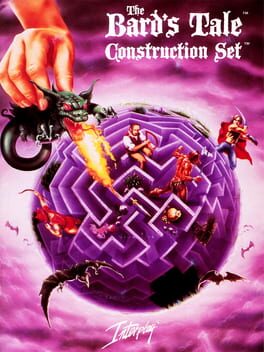
The Bard's Tale Construction Set is a 1991 software package that lets users design simple dungeon‑crawl RPGs using the classic Bard's Tale engine. Developed by Interplay Productions and distributed by Electronic Arts, it runs on MS‑DOS and was also released for the Amiga. With this tool you can build maps, define monsters, craft items, and script events, then export a standalone executable that runs on compatible PCs, allowing you to share your creations with friends.
- Extensive map and creature capacity
- Three genre‑specific construction kits
- No programming required
- Rich set of built‑in adventures
- Authentic Bard's Tale engine
- No programming required for basic games
- Standalone executables can be shared easily
- Comprehensive map and item editors
- Graphics are dated by modern standards
- Limited to single‑player mode
- Interface can feel clunky for new users
- Runs only on legacy DOS/Amiga environments
- Limited graphics and sound capabilities
- Steep learning curve for advanced scripting
More alternatives & similar tools
Alternatives to Stuart Smith's Adventure Construction Set
View all →
Create your own classic dungeon-crawl games with the original Bard's Tale engine
Alternatives to The Bard's Tale Construction Set
View all →Create and play your own epic adventures with 8 built‑in stories
The Verdict
AI-generated from listing dataStuart Smith's Adventure Construction Set offers broader map and creature capacity with three genre kits, while The Bard's Tale Construction Set gives authentic Bard's Tale mechanics and the ability to export standalone DOS games.
Key differences
- •Map/creature limits: A supports up to 500 creatures and 15 regions; B’s limits not specified.
- •Export options: A runs only inside its engine; B can compile to a standalone DOS executable.
- •Genre focus: A provides Fantasy, Spy/Mystery, Sci‑Fi kits; B is limited to classic dungeon‑crawl fantasy.
- •Platform: A is a modern single‑player engine (no OS specified); B runs only on legacy DOS/Amiga.
- •Scripting: B includes a simple scripting language for events; A requires no programming.
Gameplay & fun factor
A lets creators build larger worlds (500 creatures, 15 regions) and three distinct genres, increasing variety.
Platform availability
A runs as a single‑player engine without requiring legacy DOS/Amiga; B is limited to those old environments.
Price & value
A costs $49.99; B’s price is not specified, so direct value comparison is unavailable.
Multiplayer / co‑op
Both are single‑player only.
Content & replayability
A includes eight built‑in adventures and supports extensive custom content; B’s content capacity is not detailed.
Difficulty & accessibility
B’s basic tools need no programming, but advanced scripting has a steep learning curve; A’s interface is clunky for newcomers.
Graphics & performance
Both have dated graphics, but B is limited to legacy DOS graphics, while A’s graphics are simply described as dated.
Choose Stuart Smith's Adventure Construction Set if…
Creators wanting larger, genre‑flexible worlds without needing legacy hardware.
Choose The Bard's Tale Construction Set if…
Fans of the original Bard's Tale engine who need shareable DOS executables.
Common questions
What is the cost of each construction set?
A costs $49.99; B’s price is not provided in the available information.
Can I share the games I create with others?
A runs only inside its own engine; B can compile games into standalone DOS executables for distribution.
Do I need programming skills to build games?
Both claim no programming required for basic use; however, B offers a scripting language for advanced events, which has a steep learning curve.