3-D Tic-Tac-Toe vs OXO
Side-by-side comparison of features, pricing, ratings, and alternatives.

3-D Tic-Tac-Toe is a computerized version of the board game Qubic, using traditional tic-tac-toe notation and layout. Instead of a single 3×3 board, players place symbols on four 4×4 grids stacked vertically, and a player wins by lining up four of their symbols in a row, column, or diagonal on one grid, or spaced evenly across all four grids. The game offers nine variations, including two-player head-to-head play and single-player matches against a built-in AI with eight difficulty settings. It is controlled with a standard joystick, making it an accessible strategy challenge for players who want more depth than the classic 3×3 game.
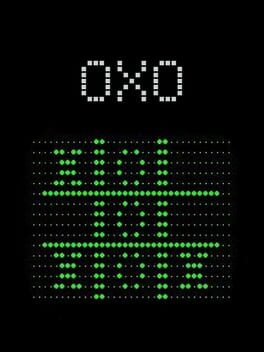
OXO is a historic computer game created in 1952 by Alexander S. Douglas for the EDSAC computer. It simulates a game of Noughts and Crosses (tic‑tac‑toe) and is the earliest known title to display graphics on a video monitor. Players interact using a rotary telephone controller while the 35×16 dot‑matrix CRT shows the board and the AI opponent's moves. Today it can be experienced on modern PCs via emulation, offering a glimpse into early interactive computing and AI.
- Adds real strategic depth to the familiar tic-tac-toe format.
- Offers eight AI difficulty levels suitable for beginners and experienced players.
- Simple joystick controls make it quick to learn.
- Nine variations provide replay value.
- Shows the origins of video game graphics.
- Simple yet strategic gameplay.
- Historical significance as the first visual computer game.
- Free and runs on modern PCs via emulation.
- Graphics and presentation reflect its early release and may feel dated.
- The three-dimensional layout can be harder to visualize than a single flat board.
- Limited to the standard joystick with no modern control or online options.
- Very limited visual fidelity by today's standards.
- Input method (rotary phone) is simulated and may feel unintuitive.
- Single‑player only; no multiplayer mode.
More alternatives & similar tools
Alternatives to 3-D Tic-Tac-Toe
View all →
A four-player isometric territory puzzle where you claim the board by swallowing neighboring pieces.

Strategic poker meets puzzle in a 2D battlefield
Alternatives to OXO
View all →
A three-dimensional take on tic-tac-toe played across four stacked 4×4 grids with 76 ways to win.