


7 Wonders: Ancient Alien Makeover vs 7 Wonders of the Ancient World
Side-by-side comparison of features, pricing, ratings, and alternatives.
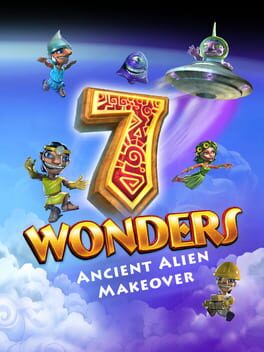
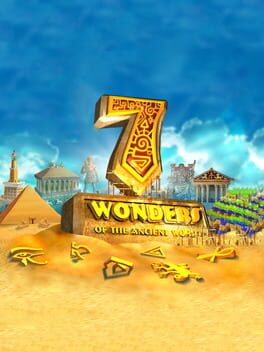
Dive into a futuristic twist on classic match‑3 gameplay where you harness alien technology to construct the world’s greatest wonders. As you match tiles, you gather resources, unlock power‑ups, and expand your own village, blending strategy with satisfying puzzle mechanics. Beyond simple matching, the game challenges you to plan resource management and strategic upgrades, offering a fresh experience that combines sci‑fi flair with the timeless appeal of building iconic monuments.
Players reconstruct the legendary Seven Wonders by matching rows of runes across multiple sub‑levels. Each wonder offers 5 to 7 challenging stages where strategic swapping creates rows of three or more identical runes. Two play modes let you test your skills: Free Play lets you revisit any completed level, while Quest Mode guides you through a progressive adventure across all wonders.
- Engaging match‑3 mechanics with a unique sci‑fi twist
- Deep resource management adds strategic depth
- Cross‑platform play between PC and iOS
- Free‑to‑play with optional in‑app purchases
- Engaging historical theme
- Easy-to-learn controls
- Two distinct play modes
- Suitable for children
- Limited to single‑player mode
- In‑app purchases can affect progression speed
- Graphics may feel dated compared to newer titles
- Limited to single‑player
- Graphics are dated
- No online multiplayer
More alternatives & similar tools
Alternatives to 7 Wonders: Ancient Alien Makeover
View all →
Match-3 adventure restoring the 7 Wonders of the ancient world
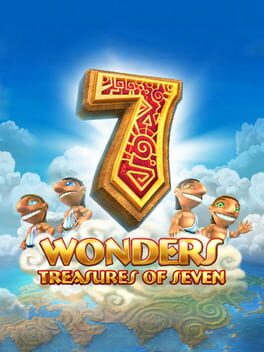
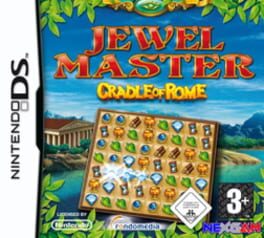
Alternatives to 7 Wonders of the Ancient World
View all →Match-3 adventure restoring the 7 Wonders of the ancient world
The Verdict
AI-generated from listing dataChoose A for a free, cross‑platform sci‑fi match‑3 with deeper resource strategy; choose B for a one‑time purchase, kid‑friendly historical puzzle with simple controls.
Key differences
- •Pricing model: A is freemium with optional IAPs; B is a paid one‑time purchase.
- •Platform support: A syncs between PC and iOS; B’s platform coverage isn’t specified.
- •Theme and audience: A targets casual sci‑fi puzzle fans; B is designed for kids and history lovers.
- •Depth of gameplay: A adds village building and resource management; B focuses on rune‑matching puzzles only.
- •Play modes: A offers a single continuous adventure; B provides Quest Mode and a Free Play replay mode.
Gameplay & fun factor
A combines match‑3 with resource management and village upgrades, adding more strategic layers than B’s pure rune matching.
Platform availability
A explicitly supports both PC and iOS with synchronized progress; B’s supported platforms are not listed.
Price & value
B is a one‑time paid title, while A is free but may require in‑app purchases to speed progression.
Multiplayer / co‑op
Both games are single‑player only.
Content & replayability
A includes ongoing village building, power‑ups, and cross‑platform progression; B offers a fixed set of puzzles per wonder.
Difficulty & accessibility
B is aimed at kids with simple point‑and‑click controls; A’s deeper systems make it less immediately accessible.
Graphics & performance
Both are described as having dated graphics.
Choose 7 Wonders: Ancient Alien Makeover if…
Casual adults who want free, cross‑platform play and deeper strategic puzzle mechanics.
Choose 7 Wonders of the Ancient World if…
Parents or younger players preferring a single purchase, historical theme, and easy‑to‑learn controls.
Common questions
Is there any ongoing cost to play either game?
A is free‑to‑play but includes optional in‑app purchases; B requires only the one‑time purchase price.
Can I play the game on both my PC and my iPhone?
Yes, A syncs progress between PC and iOS; B’s platform support is not specified.
Which game is more suitable for a child?
B is marketed toward kids with simple controls and an educational historical theme, while A targets casual puzzle gamers.